High-waisted garments have been the standard for most of recorded human history. Scythians, Mongols, and other ancient equestrian societies have worn high-waisted garments as a functional necessity since at least the 8th and 7th centuries BCE. The rise - the distance from the crotch seam to the top of the waistband, which determines where a garment sits on the body - allowed them to wear wide, rigid belts that provide core support while riding and fighting. This stabilized the spine while mounted archers drew their bows, absorbing impact, and keeping everything in place while riding - similar to how weight lifting belts are utilized today. The core strength that this provided also allowed them to hang weapons such as akinakes from their belts for ease of draw while mounted. I've always wanted to carry an akinake, but I always hated high-waisted pants. As the popularity of high-waisted garments has re-emerged over the last decade, I decided to take a real look at them. Why have they always been the standard? Why did they fall out of favor? What has reignited the current love for them? And most importantly, why have I always had an aversion to them?
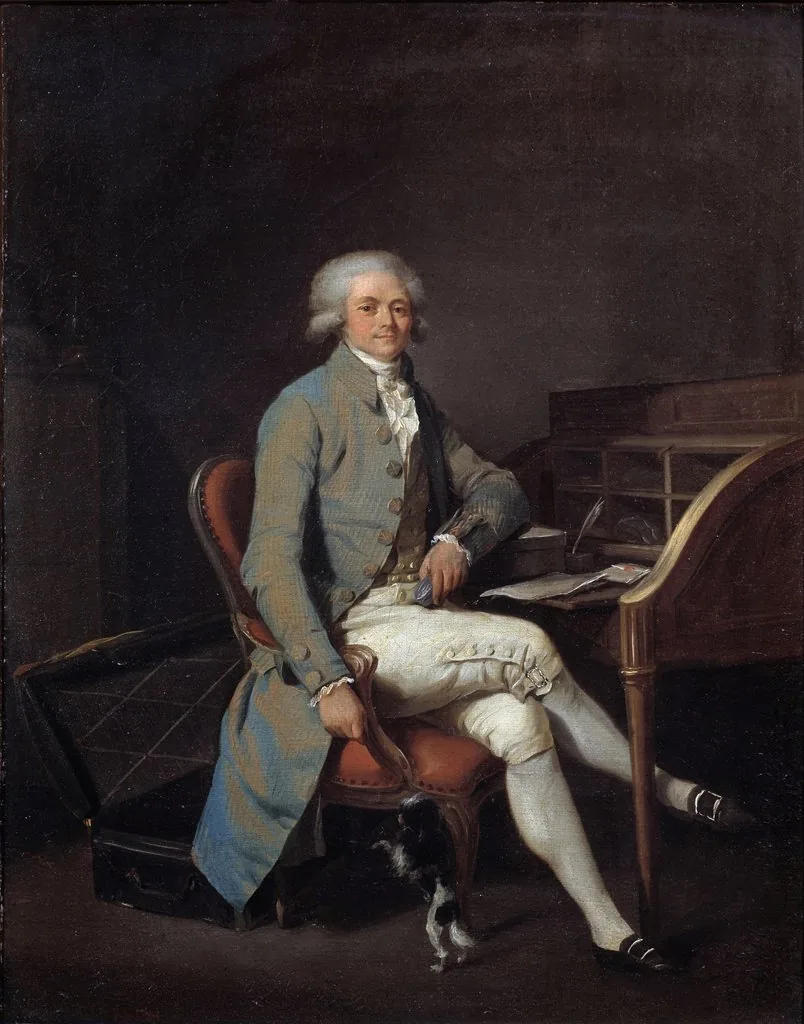
Between the 16th and 18th centuries, the high-waisted garment of choice was the breech. Breeches were high-waisted trousers often made from kerseymere, a twilled woolen fabric that was lightweight and breathed better than the heavy broadcloth that preceded it. These trousers ended just below the knee and were worn with tall stockings that covered the lower leg. They fit slim through the thigh and seat, with closures at the knees using buttons, buckles, or ties. For military and equestrian use, leather was often the predominant material because it held up much better than wool under heavy wear.
By the 18th century, breeches (called culottes in French) became a status symbol strongly associated with the aristocracy. These were increasingly made from more elegant and expensive materials, furthering the divide between the bourgeoisie and the working class. Breeches of silk and satin were the norm for court dress and formal occasions throughout the 17th and 18th centuries, and were paired with silk stockings. These elegant status pieces led to the coinage of the derogatory term sans-culottes, or "without knee-breeches," to refer to the working class.
The French Revolution in Trousers
The working class in France wore full-length trousers called pantalons. These were typically made from coarse linen, hemp, or fustian - a sturdy cotton-linen blend that features a linen warp and a cotton weft. Fustian became the quintessential working-class fabric across Europe during this period. It was inexpensive, easy to produce, and held up to physical labor in a way that the wool, silk, or satin breeches could not. These garments were undyed, further emphasizing their status as a lower-class garment. Both breeches (culottes) and early trousers (pantalons) sat at the natural waist without a belt. These garments were tight-fitting and adjusted by gusset ties at the back, but pantalons included brace (or suspender) buttons on the back, which provided additional support since there were no knee closures. The high-rise of these pants was necessary to support braces, providing more fabric for the braces to hold and putting less tension on the wearer.
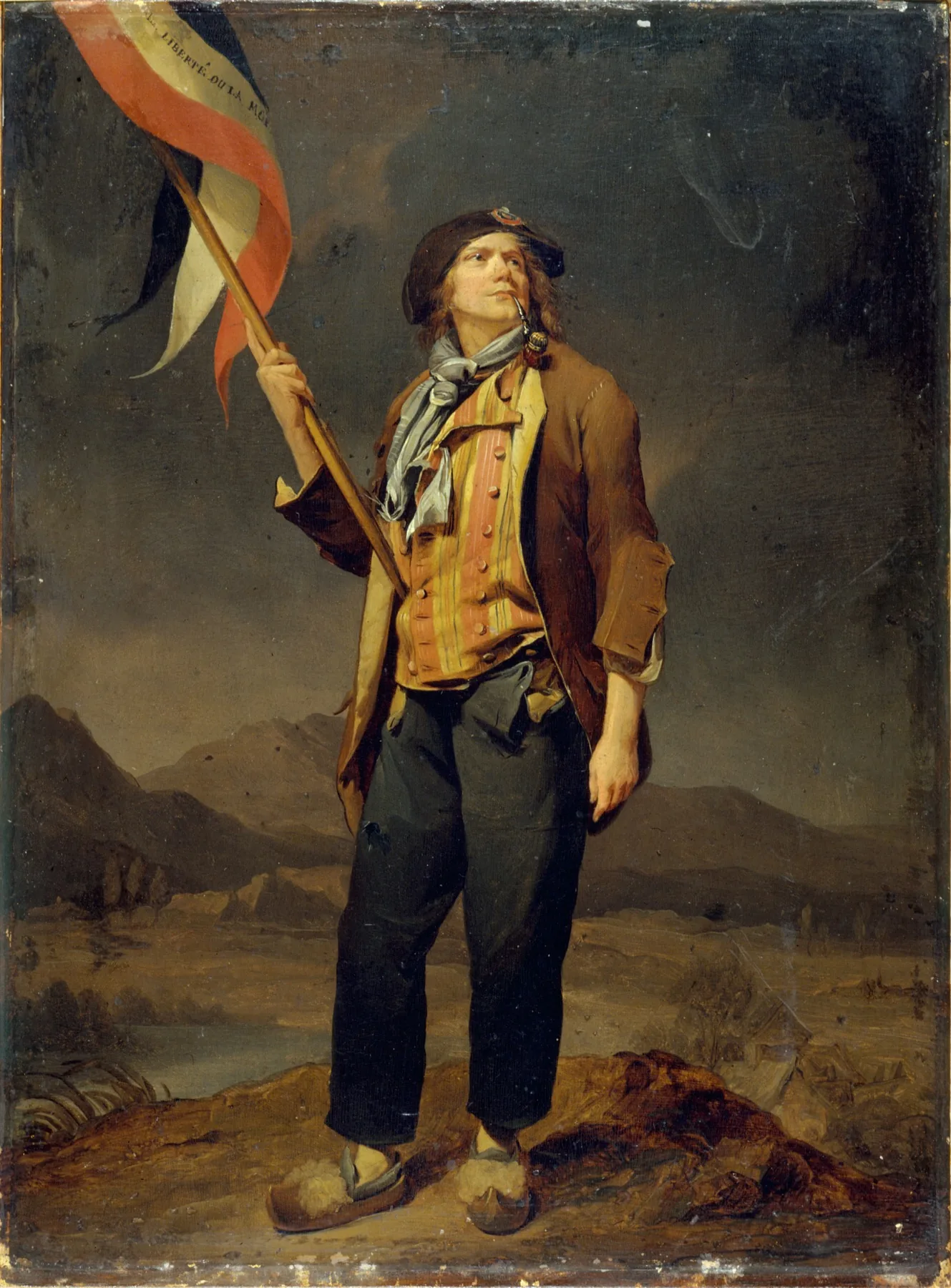
The aristocratic knee breeches came to symbolize oppression. During the French Revolution, the sans-culottes became revolutionaries who rose and overthrew the aristocracy. During the war, the pantalons became a visual symbol of resistance and liberation.
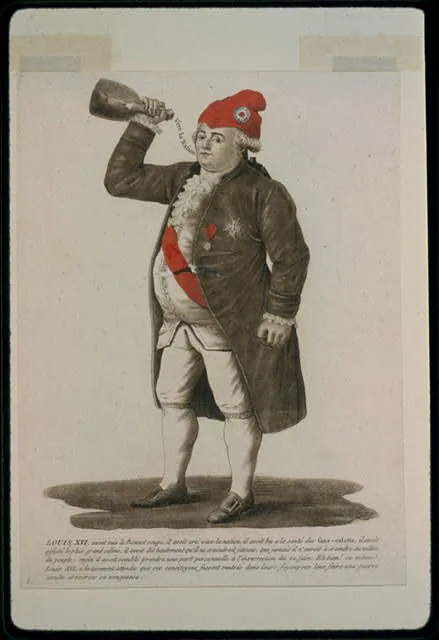
On June 20th, 1792, Parisians broke into the Tuileries Palace and forced King Louis XVI to wear a Phrygian red cap, which became a symbol of the French Revolution. According to eyewitness accounts by English doctor and writer John Moore, the crowd carried banners with anti-aristocratic slogans, including a pair of old black breeches tied to a pole bearing the slogan Libres - et sans-culottes (Free - and without breeches). Fashionable English gentlemen even adopted the French pantalon as a rejection of the French monarchy.
Denim Inherits the High Rise
By the 1820s, just 21 years after the end of the French Revolution, this symbol of resistance had become the norm throughout Europe, replacing breeches on most occasions. Breeches were still used as British court dress through the 19th century and continue to be worn as a symbolic tradition into the 21st century.
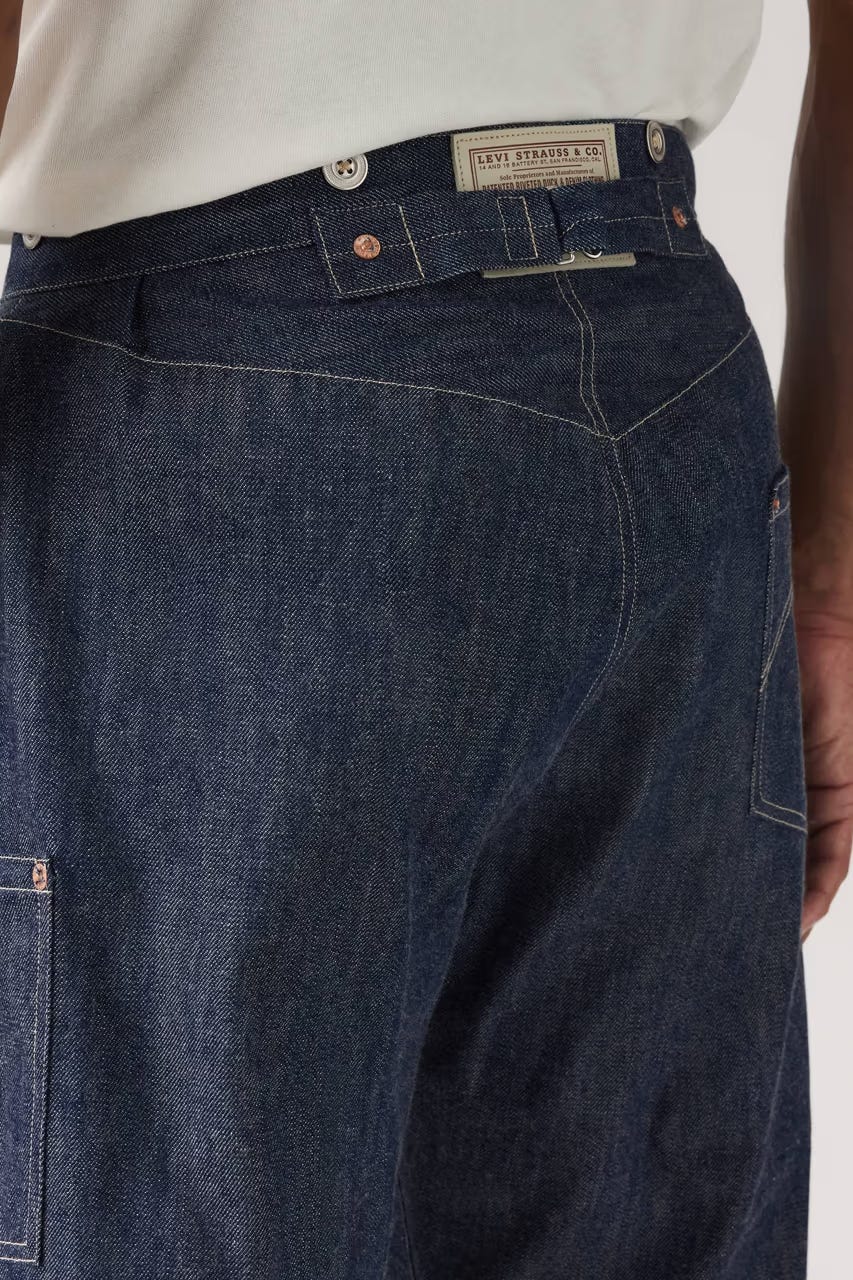
By the late 1850s, incremental modifications to the trousers resulted in a strap-and-buckle back, which allowed them to be worn without braces. This modified waistband came to define the "American Trouser." As a result, the waistband did not need to be load-bearing in the same way to support braces, reducing the need for waistcoats in non-formal attire that hid braces, which were considered an undergarment, from view.
In 1873, Levi Strauss and Jacob Davis patented a pair of riveted work pants they termed "waist overalls," which came in an indigo blue denim and a brown duck canvas. These pants featured a high-rise with both the strap-and-buckle back of American Trousers and brace buttons. These were meant to be highly functional trousers, designed to stay up and provide stability for miners, railroad workers, and cowboys doing physical labor.
This silhouette persisted through the 1940s, with high-waisted wool trousers that sat at or above the belly button being the universal standard across all classes. Suspenders persisted as the standard for the commoner as the American Military began experimenting with belts for support.
The Zoot Suit Riots
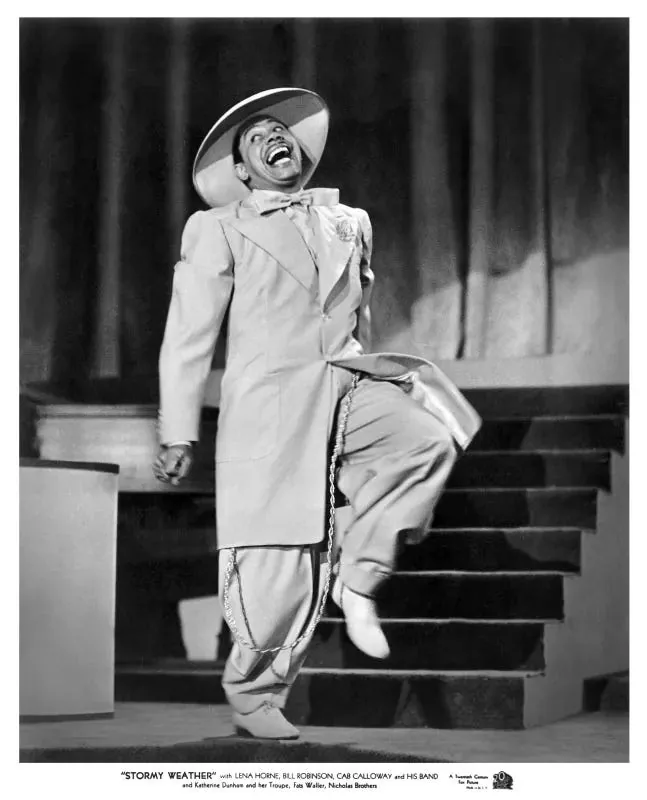
The Zoot Suit of the late 1930s and early 1940s took the high-rise trousers to their most extreme. The silhouette was high-waisted, wide-legged with an extreme taper at the ankle, and worn with a long drape coat and wide lapels. Performers, including Cab Calloway, popularized it in Harlem jazz clubs. It spread quickly among young Black, Mexican-American, Filipino, and Italian-American men.
Over the next 50 years, fashion continued to evolve, and while high-rise trousers remained the standard, several things led to a decline in the trouser rise.
After the U.S. entry into WWII following the attack on Pearl Harbor, wool and other textiles, as well as leather, rubber, cotton, and silk, were subject to strict government rationing. The war would hamper the ability to import textiles while creating a huge demand for uniforms. Franklin D. Roosevelt harnessed his propaganda machine to convince Americans that it was their patriotic duty to use less fabric. While military uniforms and trousers continued to maintain a high-rise, civilian garments from these times featured a lower rise and slimmer silhouette - saving precious inches of fabric. These restrictions made the Zoot Suit's excessive fabric - its defining characteristic - effectively illegal. Bootleg tailors continued making them anyway. The predominantly white service members stationed in Los Angeles viewed Zoot Suit wearers as draft dodgers and un-American. This sentiment was particularly strong against the pachucos, or Zoot Suit-wearing Mexican-Americans.
The Zoot Suit Riots of June 1943 lasted five days. A mob of thousands of white service members and civilians moved through Los Angeles, attacking Mexican-American, Black, and Filipino young men for how they were dressed. The high-waisted trousers were a garment people were beaten for wearing and again became a symbol of rebellion, much like the pantalon was during the French Revolution.
Why Belts Replaced Suspenders
With the development of the American Trouser in the 1850s, men could wear high-rise trousers without braces. The military began using belts with high-waisted trousers during WWI as a less cumbersome means of supporting soldiers. The braces would dig into the shoulders and wrinkle shirts, and as pants fell lower with military rationing, these issues became more pronounced. A belt, however, could provide support at any height, meaning that the natural waist was no longer the only possible anchor point. The belt began to gain popularity in the 1920s.
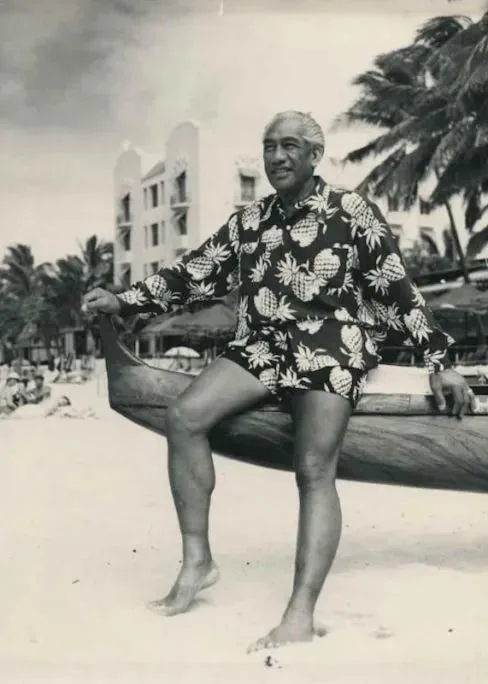
Before 1930, it was considered improper to have your dress shirt or braces be visible. These garments were considered underwear, and men wore buttoned waistcoats or jackets and high-rise pants to prevent their underwear from being seen. During this time, the first aloha shirts appeared in Hawaii as Japanese women adapted traditional kimono fabrics for men's shirting. These shirts gained popularity among tourists and service members living in Hawaii, who brought them back to the mainland. Aloha shirts were worn by American celebrities, such as Duke Kahanamoku and Bing Crosby, who endorsed the shirts and the brands making them. Duke, the trailblazer that he was, normalized wearing these aloha shirts untucked. These shirts were intended to be worn without a jacket, and the flamboyant patterns were put on display. The high-rise of the common trousers hid much of these shirts, and that just wouldn't do.
The Rise of Low-Rise Jeans
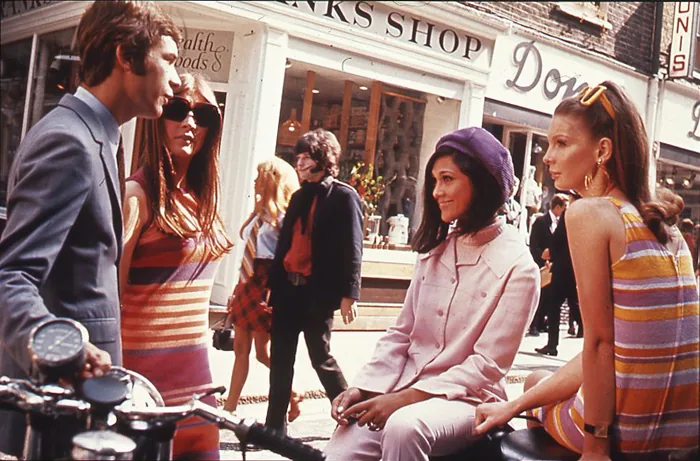
In the late 1950s, the Mod, short for "Modern," movement emerged from working-class London youth. Mod trousers were slim, straight-legged, and cropped at the ankle. As slimmer cuts became more pronounced, the rise of trousers decreased. Shirts were tucked, and thick belts sat at their hips, lowering the waistbands. This change in style was a rejection of conservative culture and led to high-waisted trousers being associated with older generations. This style spread to America through popular music and youth culture in the mid-1960s, carried by the British Invasion and the broader counterculture. This conservative rejection persisted into the 1970s as the American hippie movement embraced hip-hugger jeans.
Though its origins are debated, sagging has been associated with hip-hop and black culture since the late 1980s. As opposed to high-rise pants worn deliberately low as a rejection of norms, this was a more extreme rejection, which featured purposely ill-fitting pants without a belt to hold them in place. Artists like Tupac, Snoop, and Biggie argued that sagging wasn't just about fashion but an act of rebellion against the mainstream and a show of solidarity with working-class and marginalized communities. By the mid-1990s, this had seeped into mainstream teenage culture, and men and teens of all races could see sagging jeans. Other subcultures also adopted sagging, making it a key feature of the skateboarder aesthetic of the time.
As part of his FW93 Collection, Alexander McQueen developed the "bumster." These were ultra-low-rise trousers meant to expose the top of the butt. These ultra-low-rise trousers featured a 3-5-inch rise, whereas traditional high-waisted trousers have a 12-13-inch rise, sometimes higher. Trash collectors mistakenly threw away the original pieces, which had been hidden in plastic bags to avoid spoiling the reveal, before they could be premiered or photographed. Still, this style persisted throughout McQueen's collection for several years.
"I wanted to elongate the body, not just show the bum. To me, that part of the body — not so much the buttocks, but the bottom of the spine — that's the most erotic part of anyone's body." — Alexander McQueen
The bumster's design intention was subverted by its cultural context (body policing, eating disorder culture). Fashion items rarely get to choose what they mean once they enter the world.
The bumster arrived during the period of heroin chic - an aesthetic that prized a pale and emaciated appearance, resembling a person with a heroin addiction. In 1993, Kate Moss appeared on the cover of The Face in low-rise jeans and became an icon of the era. The garment highlighted the body it was meant to promote. Visible hip bones were the new aesthetic.
Kate Moss, age 19, photographed by Glen Luchford for the March 1993 issue of The Face. Compared to the jeans of the 2000s, these might even be considered mid-rise.
The McQueen runway concept reached the mass market through celebrity culture. Britney Spears, Paris Hilton, Christina Aguilera, Jennifer Lopez, and Lindsay Lohan made ultra-low-rise their signature look in music videos, red-carpet appearances, and constant paparazzi coverage. By 2001, Levi's itself had introduced a Superlow silhouette. By the mid-2000s, it was impossible to buy a pair of jeans that weren't low-rise.
Hedi Slimane translated this language to the world of menswear when he joined Dior Homme in 2000 and redrew the male silhouette. His trousers featured a low rise, very slim silhouette, and an edgy, youthful vibe. Karl Lagerfeld famously lost over 80 pounds so he could fit into Slimane's suits, demonstrating the cultural impact of heroin chic and the low-rise revolution across the gender spectrum.
Pete Doherty and the Libertines popularized the low-rise jean as part of the "indie sleaze" aesthetic, which also featured intentionally messy hair, heavy eyeliner, and a purposeful attempt to look like you'd been up all night partying.
Pete Doherty and Carl Barât during a Libertines tour in 2004.
How Japanese Heritage Brands Revived High-Rise Trousers
Not everyone fell prey to the low-rise heroin-chic aesthetics of the early to mid-2000s. Japanese reproduction brands had been faithfully returning to original American specs since the late 1970s and early 1980s.
Japan's denim obsession began in the postwar period after service members stationed in Japan left behind pairs of high-rise Levi's they had been wearing. By the 1970s and 1980s, collectors were traveling to the United States to find old Levi's, and Japan turned Americana into a cultural phenomenon. As authentic vintage became harder to find, some enthusiasts began producing their own versions. The first was Shigeharu Tagaki, who founded Studio D'Artisan in 1979 with the intention of reproducing the quality and construction of Levi's from the 1940s and 1950s. They reproduced the specifications of the vintage Levi's faithfully with their high rise, wide legs, and original construction details - down to using the original sewing machines.
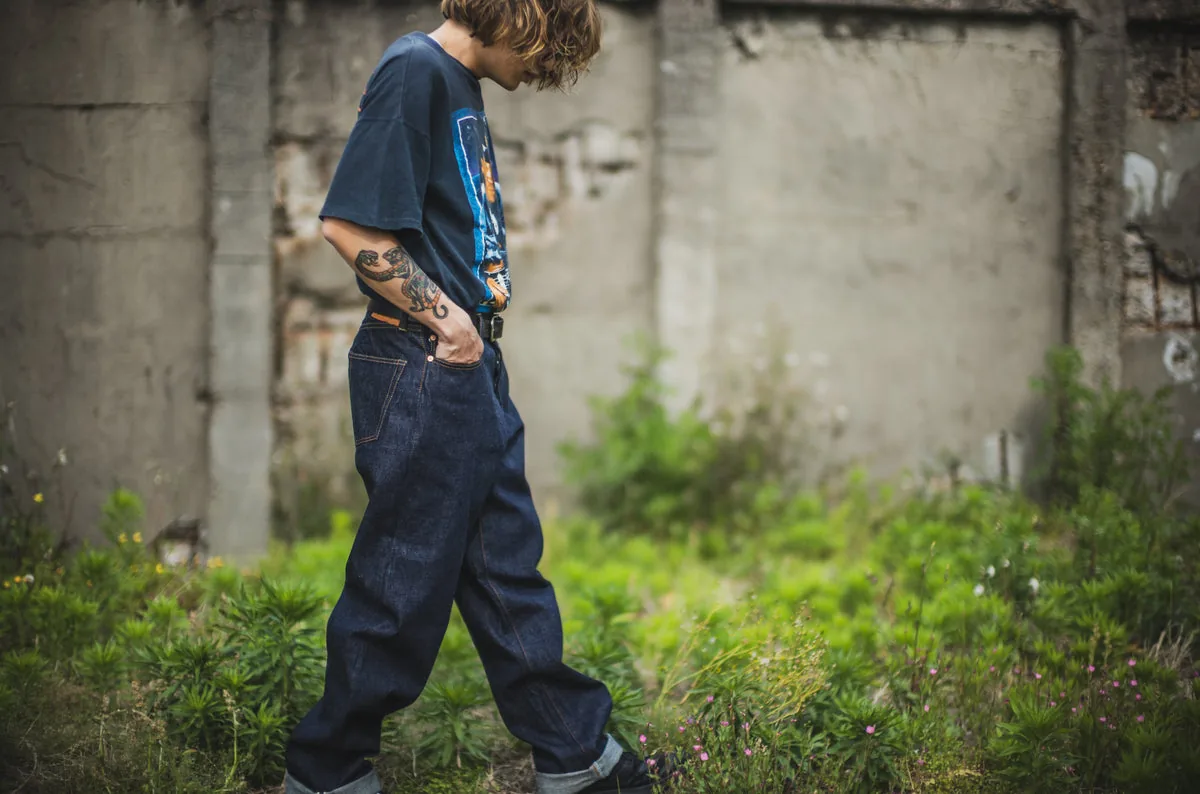
These reproductions have expanded from original Levi's to producing high-rise trousers not as a trend, but as a commitment to original construction: Bryceland's (1945 U.S. Army chino spec), The Armoury (Ring Jacket army chino with one-piece waistband and button fly), Jack Donnelly (M2, explicitly modeled on WWII U.S. army chinos), Buzz Rickson's (1942 and 1945 model reproductions), RRL (officer chino), Drake's (high rise, side adjusters, full leg), and more. Some reproduction brands will purposely incorporate flaws in the original designs as a mark of authenticity. The Japanese reproduction aesthetic is a phenomenon I wouldn't become aware of for at least another decade.
The incredibly cool @l.l.wood in Japanese reproduction styles, demonstrating how sweet high-rise aesthetics can be.
Making Peace with High-Waisted Pants
This is the context in which I grew up. Born in the 1990s, the pop culture of my childhood emphasized ultra-low-rise jeans with exposed underwear for women and sagging jeans with exposed underwear for men. As a kid, my mom bought me husky jeans that fit at my hips that I wore every day with a braided leather belt. In middle school, I hung out with skateboarders who had adopted sagging jeans as part of their subculture. I convinced my mom to buy me JNCO jeans, which I wore around my butt, showing my underwear, despite the woven nylon Spitfire brand belt that I wore to keep them in place.
As I grew up, I stopped sagging my pants, but I continued to wear my jeans the same way I did my entire life - at my hips with a belt. It had never even occurred to me that there was another way. The only exposure I had to high-waisted pants during my childhood was when we visited my grandfather. He had a huge belly that made him the perfect St. Nick for our community every Christmas season. He would walk around his house in a sweat-stained white undershirt, charcoal trousers up past his belly button, and suspenders on. I've never seen him wear a jacket; that was the whole outfit. He would often yell, "Pull up your britches," when he'd see me sagging in my baggy jeans. He would only listen to the "golden oldies" - The Four Tops, The Temptations, The Beach Boys, etc.
The Grandpa Problem
My entire life, this has been my association with high-waisted pants. An old, obese man who was always in his underwear and a dirty shirt, who definitely said things like "kids these days," and if he had any neighbors, would have definitely yelled at anyone who got near his lawn. The way my grandfather looked and carried himself was not who I wanted to be or the aesthetic I would ever strive for.
In 2003, Tina Fey debuted a skit on SNL called "Mom Jeans," a parody commercial that joked about how unflattering high-waisted jeans were. Mom jeans embodied the woman who had given up on attractiveness - frumpy, unfashionable, and simply out of touch. "When you've given up, given up, put on your Mom Jeans," the jingle espoused. High-waisted pants had become a joke. Only old, unfashionable people would wear such a thing. That had always been my perception as well.
Over the next decade, ultra-low-rise jeans fell out of fashion, replaced by standard low- to mid-rise jeans. Popularization of the skinny jean pushed waistlines slightly higher to elongate the silhouette, and brands like American Apparel and Topshop rehabilitated the "Mom Jean" label - transforming it from a fashion punchline to a woman's essential. The term "Dad jeans" entered the zeitgeist in 2009 when Barack Obama wore a pair of high-waisted Levi's to the MLB All-Star Game and was mocked for it.
My interest in Japanese denim and the Japanese commitment to painstaking craftsmanship - along with the global resurgence of high-waisted silhouettes - has finally piqued my interest enough to put time into understanding them. While I previously dismissed high-waisted pants because I perceived them as associated with older people, frumpy, and generally unfashionable, I now struggle with them for other reasons. I have a complicated relationship with my body, and I'm now finding that high-waisted trousers feel like a cut that is designed to fit my body instead of fitting despite my body. High-waisted trousers don't solve my self-image issues, but they have helped me to re-frame how I see myself. Suddenly, my silhouette makes more sense. However, finding pants that actually fit is still a struggle. I carry most of my weight in my stomach and have an otherwise proportional body. My hips, where I have worn my pants my entire life, are 32 inches. For high-waisted pants to fit over my belly button, I would need to size up considerably, to a 40, for a comfortable fit. Sizing up to such a drastic extent is a massive mental hurdle that I struggle to overcome as someone with body image issues. I have not yet been able to accept the fact that I need pants four sizes bigger than I normally wear. A high-rise is defined as a front-rise over 12.5 inches, but rises can vary from this 12.5-inch mark, sometimes up to 19 inches, in some vintage reproductions. But for me, it has to sit at or above my belly button. If the pants are any lower than my belly button, they will slip from the gap at the bottom of my stomach to my hips. Even a belt can't overcome this issue, though perhaps suspenders could alleviate this. It is complicated to find specific pants that fit exactly where I need them to without falling. It also means I'm not comfortable purchasing pants online without trying them on.
"How can you live the high life if you do not wear the high heels high-waisted pants?" — Sonia Rykiel
Finding Pants That Fit
Additionally, finding quality pants from brands I know I like has been a struggle. Japanese heritage brands that demonstrate the level of craftsmanship I appreciate do not make waist sizes large enough for my stomach. Knowing that very few Japanese brands make pants large enough to fit me has certainly not helped my self-image issues. Bronson tops out at 38 in every cut I've tried, and I haven't been able to button any of them. I had my eye on a pair of orSlow fatigues for a long time, but the size charts indicate that they're not for me, with their largest size maxing out at a 36.5-inch waist. I got the opportunity to try them on in person and ended up buying their largest size, XXL, even though they barely button, and I cannot wear them for an extended period due to the discomfort. As much as I love these pants, it was an emotional impulse purchase that was made as a refusal to accept my body for how it is.
So far, the only high-waisted pants I have found that fit my stomach and have a flattering silhouette are the barrel pants from Uniqlo. I hope to get my hands on a pair of vintage Polo Ralph Lauren Andrew pants in the near future as the next step in my exploration. While I have developed a newfound appreciation for high-waisted pants, I am still working to make them work for my body. Considering they've been around since the 8th century BCE, I figure high-waisted pants can wait for me to catch up. My quest will go on.