It was the most willing of fibers, it was the least willing of fibers, it was the age of the mordant that bit, it was the age of the mordant that found nothing to bite, it was the epoch of the bond, it was the epoch of the washout, it was the season of color, it was the season of bare cloth, it was the spring of the reactive side chain, it was the winter of the smooth and the inert, we had bonding sites before us, we had none before us, we were all going direct to the dye bath, we were all going back out of it the same color we went in…
Cotton is the most widely worn natural fiber in the world. The family of fibers it belongs to is, in the language of chemistry, the least cooperative with dye. In my last piece, I covered the three types of natural dyes: vat, mordant, and direct. This week, I'll discuss the differences between cellulose and protein fibers and how the makeup of these fibers determines which type of dye can bond to them.
Why Cotton Resists Natural Dyes
Cotton, linen, and hemp are all types of cellulose — a polysaccharide made of thousands of glucose units linked together. Cellulose is the primary structural component of plant cell walls, providing rigidity that enables plants and trees to grow tall and withstand environmental stress. At their molecular core, these three fibers are the same polymer. The differences between them come down to their crystalline structure and length, which we will touch on later.
Cellulose chains run parallel to each other and pack tightly. Along each chain, the –OH groups at specific carbons reach across to form hydrogen bonds with oxygen atoms on adjacent chains and also fold back to bond with their own chain. This structure creates a dense, interlocking hydrogen bond network that stabilizes the entire crystalline structure.
The result is a surface where most of the chemically reactive sites, the ones that could, in principle, bind a metal ion, are already engaged. They're pointing inward, bonded to neighboring chains, not outward where a metal ion in solution could reach them.
The ones that are exposed on the outer surface don't have the right geometry for metal coordination. Chelation requires an electron-donor site with a specific spatial arrangement. The metal ion needs to fit into a pocket where two donor atoms can grip it at predictable angles. Cellulose's surface –OH groups are isolated single donors, too far apart and too geometrically constrained by the chain structure to form the kind of grip that stable metal chelation requires.
So what does all of this mean, practically? Essentially, it means that dye molecules cannot bond with cotton. How could that be possible though, given that civilizations have been utilizing and dyeing cotton for thousands of years? Well, these civilizations didn't know they couldn't dye cotton. They discovered a method for dyeing cotton that chemistry couldn't explain until the 19th century.
How Tannins Make Cotton Dyeable
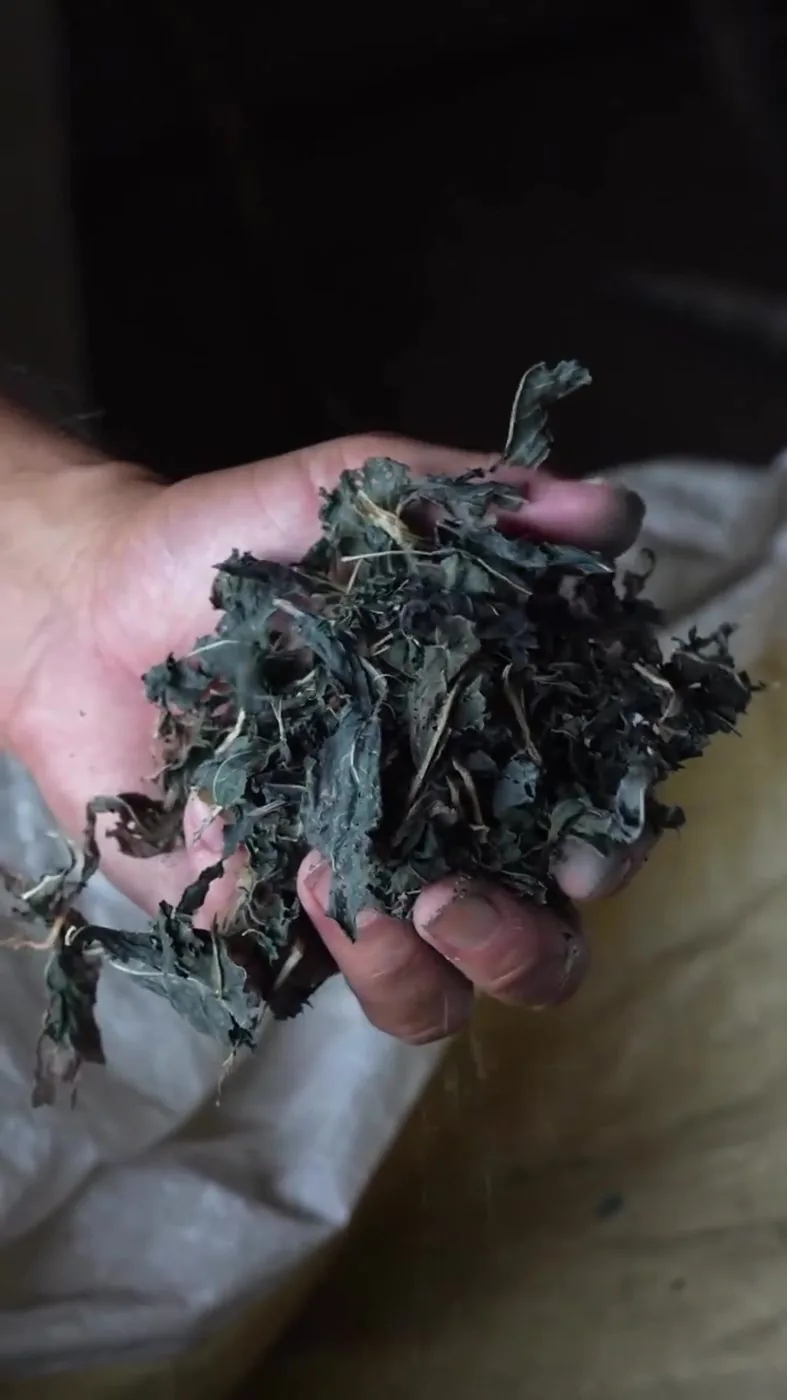
It turns out that to dye cotton, you need an intermediate called a tannin. Tannins are a class of polyphenolic compounds found widely across plant matter, in bark, leaves, fruit rinds, and seed pods. The name comes from their traditional use in leather tanning, where the same chemistry that makes them useful in dyeing also helps preserve animal hides. What they share, regardless of source, is a molecular structure built around multiple phenolic hydroxyl groups arranged on a flexible scaffold.
That structure is what makes them useful on cellulose. In a tannin bath, those hydroxyl groups form hydrogen bonds with cellulose's exposed surface sites. These aren't strong bonds individually, but formed simultaneously across multiple contact points, they are collectively stable enough to hold. The tannin deposits onto the fiber surface as a coating, projecting its phenolic groups outward rather than inward. Those outward-projecting groups carry something cellulose's own surface doesn't: the geometry that metal ions can actually grip. The mordant bath follows. Iron or aluminum chelates onto the tannin, not the cellulose beneath it. The dye chelates to the metal and is indirectly bound to the cellulose fiber.
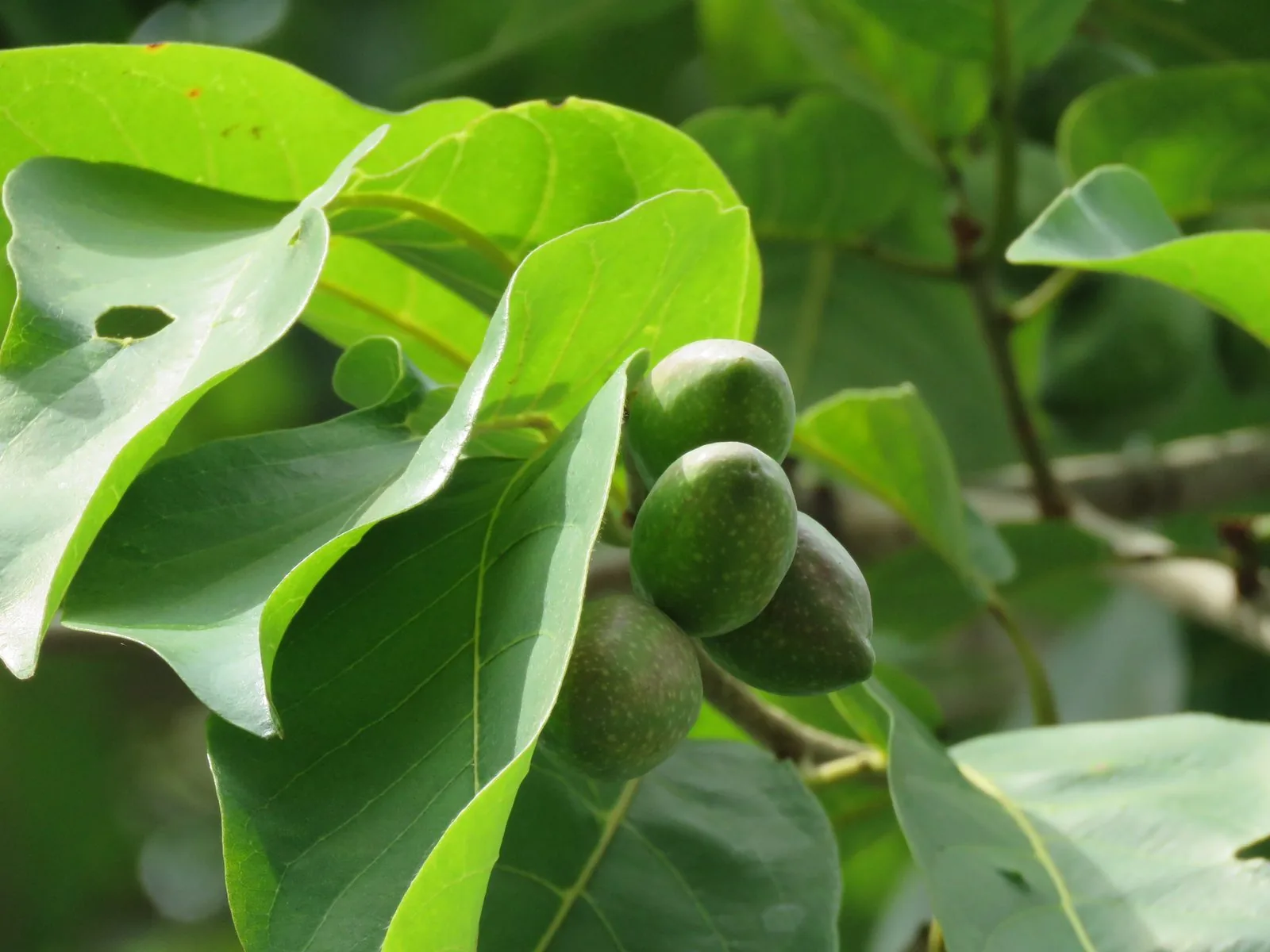
Among the oldest documented examples of this practice is the Indian myrobalan tradition. Myrobalan fruit, Terminalia chebula, contains among the highest concentrations of tannins of any plant source, and its use as a cellulose pretreatment before mordant dyeing has been practiced in India for centuries. Myrobalan also produces color in its own right, yielding warm yellow-browns on cotton with a fastness that would have been conspicuous against the fugitive behavior of other plant dyes on cellulose. The pretreatment function was almost certainly discovered through dyeing practice. Myrobalan was used first as a dye, its exceptional holding power noticed over generations, and eventually the tannin step was separated and applied before a different dyestuff entirely. There are almost certainly earlier, less documented examples. But myrobalan is where the record begins.
The Kalamkari textile tradition of Andhra Pradesh, an ancient Indian style of hand-painted or block-printed cotton textile art that uses natural dyes, is built on the three-link chain of cotton-tannin-mordant. Cotton cloth is first treated in a myrobalan bath, embedding tannins in the fiber surface before any dye or mordant is introduced. Once the pretreatment is set, artisans apply Kasim Kaaram, an iron solution prepared by fermenting rusted iron filings with cane jaggery and water for roughly three weeks, directly to the tannin-treated cloth. The iron ions react with the embedded tannins to form ferrous tannate, a stable, insoluble compound that develops not on the surface of the fiber but within it. Kalamkari dyers arrived at this sequence through accumulated practice, not through any understanding of chelation or polyphenolic deposition. The vocabulary is centuries older than the explanation.
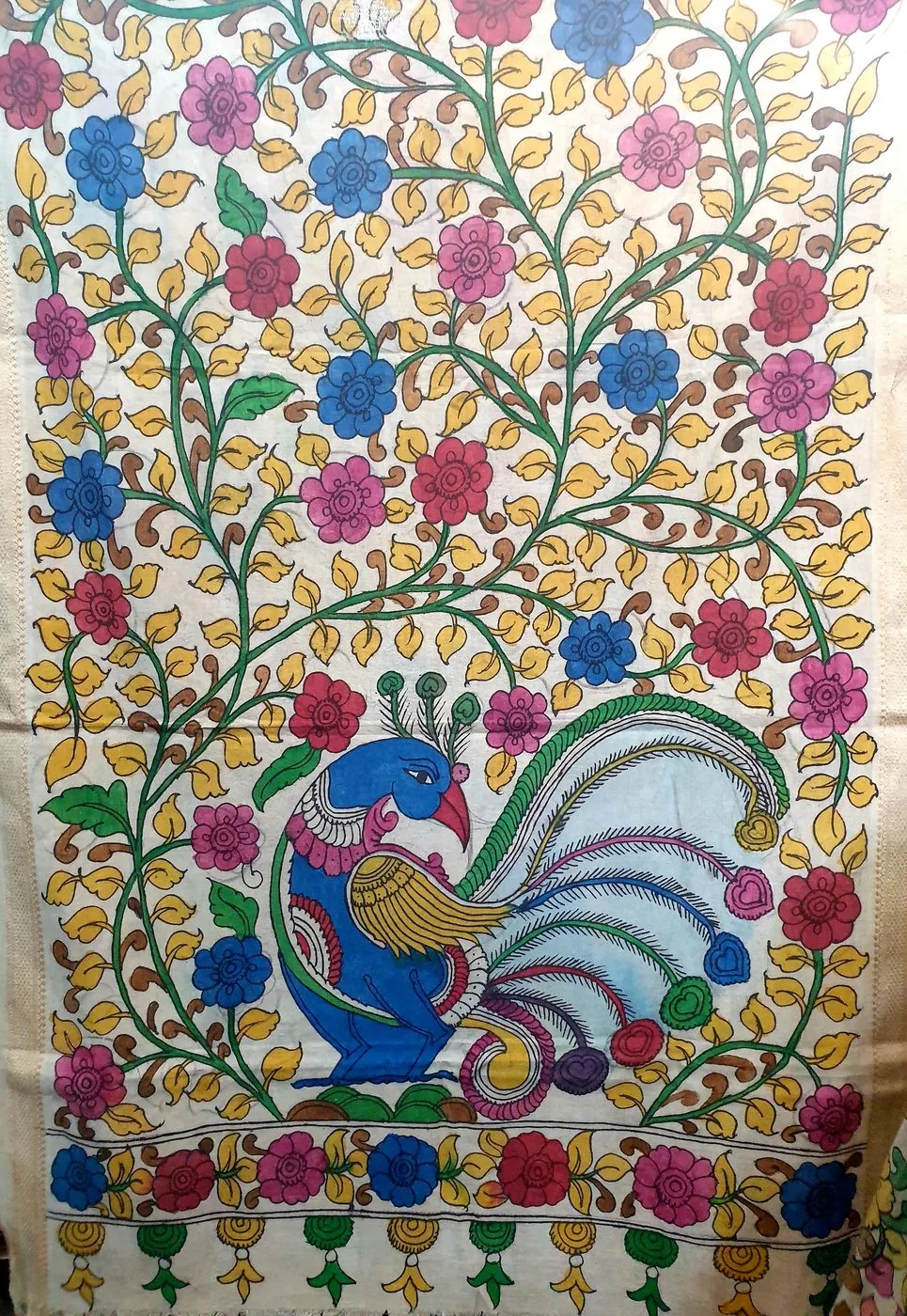
Tannin-containing plants were used as dyes across many traditions without the pretreatment function being consciously separated. Walnut in Rome, oak gall across the Mediterranean and Near East, sumac across Central Asia. In each case, the tannin and colorant are both present in the same plant material, and the dyer is getting both effects simultaneously without necessarily knowing it. The separation of the tannin pretreatment from the dyeing step was itself a discovery, arrived at through generations of noticing which colors held and which didn't.
The differences in how dyes are accepted between different members of the cellulose family come down to the crystal structure of each fiber. Crystallinity refers to how tightly the cellulose chains pack together and how much of the available hydroxyl surface is locked in internal hydrogen bonding. Higher crystallinity means more –OH groups are occupied internally, and less surface is available for external interactions.
Linen (flax) has the highest crystallinity of the three, around 80–90%. Its cellulose chains pack very tightly, which is why linen is stiff, strong, and slow to soak up moisture compared to cotton. Hemp behaves a lot like linen: high crystallinity and similarly stiff, strong fibers. Cotton has somewhat lower crystallinity, roughly 70–80%, which is why it feels softer in the hand and absorbs water more readily than linen.
Because linen and hemp are a bit more crystalline, they're also slightly more resistant to mordant dyeing than cotton, as there are fewer easy-to-reach sites on the fiber surface for dye chemistry to grab. In practice, the difference is small, which is why you usually see all three discussed together as cellulose fibers rather than as three separate stories.
None of this — the tannin, the fermented iron, the three centuries of Kalamkari trial and error — would have been necessary if cotton had been built differently. Cellulose chemistry isn't hostile to dye so much as indifferent to it. Getting color to stay meant developing a surface that cellulose doesn't naturally have.
“A great textile, like the William Morris Strawberry Thief, is a piece of art, but it takes a lot of time to make a piece of art. It isn't simply design either. You have to understand the fabrics and what they can bear. You have to understand the dyeing process and how to achieve certain colors and what will make the color last through the ages. If you make a mistake, you might have to begin again.”
— Gabrielle Zevin, Tomorrow, and Tomorrow, and Tomorrow
Why Wool and Silk Hold Color So Well
Wool and silk don't have the same problem, though having a reactive site is no guarantee that a dye will react with it. Alizarin and carminic acid are mordant-class dyes at heart: chelation molecules built to grip a metal ion, indifferent to whatever amine or carboxyl group happens to be sitting on the fiber surface waiting for it. Mordant dyes will still prefer to have a mordant present, regardless of the fiber used.
Wool and silk are proteins, not polysaccharides. Instead of repeating glucose units in long, regular chains, they're made from amino acids, folded into far more irregular, far less crystalline structures than cellulose ever forms. Where cellulose offers a monotonous run of –OH groups, protein fibers are studded with a whole alphabet of side chains: amine groups, carboxyl groups, sulfhydryl groups. Each has different geometry, charge, and willingness to bond. Crucially, some of these groups stick out from the fiber surface on their own without any tannin pretreatment needed. The chelation sites are already there, waiting; unlike cellulose, where cotton, linen, and hemp are the same molecule with different crystal structures, wool and silk aren't the same protein at all. Wool is keratin, silk is fibroin. These structurally unrelated fibrous proteins happen to have reactive side chains facing the right way.
It would be tidy to say protein fibers need no pretreatment at all. That isn't quite true, but it's a completely different story than tannin or mordant pretreatment.
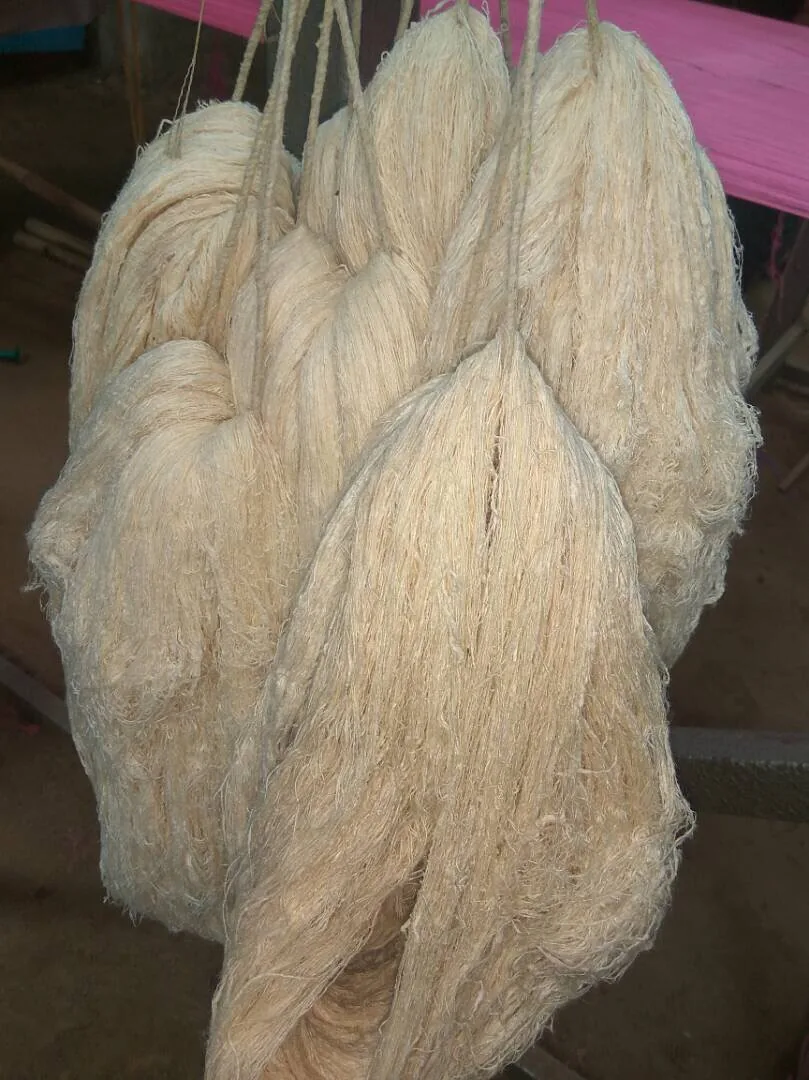
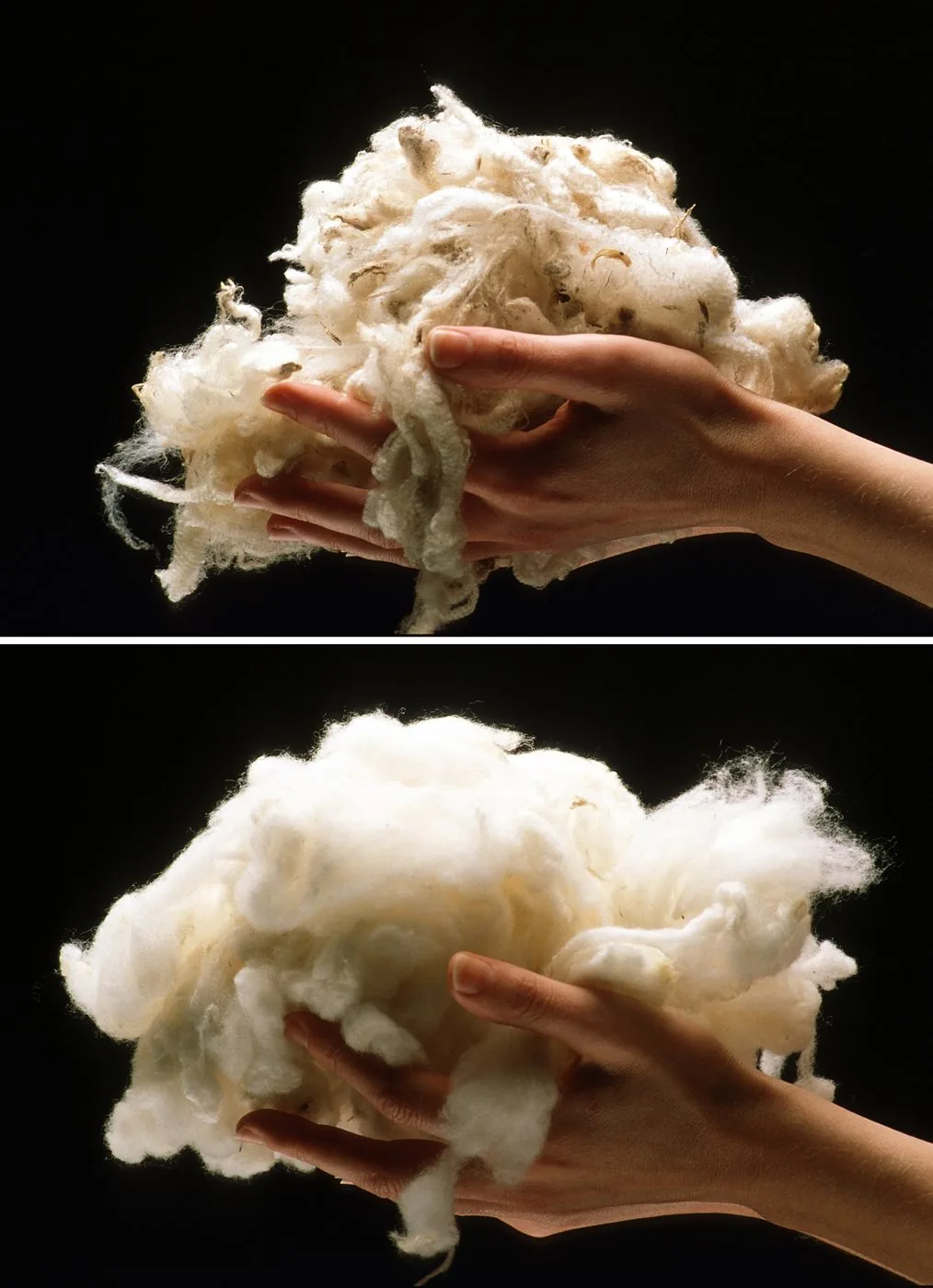
Raw wool comes off the sheep coated in lanolin, a waxy secretion from the sebaceous glands that can account for a quarter of the fiber's weight, plus dried sweat, dirt, and whatever else got caught in the fleece. Raw silk is worse in one sense: the fibroin filament, the actual protein you want to dye, arrives wrapped in sericin, a gum that can make up nearly a third of the thread's mass, laid down by the silkworm to glue the cocoon into a solid shell. Neither fiber can take a dye in that state. Wool has to be scoured with a gentle alkaline wash. Wool is alkali-sensitive and can't tolerate much more than a gentle wash. Silk has to be degummed by boiling in a hot soap bath until the sericin dissolves away and the underlying fiber shifts from stiff and dull to soft and lustrous.
This is a different kind of pretreatment than the tannin bath cotton requires. Tannin gives cellulose something it doesn't have: a layer of phenolic groups on the surface with the right geometry to grip a metal ion, engineered onto a fiber that wasn't meant to hold ions. Scouring and degumming, by contrast, remove what's in the way. The amine groups, the carboxyl groups, the sulfhydryl groups are already there, already correctly shaped, already waiting under the grease and the gum. Cellulose's problem was structural: no reactive site ever pointed in the right direction. Protein fibers' problem is more akin to a denimhead who keeps his 21oz Iron Hearts on in the middle of summer and can only walk when he needs to run.
What Determines Colorfastness in Natural Dyes
Everything up to this point has been about whether a bond forms. It's worth mentioning what happens after the bond forms, because "the dye is attached" and "the dye stays attached" are not the same.
Textile chemists don't measure color-holding as one property. They measure it across a few distinct stresses, and a dye can pass one and fail another entirely:
- Lightfastness — resistance to UV breaking down the dye molecule itself
- Washfastness — resistance to the bond releasing dye into water
- Crocking or rubfastness — resistance to dye transferring by plain friction, no water involved (this is the process that sheds indigo from denim)
Cellulose, dyed through the tannin-mordant chain, is structurally worse off on nearly all three counts — not because the dyestuff itself is fragile, but because the dye sits three links removed from the fiber. Dye to metal, metal to tannin, tannin to cellulose: every additional link is another interface for water, friction, or sunlight to work on. A direct bond has one thing that can fail. A three-link chain has three.
Protein fiber's chain is one link shorter: dye to metal and metal to fiber. That's the structural reason wool and silk have historically held color at a depth cellulose struggles to match, independent of which specific dyestuff is involved. Fewer joints means fewer failure points.
This isn't the mechanism behind your own jeans fading. Indigo is a vat dye, and it never chemically bonds to cotton. It's reduced to a soluble, colorless form, worked into the fiber, then oxidized back into an insoluble pigment that's mechanically trapped inside the cotton rather than bonded to it. That's an even weaker hold than the tannin-mordant chain, which is exactly why indigo crocks and abrades so readily, and why a pair of raw denim fades precisely along the lines that take the most friction. It's the extreme case of the same rule: the further a dye sits from a true bond with its fiber, the more visibly and specifically it loses that color over time.
It's the difference between a red that fades into memory and a red that outlives the person wearing it
The difference between cellulose and protein isn't trivial. It's why certain colors in textile history belong so specifically to certain fibers; why some of the deepest, most guarded reds and purples in the historical record were built almost exclusively on wool and silk, not cotton. A fiber that already has a place for dye to grip can hold color at a depth and permanence that cellulose, even when mordanted, rarely reaches. It's the difference between a red that fades into memory and a red that outlives the person wearing it — the kind of color that got written into sumptuary law, that started wars over trade routes, that a handful of families guarded as a livelihood for generations.
In two weeks, the series turns to exactly that: cochineal, madder, kermes — the reds and crimsons that protein fiber made possible, and the artisans still working with them today, mixing insects and roots and centuries-old recipe books against a textile industry that mostly forgot how any of this worked. Protein gave us the color worth fighting over.