

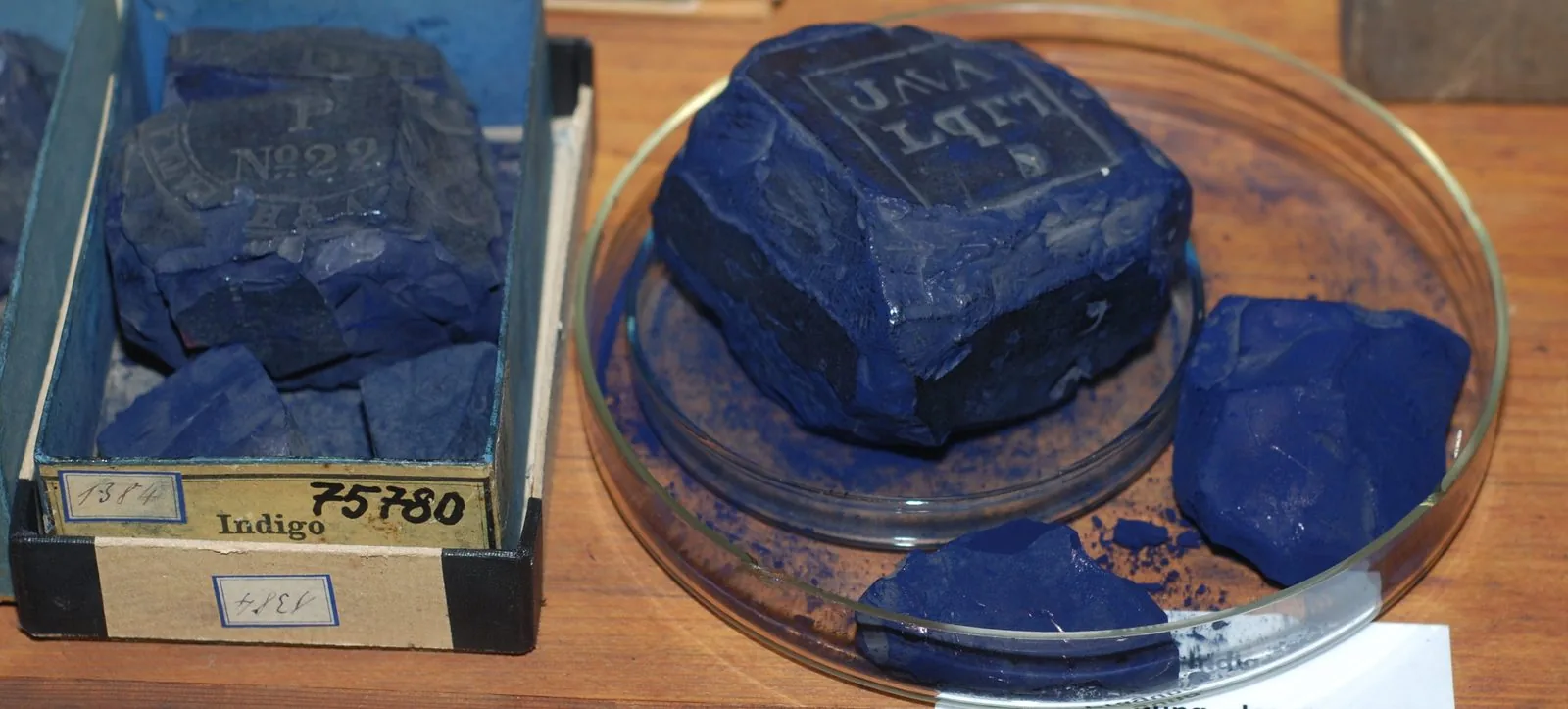
Indigo comes out of the vat pale and yellow-green. Within minutes of hitting air, it turns blue right in front of you — the reaction underneath every pair of raw denim. Scroll to watch it happen, stage by stage.
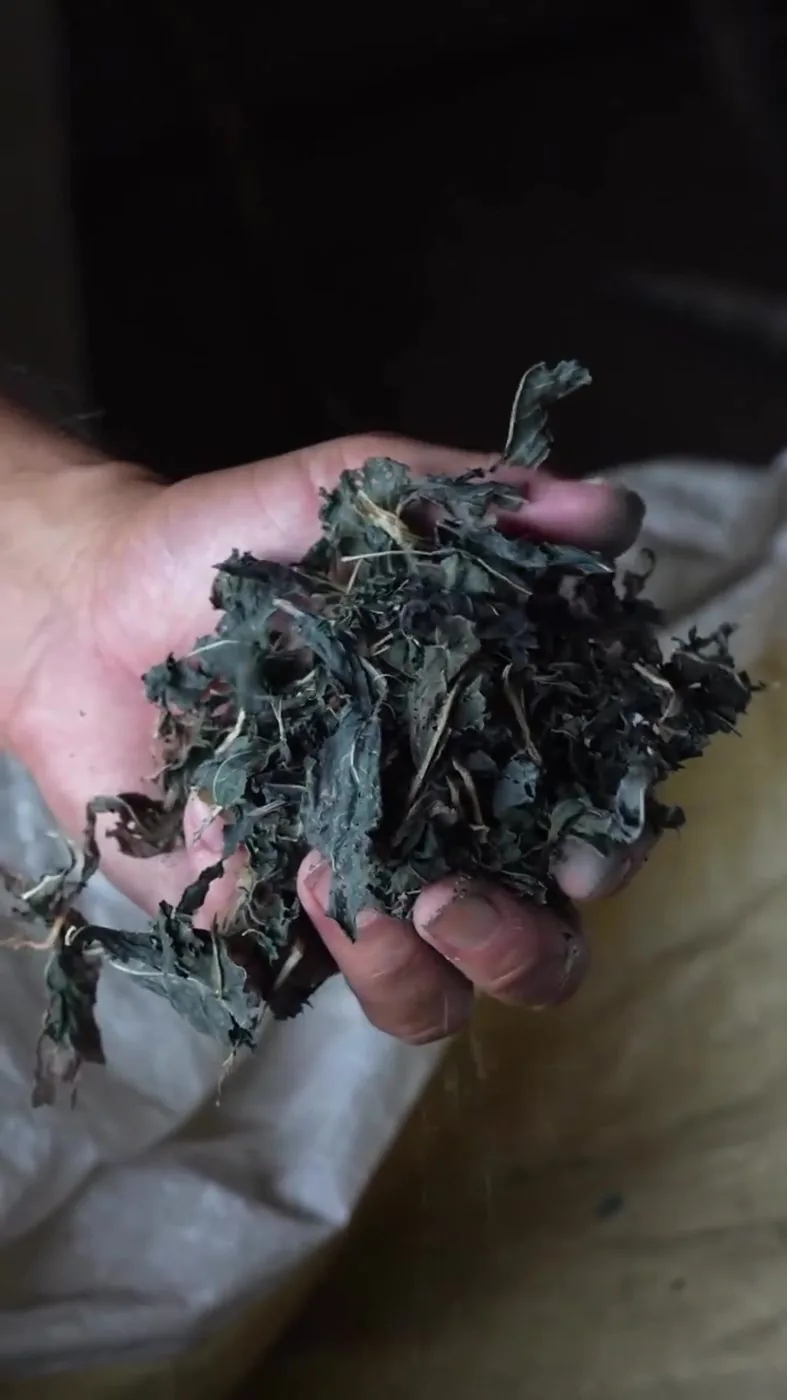 Dried indigo, before the vat
Indigotin is a stable, insoluble crystal. Dump the powder in a tub with cloth and nothing happens. It has nothing to dissolve into.
An alkaline vat, kept alive by bacteria, strips electrons from indigotin and collapses its crystal structure into leuco-indigo, a pale, yellow-green compound that's finally soluble.
Pulled out and exposed to oxygen, the cloth turns from yellow-green to teal to blue in minutes, as leuco-indigo re-oxidizes back into solid indigotin, visibly and in real time.
Indigo never forms a chemical bond with the fiber. It's mechanically trapped, mid-collapse from soluble back to solid. That's why it takes 10 to 50 dips to get real depth of color, and it's the same reaction underneath every pair of raw denim you own.
Read Part One →