In 2010, Esquire sent reporter Abram Sauer to the mall with a tape measure. He bought “size 36” pants from five different stores and measured the actual waistbands. The worst offender came in at 41 inches — a full five inches of flattery sewn into the size tag. That was more than fifteen years ago, but the underlying problem hasn’t gone anywhere. It has just gotten more expensive.
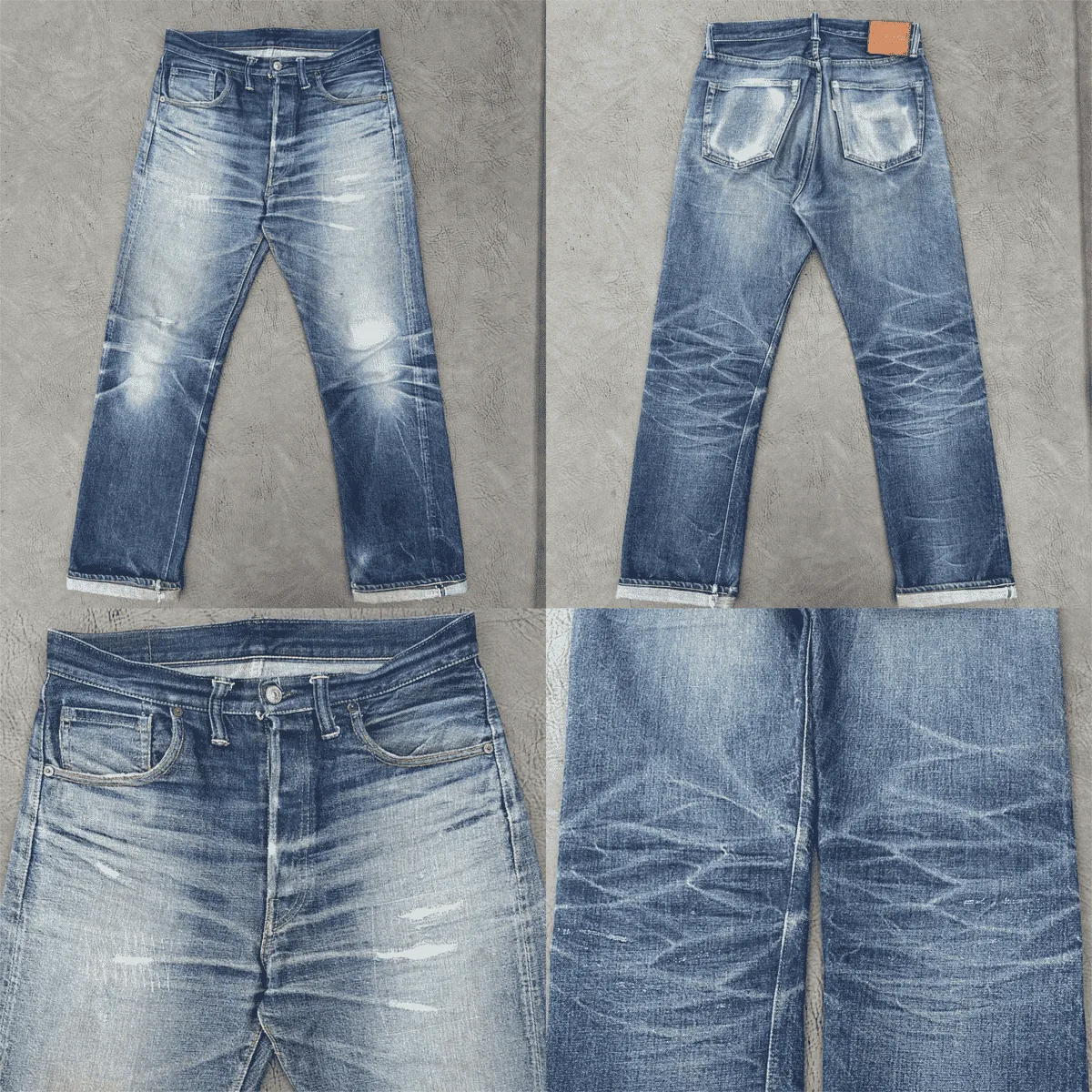
A tagged 34 in unsanforized loomstate cloth might measure 36 at the waistband because it’s expected to shrink. A tagged 34 in a slim cut might measure a true 34 and punish you for believing your mall size. Across the database I’m about to describe, a size 34 is measured anywhere from 31 inches at the actual waistband to 38 inches. Same number on the tag, seven inches of disagreement in the cloth.
That’s why it’s so important to measure garments instead of trusting labels, and it’s why every serious denim shop publishes measurement charts. But those charts live on a thousand separate product pages, in inconsistent formats and methodologies, and they vanish when the product sells out. The knowledge exists; it’s just not accessible.
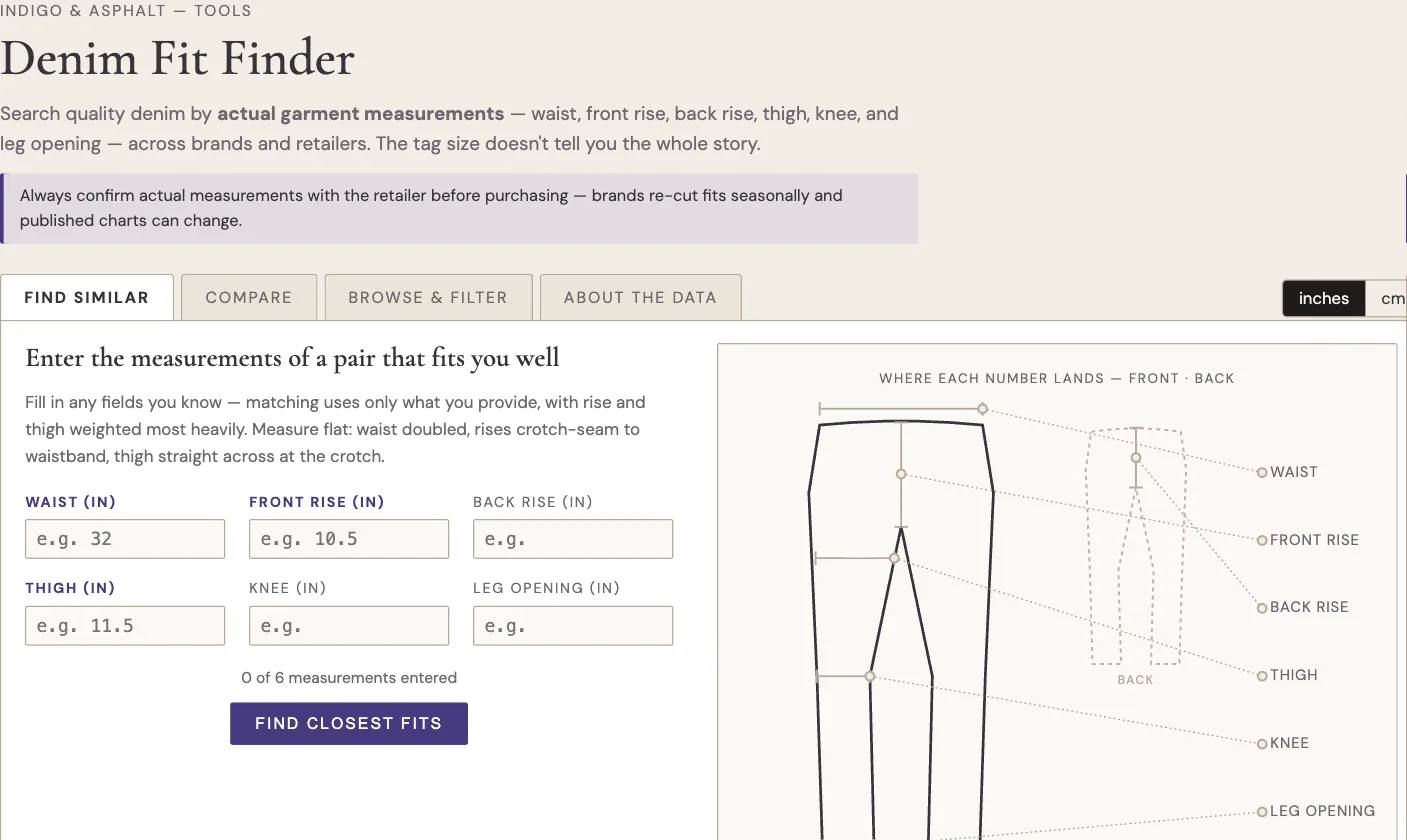
So I built the thing I wanted to exist: the Denim Fit Finder. It’s a free, searchable database of actual garment measurements — 293 models and all their sizes across 50 brands as of this week — with no affiliate links or ads.
What’s Actually in the Fit Finder
Every row is a real measurement of a real garment, published by a retailer who put tape to cloth: waist, front rise, back rise, thigh, knee, leg opening, inseam, per tagged size. Nothing is estimated, interpolated, or crowdsourced.
The database draws from two kinds of sources: retailers that measure garments in-house and brands that publish complete measurement charts. Each model is assigned a single designated source, so the measurements remain internally consistent rather than mixing different methodologies.
That distinction matters. Self Edge measures thighs one inch below the crotch seam, while Okayama Denim measures directly at the seam. Neither approach is wrong, but averaging the two would create a number nobody actually measured. Every row links back to its original source so you can verify the data yourself.
Sold-out and archived cuts stay in the database on purpose, because most of the time you’re not matching what’s in stock this week — you’re trying to match a pair you already own.
How to Use the Fit Finder
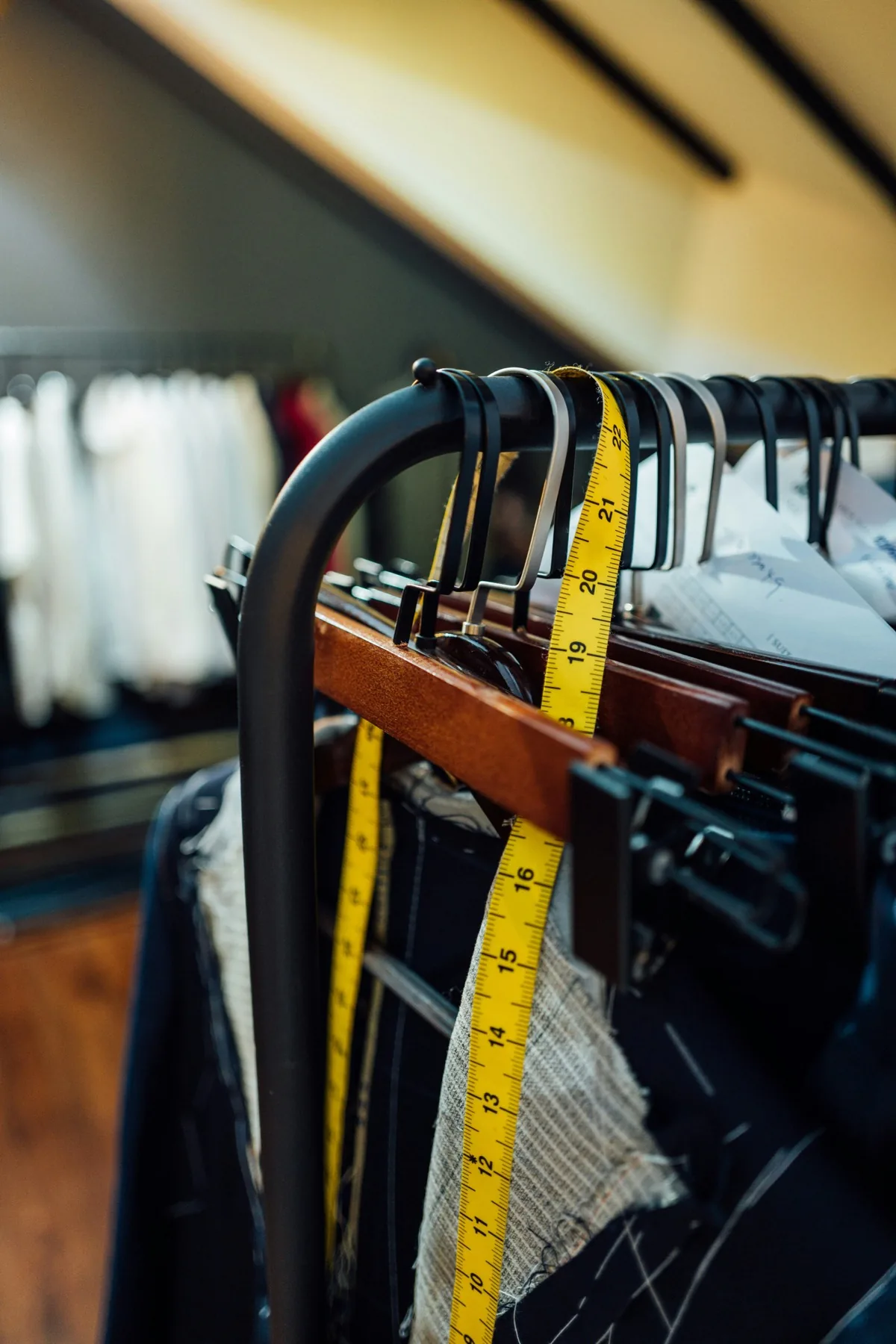
Using the Fit Finder starts with the pair of jeans that already fits you best. Grab a tape measure, lay the jeans flat, and record the handful of measurements that matter: waist, front rise, back rise, thigh, knee, leg opening, and inseam. Ten minutes later, you’ll know more about how your favorite pair fits than you ever will from a size tag.
The tool has three ways to explore the data.
Find Similar is the heart of it. Enter the measurements of a pair you already own, and every cut in the database is ranked by how closely it matches. Rise and thigh carry the most weight because they’re the hardest dimensions to alter and often determine whether a jean works at all.
Compare puts up to four cuts side by side, highlighting where they differ. It’s the quickest way to see whether two jeans that look similar on paper actually fit the same way.
Browse & Filter lets you explore the entire database by brand, cut, or measurement range. Whether you’re searching for a roomier thigh, a higher rise, or simply wondering who still makes your favorite silhouette, it’s all there.
One limitation to keep in mind: unsanforized fabrics are listed pre-shrink, exactly as the source measured them. The tool does no shrink modeling, because shrink varies by fabric, water temperature, and how brave you are with the dryer. The entry is noted as unsanforized when so described in the product description.
Grab a tape measure and try it on a pair you already own.
Try the Denim Fit Finder →What Building It Taught Me
The biggest thing this project taught me is that I spent years asking the wrong question. I kept asking, “Which brands are good for bigger guys?” The better question is, “Which measurements work for my body?” Once you realize your favorite jeans aren’t special because they’re made by Brand X but because they have a 12-inch front rise and a generous thigh, shopping gets dramatically easier. The search becomes less frustrating and a lot more successful.
The Rules Governing the Data
The database follows a few rules that I don’t bend.
Measurements are never averaged between sources. Every model uses one designated measuring source, because combining charts with different methodologies creates numbers that were never actually measured.
Missing data stays missing. If a retailer doesn’t publish a back rise, the database leaves it blank instead of estimating.
Questionable measurements stay visible but are flagged. The goal isn’t to “correct” published data — it’s to document what was published while making potential issues transparent.
Finally, every row includes both the source URL and the date it was last verified. Fits change over time, and stale data should never pretend to be current. There’s now a changelog on the “About the Data” tab, too, so you can see exactly what was entered into the database and when. Since the site went live on Sunday, I’ve added about 900 new rows across two retailers and two direct-to-consumer manufacturers.
What the Database Says About the Customer Base
Collecting this much data also exposed something I think most of us knew, but is important to call out: the market simply isn’t built for everyone.
Of the 293 models currently indexed, 40 percent stop at a tagged size 38 or smaller. Only 19 percent reach a 42, and just one model in the entire database goes to a tagged 50.
But the numbers tell a more nuanced story than “brands don’t make bigger jeans.” They also reveal how dramatically fits differ within the same tagged size. A size 34 can have anywhere from a 10-inch to a 16-inch front rise, and thigh measurements vary by more than four inches. The sizing cliff is a real problem for bigger guys, but so is the escape route: wider cuts and generous rises are available, they’re just scattered across multiple websites that no one has compiled.
Where We Are Going
In the near term, new updates will be made roughly bi-weekly, each documented in the changelog. The request line is open. If there’s a manufacturer or store you want cross-indexed, send an email (fitfinder@indigoandasphalt.com) or leave a comment, and if they publish real measurements — or a shop that carries them does — I will add them to the backlog. This week’s additions all started as reader suggestions.
The Fit Finder is already useful, but I don’t think it’s finished. A few of the improvements I’m working toward:
Ratios. Thigh-to-waist and rise-to-inseam ratios say a lot about how a cut will sit on a bigger frame. The data to compute them is already in every row; the interface for filtering by them isn’t built yet.
Deeper coverage of the gaps the data exposed. The 42-and-up shortlist is embarrassingly short. Documenting it properly, and pressuring it to grow by talking about who patterns generously, is a goal of mine.
Keeping the verify dates honest. Re-verification passes on the oldest rows will happen quarterly. A confidently wrong number is worse than no number.
Enhancing the user experience. The UI for the compare tab is a little clunky at the moment, and I’m exploring avenues for visualization that make it easier to interpret. I’m also working to allow comparison between different sizes instead of being locked into comparing garments of the same tagged size.
What the Fit Finder is not: a shop, a price tracker, or a database of user-submitted estimates. No affiliate links, no sponsored placement in the results. If a number is in the database, it’s because a retailer or manufacturer measured the garment and published it, and you can follow the link to check their work.
The Fit Finder is free and lives at indigoandasphalt.com/fit-finder. If it saves you from one expensive mistake, there’s a tip jar. More valuable than that, though, is your feedback. Please send any and all bugs, issues, refinements, or future ideas to fitfinder@indigoandasphalt.com.
Reference tools only become trustworthy when people try to break them. That’s how this one gets better.