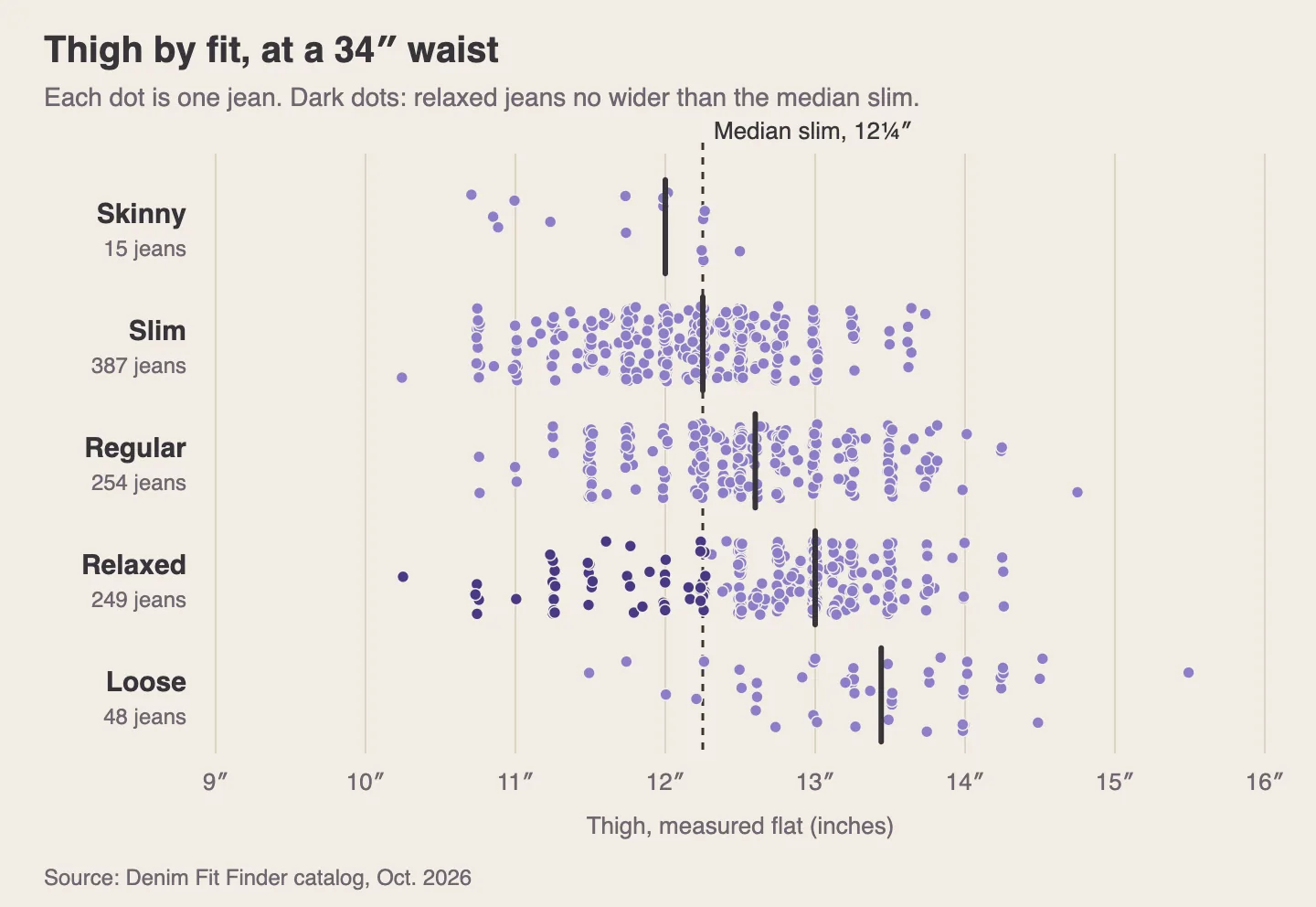
In developing the Denim Fit Finder, I scoured forums to understand the sizing problems men encounter when shopping for jeans. Two questions kept appearing: “Which brands make denim for men with waists over 40 inches?” and “Which jeans work best for men with large thighs?” I addressed the second question a few weeks ago, so this article tackles the first.
I assumed a major denim publication had already answered this question thoroughly, but found surprisingly little. Heddels addressed it in a 2017 FAQ, offering two recommendations: bespoke denim or Ubi-Ind, a small San Francisco brand.
Today, Ubi-Ind sells selvedge denim aprons rather than jeans and has become a kitchenware brand called Mi Cocina. The aprons may be selvedge, but they do not answer the sizing question men are asking.
This analysis focuses on jeans with a measured waist of at least 42 inches, while also examining the sharper drop-off among models measuring 44 inches or more. I use measured waist circumference, not the size printed on the tag, as the primary benchmark. The options are sparse, but they exist, and one brand clearly leads the field.
Materials and Methods
The data comes from the Denim Fit Finder, a database I assembled from published garment measurements. At the time of publication, the database consists of 12,608 sizing records covering 1,431 models from 123 brands. A model is one specific garment as the brand sells it, so a different fabric, fit, rise, or leg shape counts as its own model. Different colorways of the same model are lumped together, assuming they all measure the same.
For this analysis, I focused on measured waist size instead of trusting the tag size. As I discussed in my previous post, the size tag never tells the full story. The size tag is often used as a marketing and vanity tool, so one can’t reliably take manufacturers at their word.
My first draft relied on tagged sizes and would have claimed that eight brands offered 22 models reaching a 44-inch waist. The measurements show otherwise. Thirteen of those models measure less than 44 inches at the waist in the size labeled 44. Warehouse & Co.’s Lot 900XX, for example, measures only 40 inches at the waist in its tagged size 44. Recommending it to someone with a 44-inch waist would have been seriously misleading.
The reverse happens too. Twenty-four models without a tagged size 42 still include a pair measuring at least 42 inches at the waist. A list based on tags alone would miss viable options and recommend undersized ones.
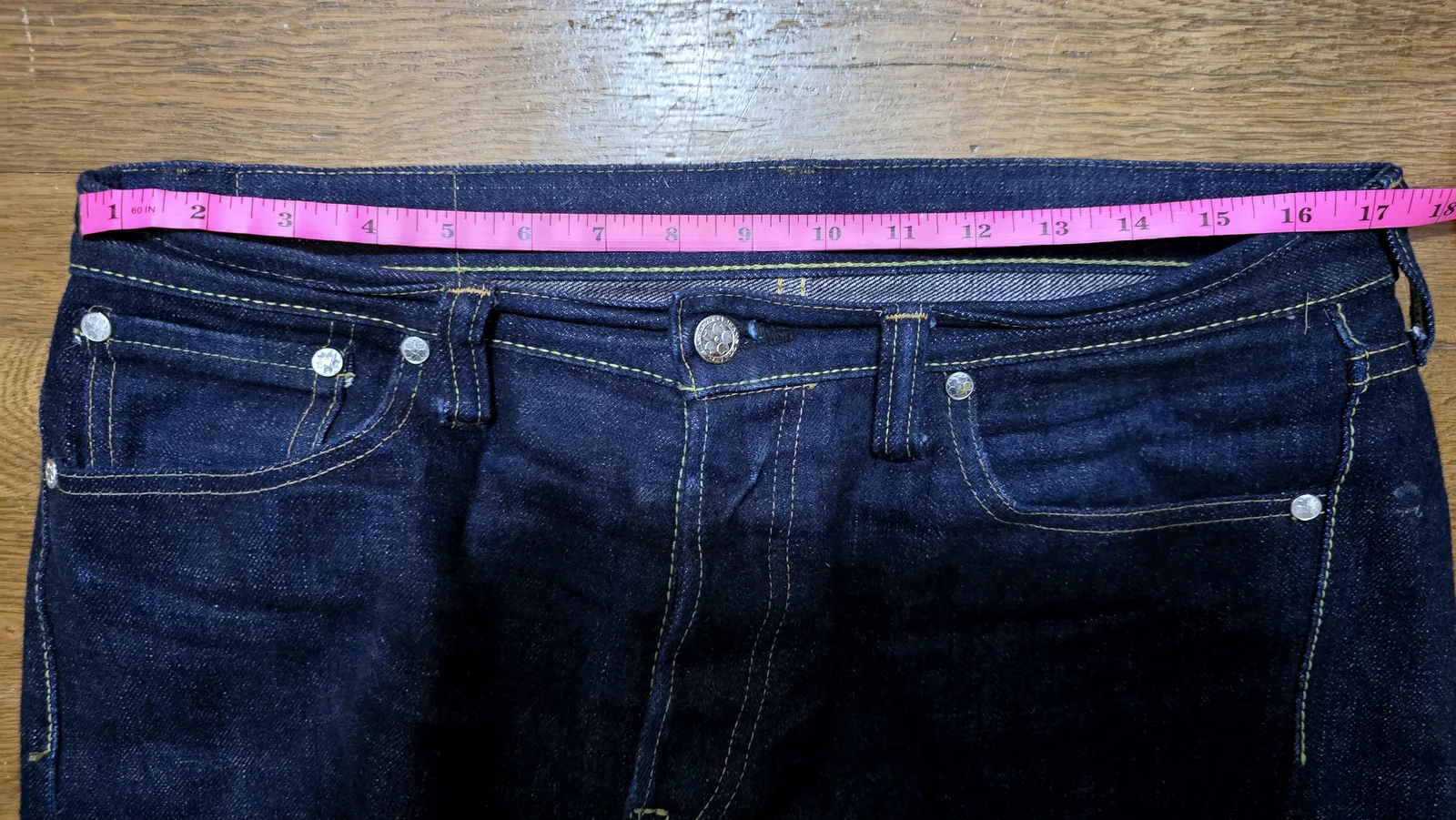
The tables below use the garment measurement as the brand or retailer publishes it: across the top of the waistband with the jeans laid flat and unstretched, doubled to estimate the full waist circumference. These measurements describe the garment, not a guaranteed body measurement or fit recommendation. Rise, waistband shape, fabric stretch, and individual body shape all affect fit.
Fit Finder now classifies every model as men’s, women’s, or unisex. This analysis includes only men’s and unisex models so the dataset matches the audience and does not distort the comparison with categories outside its scope. It also counts only five-pocket jeans, leaving out overalls where the waist isn’t measured the same way. That leaves 1,205 models, and every percentage below is a share of those 1,205.
The shortlist reflects models documented in Fit Finder, not necessarily styles that are in stock today. Availability changes by season, retailer, production run, and size. However, the Fit Finder App can alert you when these models come back in stock.
↑ Table of ContentsThe Sizing Cliff in Numbers
The question is simple, but the answer is hard to stomach, especially for those of us with a big stomach. At a 40-inch waist, 424 models in the database remain viable. At 42 inches, that number drops to 190, a decline of about 55 percent. At 44 inches, only 33 remain, another decline of about 83 percent. The available range does not taper gradually. It falls off a cliff after 42 inches.
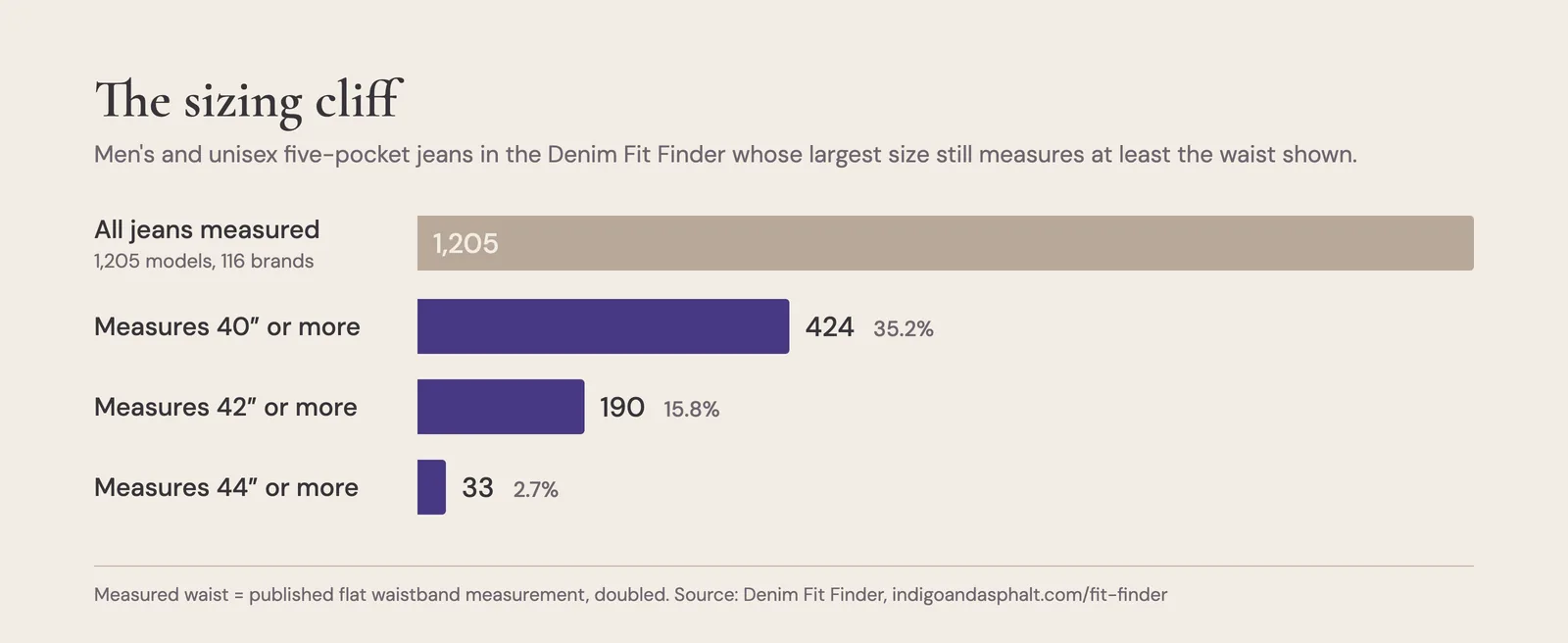
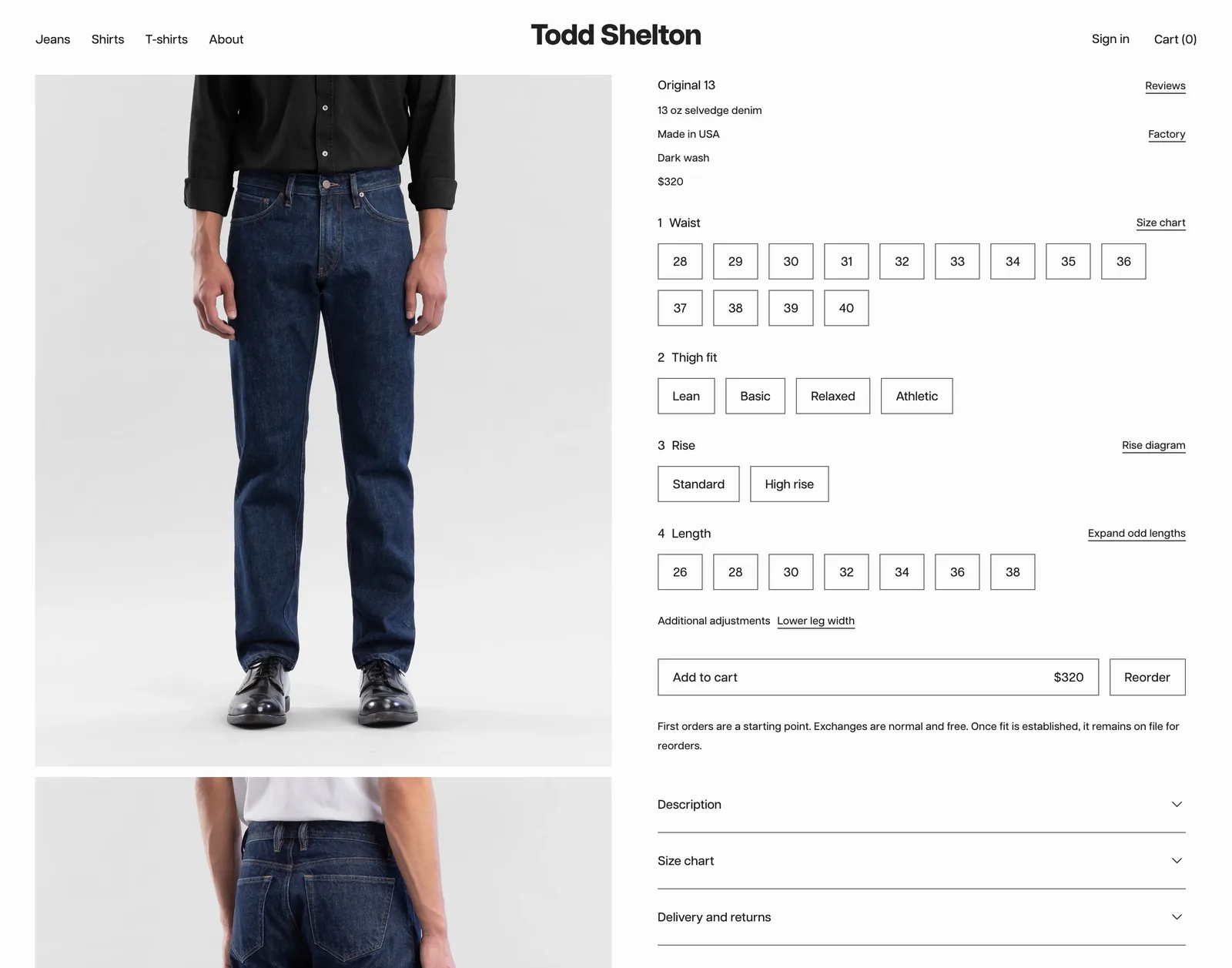
Only 15.8% of the models in this dataset reach a measured waist of at least 42 inches. Todd Shelton accounts for more than a third of that category, with all 72 models reaching 43.5 inches. The brand is a clear outlier and materially lifts the category’s overall share. Without their inclusion, the share drops to 10.4%.
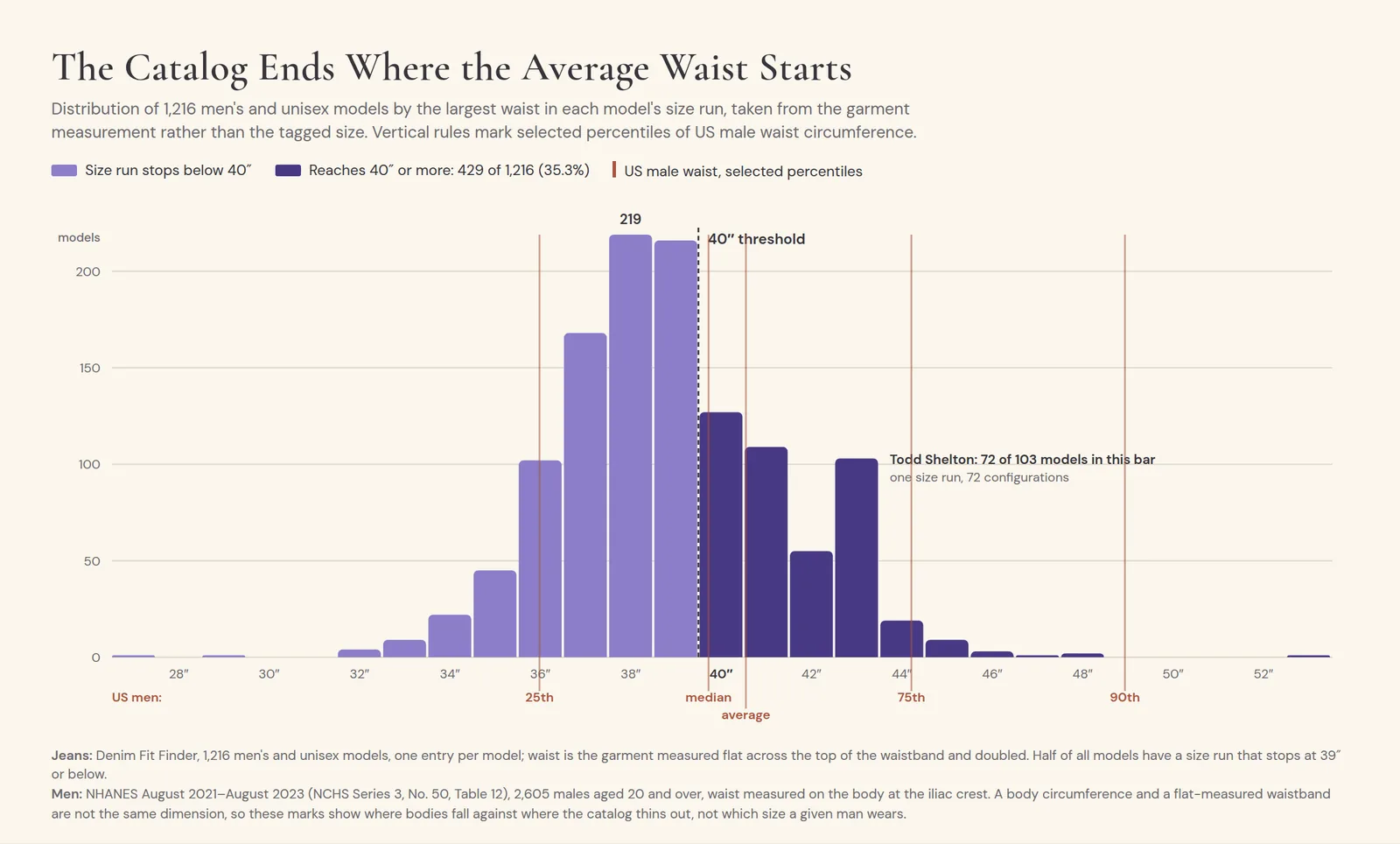
To make sense of the data, I researched what American men’s waists actually measure. NHANES, the CDC’s health survey, assessed 2,605 men between 2021 and 2023 and determined an average waist of 40.6 inches. That measurement was taken at the hip bone, so it isn’t directly comparable to a waistband laid flat and doubled. Even so, the average American man has already passed two-thirds of this catalog.
Why the Sizing Cliff Exists
This isn’t prejudice against bigger guys, as much as it feels like it sometimes. A brand builds its sizing run around the customers it expects to have, and every size past the middle of that run costs real money to add. It requires another pattern grade, more fabric per pair, another size to cut and stock, and eventually mark down when it doesn’t sell. Brands keep extending the sizes as long as the next size up pays for itself, and they stop when it doesn’t. A 42″ or a 44″ sits far enough out that it stops paying early, which is why the drop is so steep.
That explains the cliff, but it doesn’t necessarily explain why one brand quits at 36, and another goes to 50. To answer that, you have to understand who the brand was building around in the first place.
American brands draft for American bodies, and the American middle sits further up the tape. As shown above, the average American male’s waist measures 40.6 inches. Railcar, Unbranded, Brave Star, Todd Shelton, and Warp + Weft all show up in the tables below with most or all of their catalog clearing 42. To them, a 42 is an expected size in their market.
Japanese heritage brands are drafting for a domestic market where that curve sits several inches lower, and many are still reproducing mid-century patterns cut for a smaller body. The ones that do turn up below are one-offs, or close to it: ONI’s qualifying pair is tagged 40, and so are the ones from Fullcount, Big John, The Strike Gold, and Studio D’Artisan. Those are top-of-run sizes that happen to measure big.
Keep that in mind when you read the tables. Twenty-six brands make a jean that measures 42 inches or more, but they aren’t twenty-six equivalent options.
↑ Table of ContentsThe Shortlist: 42 Inches and Up
Some of the links below are affiliate links. If you buy through one, I may earn a small commission at no cost to you.
Of the 116 brands here that publish measurements, 26 brands make a jean that measures 42 inches or more. Nine brands reach 44 inches. Every pair in both tables is collected on one Fit Finder page, the 42-and-up list, with the full measurement chart for each.
| Brand | Largest model, measured | Tag on that model | Documented models at 44″+ | Notes |
|---|---|---|---|---|
| Railcar Fine Goods | 53″ (Switcher X130) | 50 | 3/3 | Spikes and Rebels both measure 48″. Every Railcar model in the database clears 44″. |
| Unbranded | 47″ (UB701 Wide Fit) | 44 | 6/7 | UB101/201/601/801 all measure 45″ to 46″. Six of seven models. |
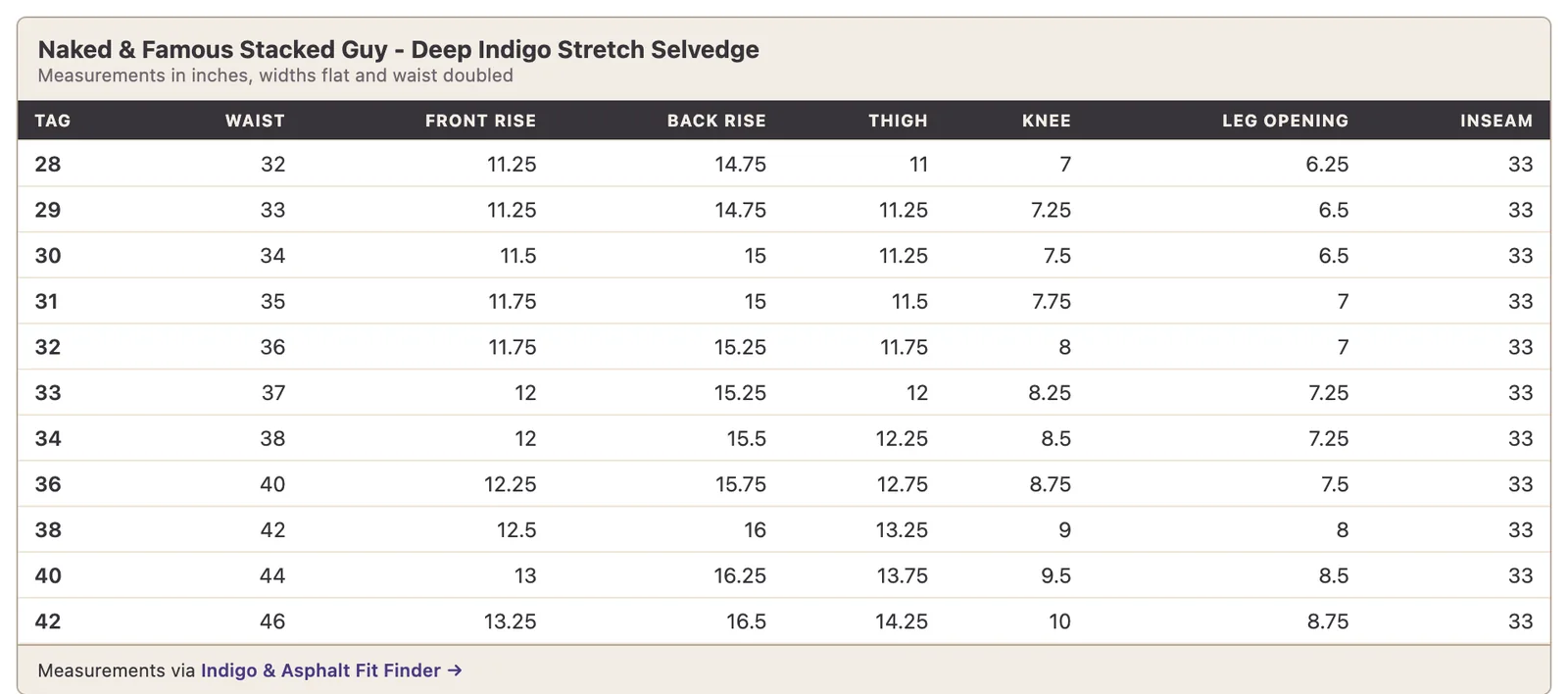
| Naked & Famous | 46″ (Stacked Guy) | 42 | 5/11 | Runs a consistent 4″ over tag. Its "42" is a 46. |
| Warp + Weft | 45.25″ (GRR Relaxed) | 42 | 2/3 | Consistent 3.25″ over tag across the run. |
| Brave Star Selvage | 45″ (Panhead Buckle Back) | 42 | 12/15 | Twelve of fifteen models clear 44″. Runs 3″ over tag. |
| Samurai Jeans | 45″ (S310XX19ozII) | 44 | 1/53 | |
| Tellason | 45″ (Ankara Straight Leg) | 44 | 1/8 | |
| Pure Blue Japan | 44.5″ (SLB-019 Relaxed Taper) | 42 | 1/72 | |
| Momotaro | 44″ (MMJZ6403 #100 Straight) | 42 | 2/77 |
Source: Denim Fit Finder, measured garment waist, as of September 22, 2026.
| Brand | Largest model, measured | Tag on that model | Documented models at 42″+ | Notes |
|---|---|---|---|---|
| Todd Shelton | 43.5″ (Original 13) | 42 | 72/72 | Every configuration in the catalog. One size run across 72 fabric/fit/rise/leg combinations. |
| Omoto Denim | 43.5″ (0412) | 42 | 4/18 | |
| Okayama Denim | 43.3″ (OD+PBJ 18oz "Super Rough Kakishibu") | 42 | 6/53 | |
| Studio D'Artisan | 43.3″ (45th Anniversary "Hinode-Awa") | 40 | 3/67 | Tagged 40, measures 43.3″. |
| Manresa | 43″ (207R) | 42 | 2/2 | Two-model catalog, small sample size. |
| Drake's | 43″ (Five-Pocket Jeans) | 42 | 2/2 | Two-model catalog, small sample size. |
| Iron Heart | 43″ (634s 21oz Indigo Selvedge) | 44 | 6/61 | The six "44s" measure 42″ to 43″. |
| The Flat Head | 43″ (FN-D111 14.5oz Selvedge) | 42 | 1/24 | |
| Kojima Genes | 42.5″ (RNB102RZIND Straight Zip Fly) | 42 | 2/2 | Two-model catalog, small sample size. |
| 3sixteen | 42.5″ (x Samurai for Self Edge SEXSX3s27-02) | 44 | 4/21 | Tagged 44, measures 42.5″. The tag overshoots by an inch and a half. |
| ONI Denim | 42.5″ (642-13BK "Jet Black" 13oz) | 40 | 1/73 | Tagged 40. |
| The Strike Gold | 42.25″ (2105 Brown Weft Slim Straight) | 40 | 1/21 | Tagged 40. |
| Big John | 42.25″ (M1012RC 66 GR Label Wild Duck) | 40 | 1/24 | Tagged 40. |
| Fullcount | 42.25″ (1108SSW Slim Straight) | 40 | 1/52 | Tagged 40. |
| Left Field NYC | 42″ (Greaser 16oz Low Tension) | 42 | 6/11 | |
| Hiroshi Kato | 42″ (10.5oz Indigo Stretch Selvedge) | 40 | 2/5 | The biggest tagged size is 40, but it measures 42″. |
| Stevenson Overall Co. | 42″ (714 Valencia Jean) | 40 | 2/9 | Never prints a 42; the 40 delivers one. |
Source: Denim Fit Finder, measured garment waist, as of September 22, 2026.
There are three answers, depending on your priorities. Railcar Fine Goods is the best overall choice as a high-quality, made-to-order denim maker, with every model allowing sizing past 44 inches. The Unbranded Brand is the best value, with six of seven models past 44 at roughly half of Railcar’s price, while Brave Star Selvage offers the broadest middle ground, with twelve models to choose from. Start with those three, then confirm the measurements for the specific model before buying.
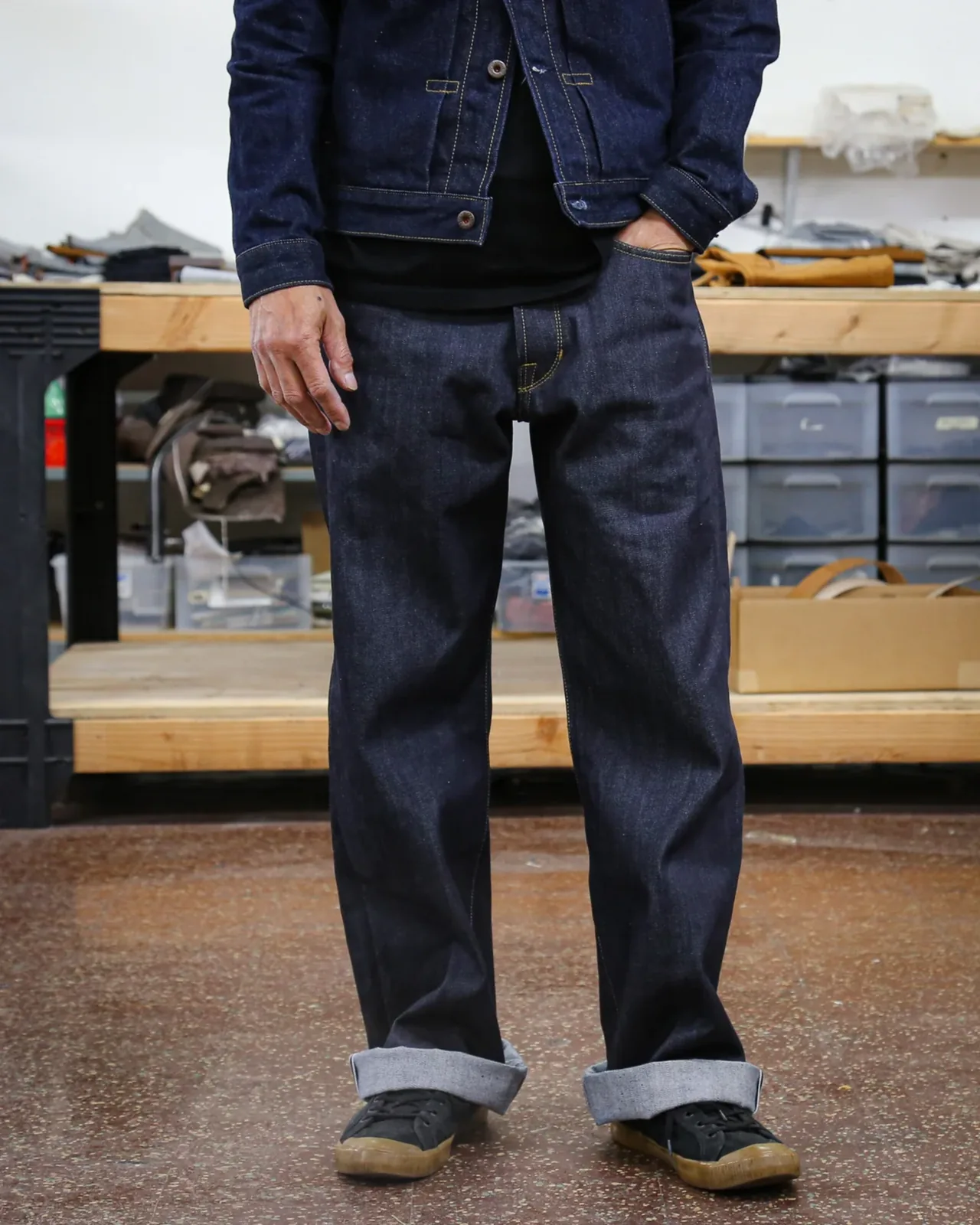
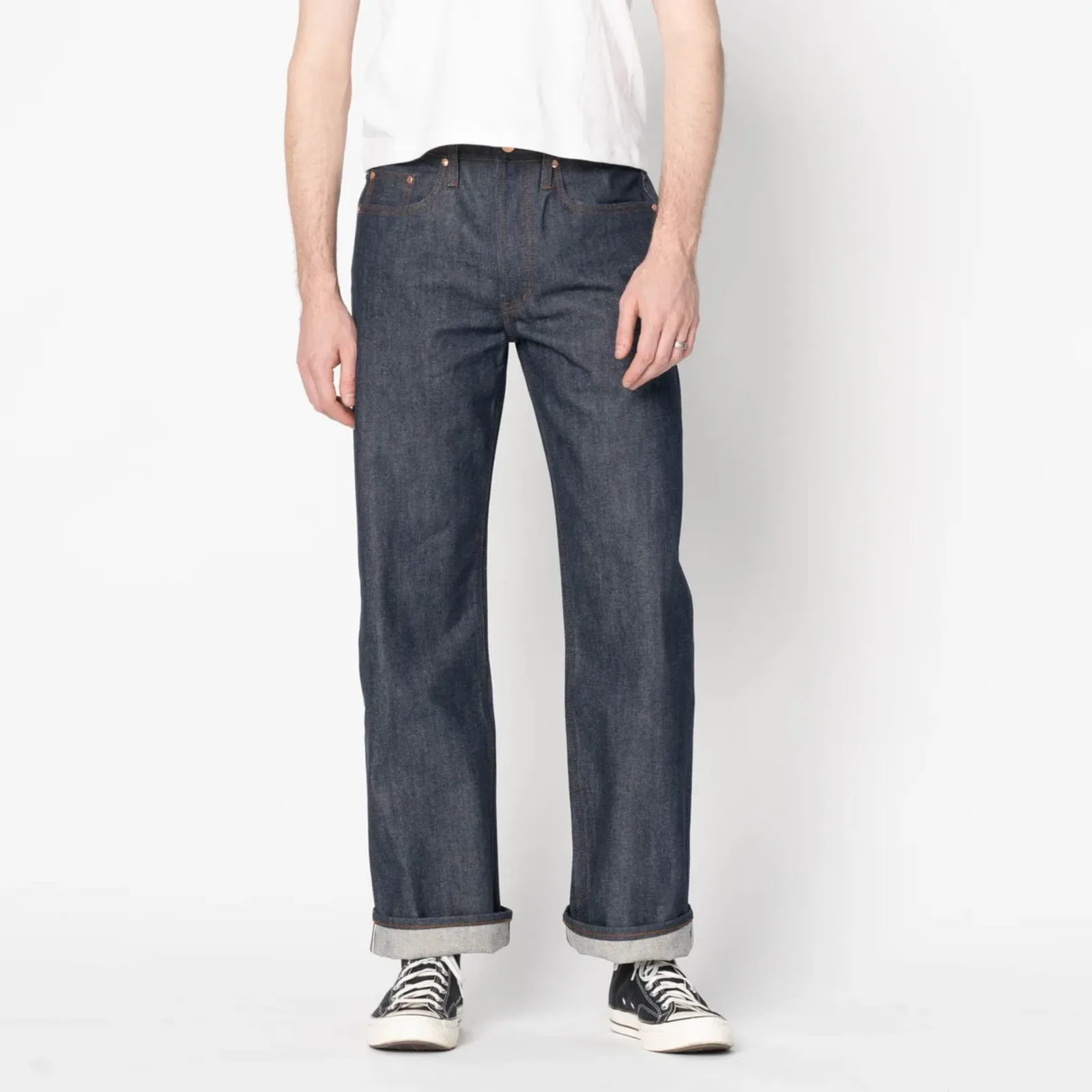
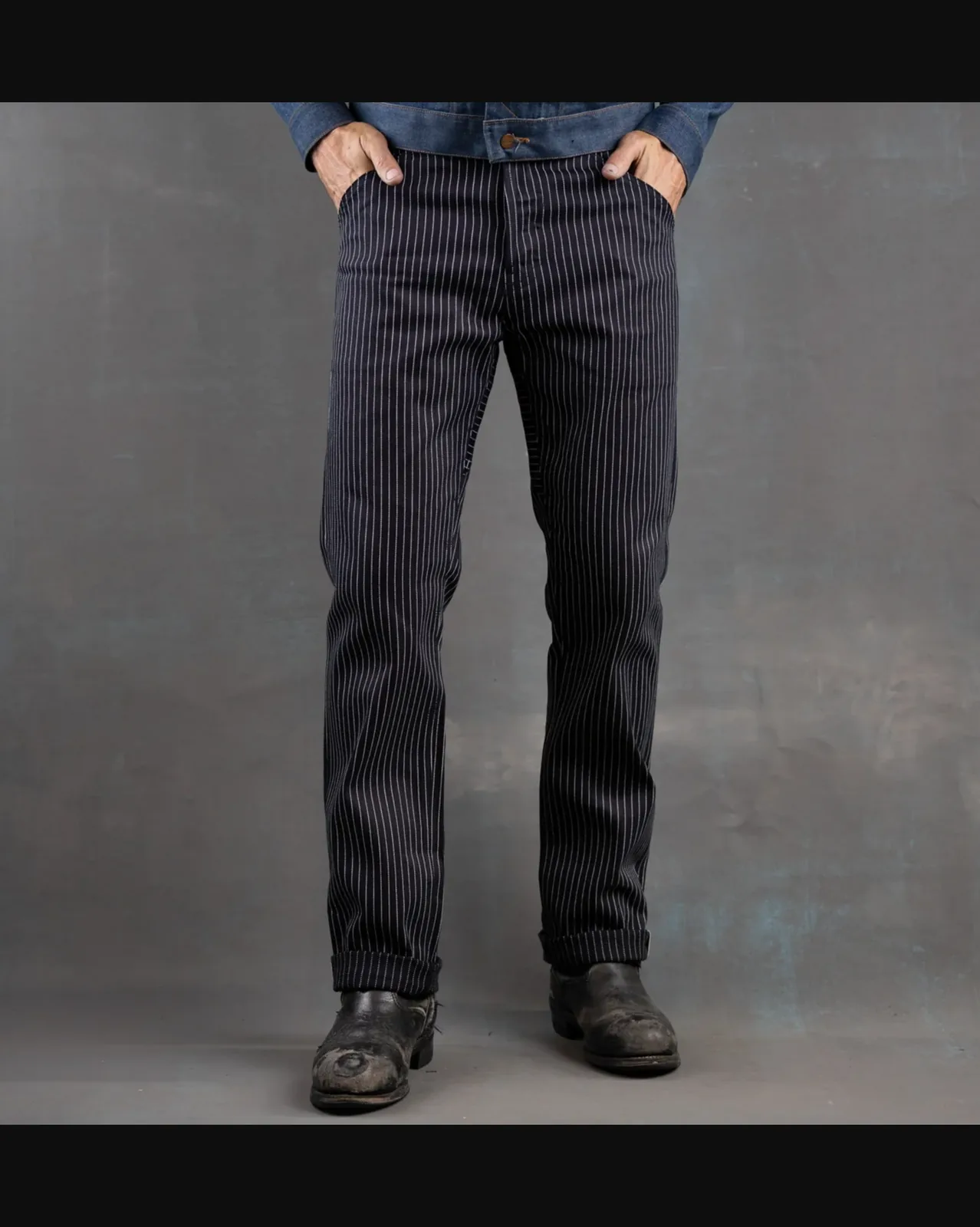
One budget lead I cannot verify, since the full measurement charts aren’t posted, is Ben Davis Carpenter Jeans. Not the flagship “Original Ben’s,” which runs up to 60 inches and is a 50/50 poly-cotton twill. The polyester alone rules those out for me. The Carpenter line is 100 percent cotton, 14oz denim, and Ben Davis’s own chart lists waists from 30″ to 50″. Treat those numbers as loose guidance until you’ve tried them on yourself, but even a few inches of vanity leaves plenty of room at the top of that run. At $53 as of this writing, they are easily the cheapest option here. Ben Davis also has a deep history in the skate and lowrider scenes.
↑ Table of ContentsWhat the Cliff Means for You
At a 42-inch waist or larger, you are functionally locked out of most of the heritage and selvedge market.
Practically, it means you’re not shopping the same market as a 32-inch waist shopper. You’re shopping a much smaller subset, and knowing where that subset is saves you from wasting time browsing brands that will never fit or ordering a vanity-sized tag you’ll need to return.
Start with the brands where inclusive sizing is the norm. Railcar, Unbranded, and Brave Star built their sizing to cover you from the start. It’s not worth betting on a brand where only 1 out of 77 models could potentially work.
The next step is to stop shopping by tag size and start shopping by measurements. Naked & Famous never prints a size above 42 yet makes a jean that measures 46 inches. Warehouse & Co. has a size 44 that measures 40 inches. No industry standard defines what a waist tag means, so the measurement is the only thing worth trusting. Look up the model, read the chart, and compare it with a pair you already own. If you can, try the jeans on in person. The value of finding the perfect pair in a store cannot be overstated.
The Cliff May Get Steeper
Everything above describes what brands have cataloged so far. It says nothing about what the mills can currently weave, and as I wrote in the piece on the Japanese selvedge shortage, the world wants more selvedge denim than there are looms to make it. Only so many shuttle looms remain. Nobody is building more, and demand keeps climbing.
When fabric gets scarce, brands begin to allocate it to the models and sizes that sell. That is the rational move, and every brand makes it. It also means larger sizes are first in line to disappear because the middle of the size run is where the volume is. The cliff noted above may move from 42 inches to 40 inches as these issues compound.
The advice from the shortage piece lands twice as hard for those who need a larger size. Know your measurements before you need them. Be an informed buyer and purchase deliberately. Understand that the usual safety net may be gone. If you order a size 42 and it does not fit, the chance that the next size exists or remains in stock is slim to none.
Heddels’ answer in 2017 was bespoke or Ubi-Ind, and I don’t think that was really enough even then. Here’s what I’ve got instead.
Twenty-six brands make a jean that measures 42 inches or more, and nine of them reach 44 inches. If you are starting from scratch, Railcar, Unbranded, and Brave Star are the easiest places to begin because their sizing covers the whole catalog, not just a single model. Everywhere else, look up the specific pair in the Fit Finder before buying it. The measurements are already there, and they will tell you what the tag size will not.
I’d also say not to sit on the decision too long. Between lead times and how brands ration fabric toward what sells, size 42 is likely the first to go.
Fit Finder is public and available on my website or as an Android app. Development for iOS is underway and will be complete before the end of 2026. If a brand belongs on this list and isn’t here, tell me what I’m missing. If what you actually need is thigh room rather than waist ceiling, the big-thighs piece covers that.
Let me know what sizing issues you are dealing with so that I can tailor Fit Finder better to my readers’ needs.