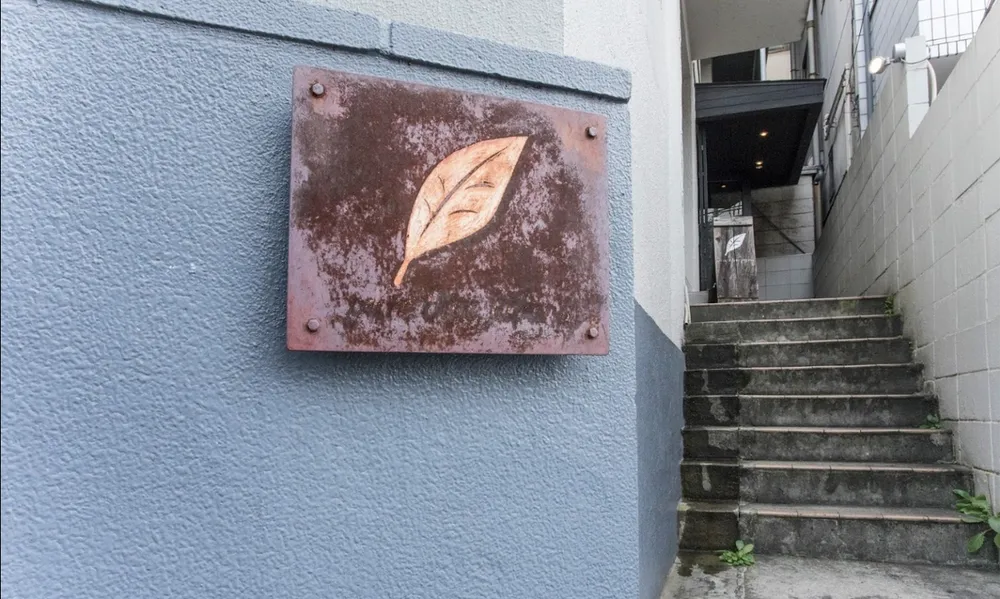
On a street corner in Harajuku, there's a nondescript leaf engraved into a rusted sheet of metal and bolted to a concrete wall — easy to walk past if you don't know what you're looking at. In fact, I walked by it multiple times before realizing what it was. I bought my first pair of Japanese denim a few steps past it in 2019, with no idea yet how deliberate that leaf, or the slub texture of the denim, actually was. The leaf reappears on the back pocket of every pair the brand makes.
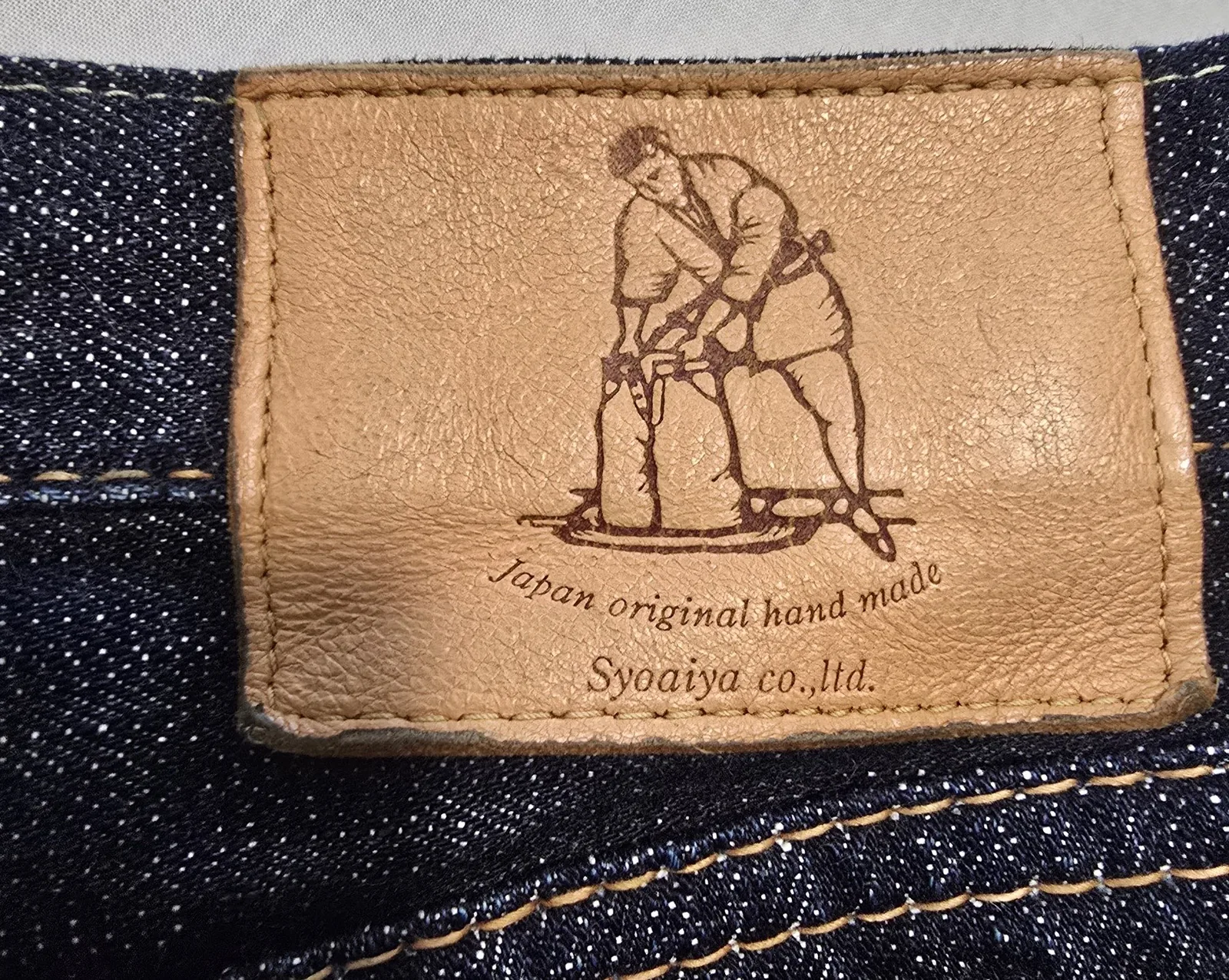
Every Japanese denim brand of note weaves a colored thread, known as the selvedge ID, into the finished edge of its denim fabric. Reproduction brands tend to stick to red — a quiet homage to the Levi's redline that started the whole denim obsession. Pure Blue Japan uses blue thread. It's a small detail, easy to miss, but it's downstream of a much larger decision the brand made early on: not to spend its life reproducing someone else's jeans. While most of Okayama was taking apart vintage Levi's stitch by stitch to replicate the original, Pure Blue Japan founder Kenichi Iwaya was trying to move further away from it.
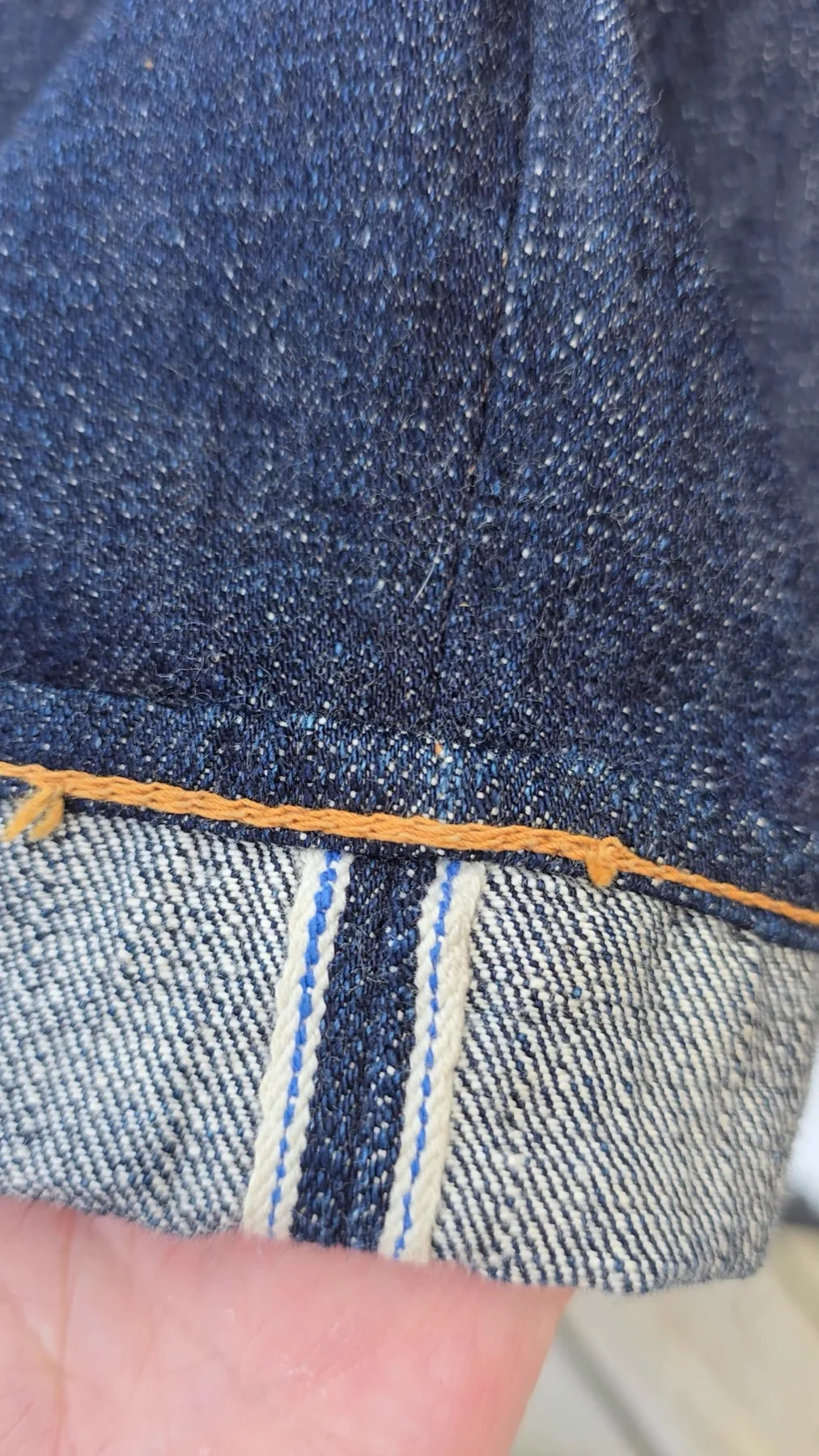
Kenichi Iwaya and Okayama’s Denim Industry
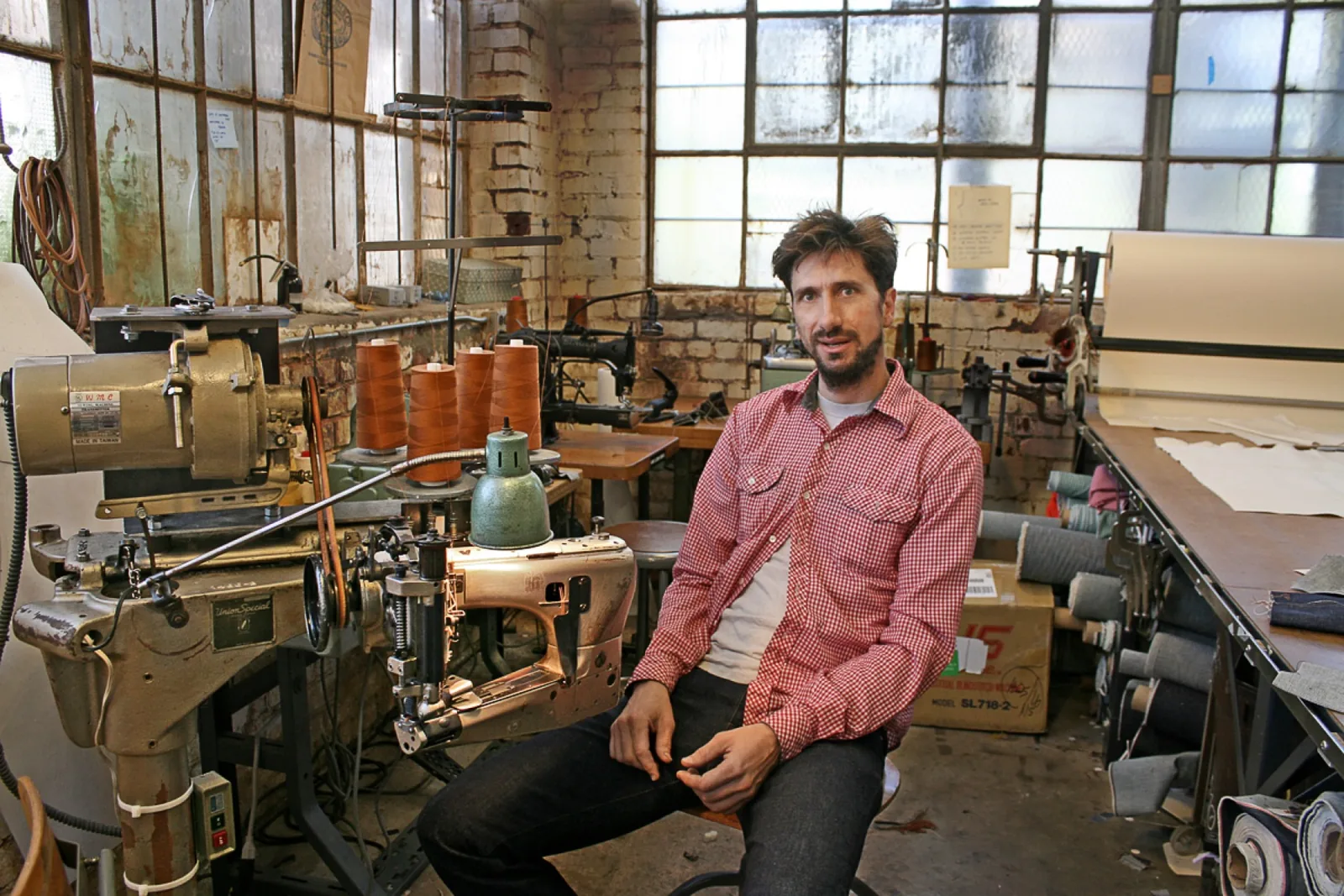
Iwaya grew up in Okayama, a prefecture of Japan that has spent half a century quietly becoming the world's denim capital. His entry point into the denim world was his older brother, who loved vintage Levi's jeans. He rubbed them down with a pumice stone to chase the fades he saw in well-worn pairs. Levi's are the gateway drug that every denim obsessive in Japan shares. What's less ordinary is the path Iwaya took afterward. Before he ever cut a pattern, he worked in textile sales, which put him inside the factories rather than outside them. He understood the machinery and the supply chain before he understood garment construction. In 1997, at twenty-five, he founded the company that would become Pure Blue Japan with, in his own words, “literally no knowledge about fashion production.” His first patterns, drawn by hand with no formal training behind them, he has since described — flatly, without self-pity — as absolutely terrible. The brand that exists now is the result of a couple hundred iterations of that terrible first draft.
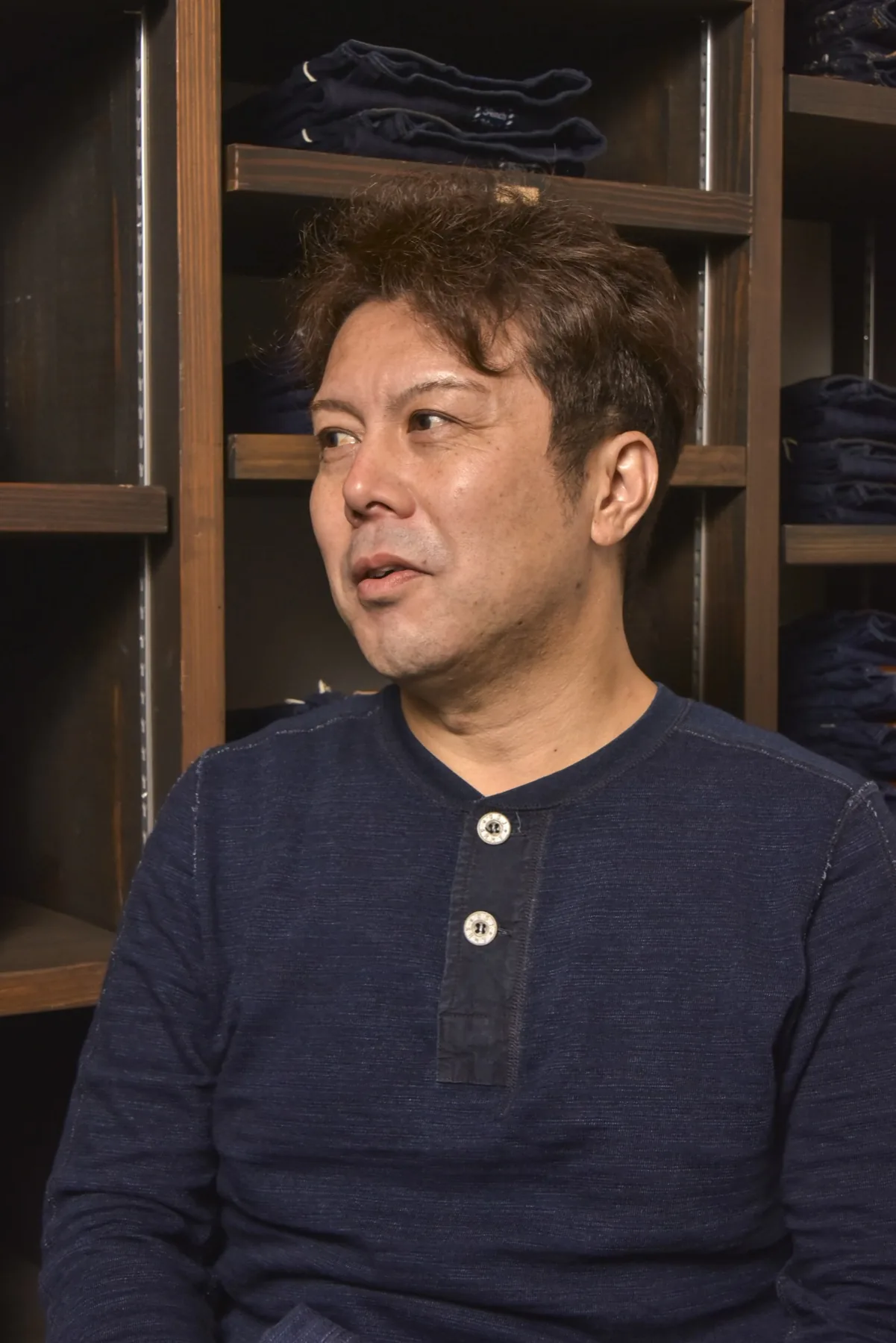
The company didn't start life as Pure Blue Japan. It started as Shoaiya, a name pulled from shoai — the term in Tokushima for indigo dyeing done the old way, with real Ai plant and no shortcuts. It's a beautiful name but unintelligible outside Japan, which Iwaya understood early. He wanted something that could travel, something that read as both literal and a little poetic in any language, and landed on Pure Blue Japan — three words that do the job a four-character Tokushima dialect couldn't. The blue selvedge thread follows directly from that renaming.
Slub and Nep: What Sets Pure Blue Japan Denim Apart
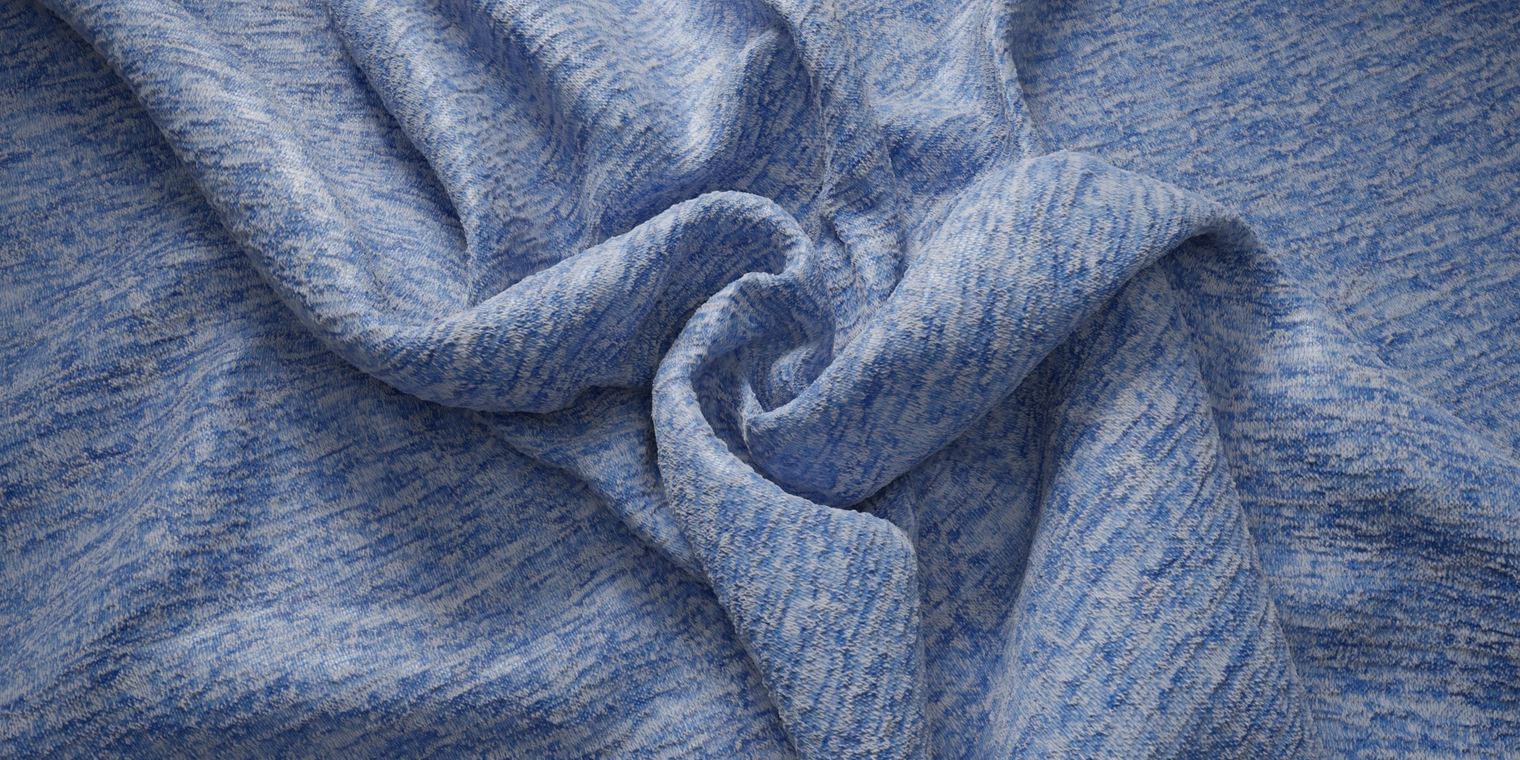
What actually separates Pure Blue Japan from the dozen other respected Okayama houses isn't the name. It's the details. “Slub” is irregularity in the yarn itself — slight thickenings and thinnings along its length that show up in the woven cloth as a rough, uneven, almost handmade-looking surface, the opposite of the flat, consistent face most denim is engineered to have. Pure Blue Japan runs its cloth through customized old looms, slowed down further than the already-slow shuttle-loom standard, specifically to chase that irregularity rather than iron it out. It's a deliberate inversion of what most mills spend their effort trying to eliminate. Iwaya frames the brand's relationship to slub as a genuine claim of priority, not just a stylistic preference, and reaches for an unlikely comparison to make the case:
In the case of hamburgers, the teriyaki burger is a good example of something that did not originally exist in the traditional hamburger lineup, yet it was created, spread globally, and eventually became so widely recognized that it feels as if it had always been part of the category. Denim is similar. Elements such as strongly slubbed yarns and distinctive fabric textures — things that did not exist in the past — have become increasingly appreciated, and are now considered important characteristics of denim. We believe we were among the early pioneers in developing slub fabrics, and we intend to continue pursuing that direction.
It's a strange comparison until you sit with it: a regional variation, invented to suit local taste, eventually becomes so embedded in the category that nobody remembers it was ever a deviation. That's the position Pure Blue Japan is establishing with slubby denim.
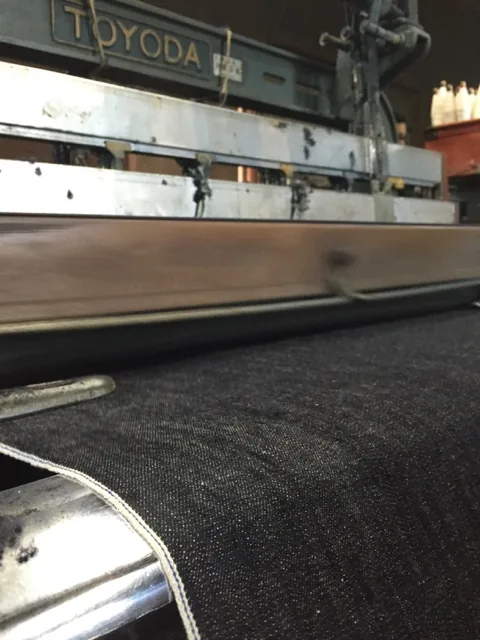
Iwaya is direct about why he built it this way instead of doing what nearly everyone else in his generation of Okayama denim makers was doing — reverse-engineering vintage Levi's down to the rivet. “About 30 years ago,” he told me, “there were already many brands that were taking apart and analyzing vintage Levi's jeans, seeking to reproduce products originally made with the limited technology of the time by utilizing modern manufacturing techniques. The level of accuracy they achieved was remarkably high. However, I did not feel that I wanted to follow the same direction. Because the brand was called Pure Blue Japan, I wanted to create ‘Japanese jeans’ conceived through Japanese sensibilities and brought to life through Japanese craftsmanship and techniques.”
That's the whole philosophy. Not American repro filtered through Japanese precision — something built from a different set of instincts entirely. You see it in the small identity markers too: an indigofera leaf embroidered on the back pocket instead of the arcuate stitching every brand seems obligated to imitate, and a deerskin patch depicting a man dipping jeans into an indigo vat. Not a cowboy or a rancher, but a dyer.
Rope Dyeing vs Hank Dyeing
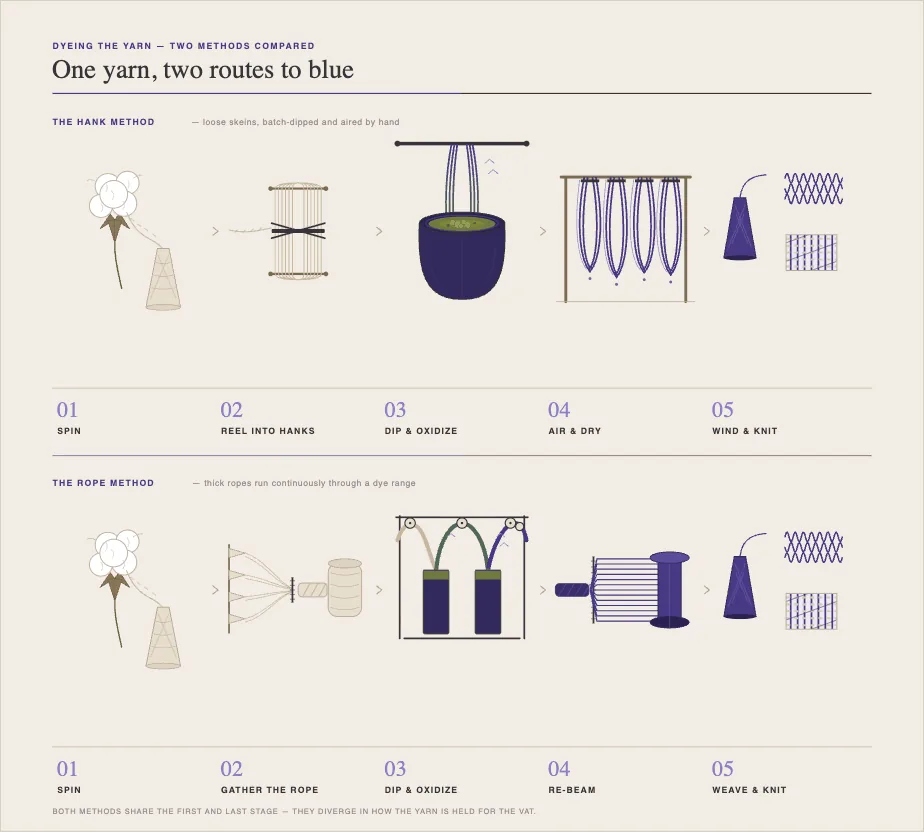
The standard lines use synthetic indigo, a distinction the brand is straightforward about rather than defensive. The denim for the standard line is dyed using standard rope-dyeing techniques. Rope-dyeing twists hundreds of warp yarns into a bundle and runs it through repeated brief dips in indigo, alternating with air exposure that oxidizes the dye from green to blue. The color builds up in thin layers on the yarn's surface while the core stays white. For the brand's aizome (AI) pieces, Pure Blue Japan maintains a long-term relationship with Tokushima-based shokunin who hand-dye the yarn using hank-dyeing rather than rope-dyeing, dipping loose skeins by hand instead of running bundled rope through a mechanized vat. It's slower and harder to scale, but necessary as natural indigo requires longer immersion than synthetic indigo. This process also introduces more tonal variation because the hanks are not uniformly exposed to the dye vat as they would be if assembled into ropes. Sukumo, the fermented dye base, takes about a hundred days to prepare before a single yarn is dipped, which is part of why the AI-series pieces are run in limited quantities rather than treated as standard stock. Natural Tokushima indigo is produced in small, once-a-year batches limited by how much sukumo the shokunin can ferment.
The World Discovers Pure Blue Japan
For the first several years, none of this traveled. Japanese denim wasn't yet accepted in Western markets, and PBJ's first Pitti Uomo appearance in 2000 fell on deaf ears, as buyers had no real frame of reference for what they were looking at. The turn came in 2005, when a buyer from Blue in Green — the SoHo shop that's done more than almost any single retailer to introduce American customers to Japanese denim — visited the brand's Tokyo store and struck a wholesale deal. It sold, in Iwaya's phrase, “unexpectedly well.” That single relationship became the crack in the dam. Word moved through the boutique world the way it always does — not through advertising, but through buyers telling other buyers that Japanese denim had more potential than anyone had given it credit for. Two decades later, PBJ ships to roughly twenty-five countries on every continent except Africa and Antarctica, still runs exclusive annual collaborations with Blue in Green, and counts the UK, Switzerland, Australia, Thailand, and China among its strongest markets outside Japan and the US.
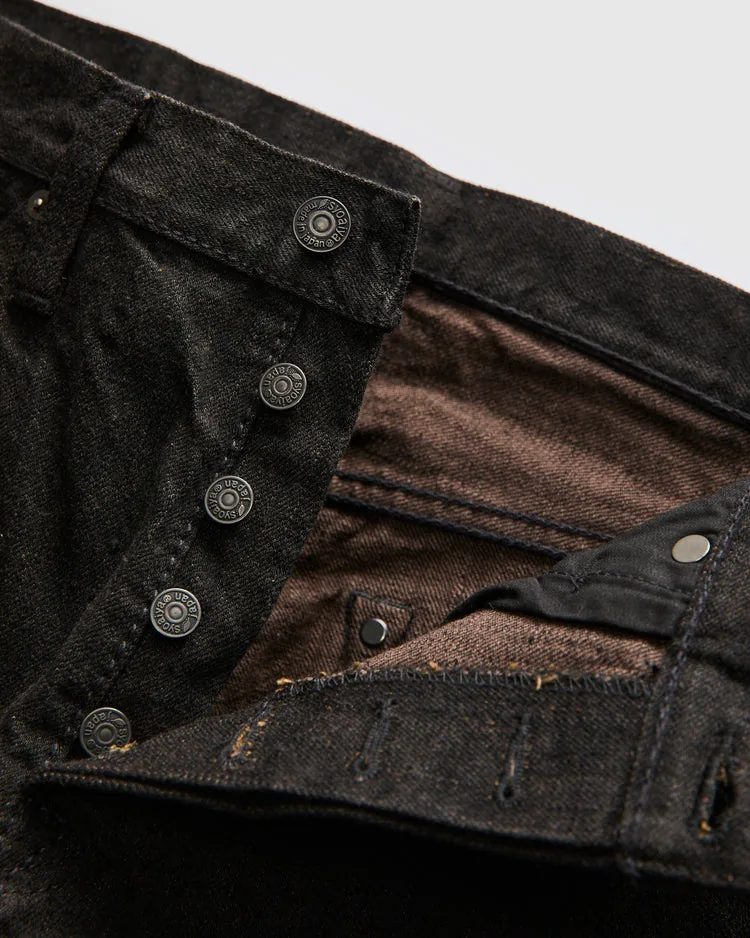
Pure Blue Japan isn't interested in reproducing history; it's interested in extending it. That willingness to reinterpret rather than reproduce extends beyond indigo. One recent example is the brand's Teacore denim. Teacore is a common dyeing technique for leather in which untreated light-brown leather is surface-dyed a darker color, usually black. Pure Blue Japan has developed denim that mimics this technique, featuring brown-core, black-dyed warp yarns paired with a brown weft that reveals warmer tones as it ages. It's an unlikely crossover that reflects the company's broader habit of asking what denim could become rather than what it once was.
Iwaya is candid about how much he still doesn't know. On the subject of natural dyeing specifically: “There are two types: indigo grown in Japan and indigo derived from India. Both are natural indigo, but we are committed to hand-dyeing using Japanese indigo. We are still continuously learning and exploring dyeing and fabric development, and we find it to be an extremely deep and fascinating craft.” Almost thirty years into running the company, and the language is still that of someone early in an apprenticeship. He doesn't speak with false modesty, but rather with an honest acknowledgment of how deep the craft actually goes.
Pure Blue Japan isn't part of the so-called Osaka Five, the loose grouping that tends to dominate any conversation about the old guard of heritage Japanese denim. It doesn't need to be. The flagship sits in Harajuku now, but the roots are still in Kojima, Okayama, where this entire industry effectively began, and the company remains founder-led, entirely Japan-made, almost three decades in. No private equity rollup, no licensing out of the name to a fashion conglomerate, just one guy who wants to make clothes on his own terms.
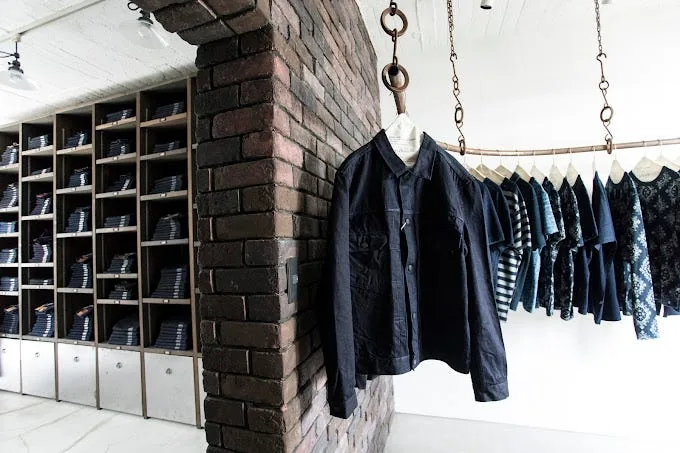
My visit to Pure Blue Japan's Harajuku store in 2019 had a huge impact on my love for raw denim and inspired an appreciation for things made slowly and intentionally. The small interior of the shop, wooden shelves, brick walls, and cracked floors make it feel like the home of an artisan who puts all their time and energy into making garments with a story that will stand the test of time, rather than a meticulously curated brand built for a social media aesthetic. The authenticity I saw when I walked into that store seven years ago, and my continued awe every time they release a new piece, inspire me. Iwaya and Pure Blue Japan make garments that the world deserves to know about.
Quotes from Kenichi Iwaya sourced via direct correspondence with Kozue Tamura, Pure Blue Japan / Syoaiya Inc., June 2026.