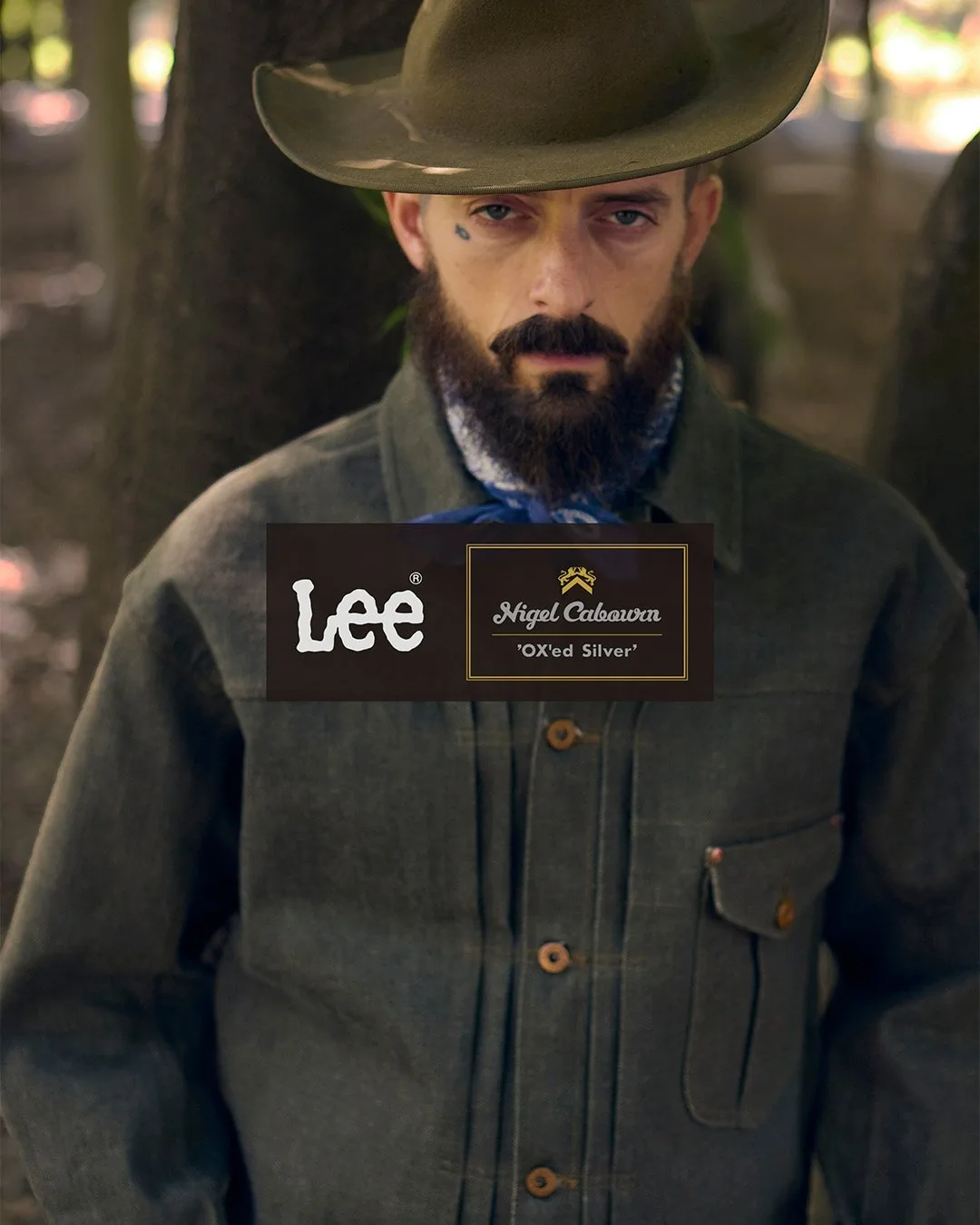
The misspelling is on purpose. “Normally, it would be spelled Blurry,” ZUKI, head of design at Nigel Cabourn OX’ed Silver, said in the brand’s announcement, “but I changed the L to an R to give it a sense of instability. The name Brurry embodies the philosophy behind the fabric.”
Brurry Denim is the fabric behind Lee’s new collaboration with OX’ed Silver, a ten-piece capsule made in Japan for the 101st year of the Lee 101. Mills usually work hard to make denim consistent so they can produce it in mass quantities. This cloth is designed to be inconsistent from the yarn up, and the people who made it say they can’t predict how the next batch will turn out. I find that admission to be one of the most interesting things about the collection.
Nigel Cabourn and the Archive
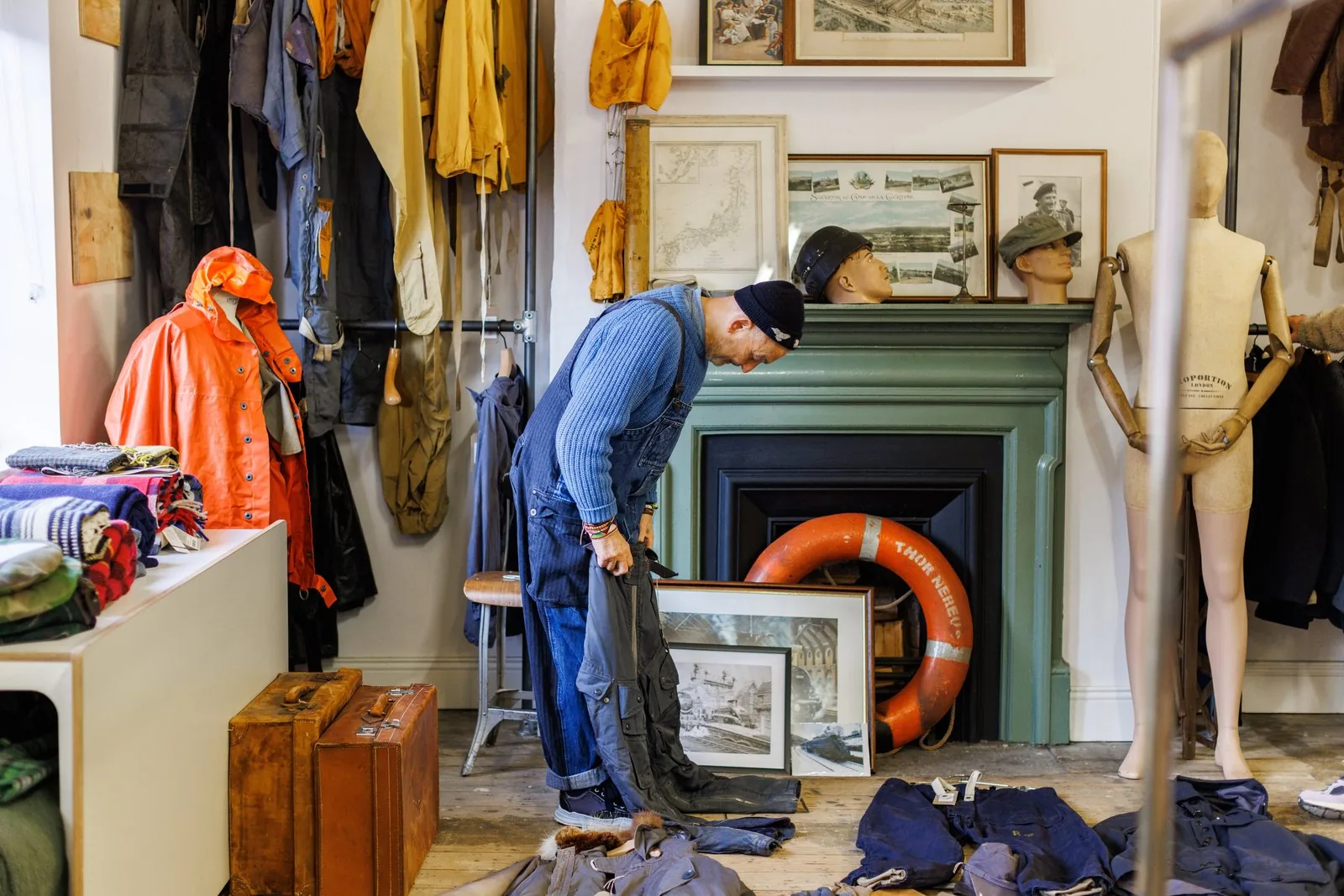
According to the brand’s own timeline, Cabourn was born in Lincolnshire in 1949 and attended Newcastle Polytechnic (now Northumbria University) in 1967. He founded his first company, Cricket Clothing, in 1969 while still a student. He stayed in Newcastle for the rest of his career rather than moving to London, and in 1985 was named Designer of the Year.
Highsnobiety reports that Paul Smith once gave him a vintage Royal Air Force pilot’s jacket, and that the gift pushed his work toward old military and working clothes. In 1984, he renamed the brand after himself due to trademark issues.
Over 40 years, his archive grew to about 4,000 vintage garments, mostly military uniforms, mountaineering gear, workwear, and weatherproof pieces. He drew directly on these pieces for seasonal collections, and he often posted archive finds for followers to see. He frequently referenced explorers like Ernest Shackleton, Robert Falcon Scott, and George Mallory, and his Everest Parka became a collector’s piece.
Japan turned into his biggest market. He opened his Tokyo flagship, The Army Gym in Nakameguro, in 2009, and the brand now runs 11 stores there through its licensing partner, Marubeni. His collections split into British-made and Japanese-made lines.
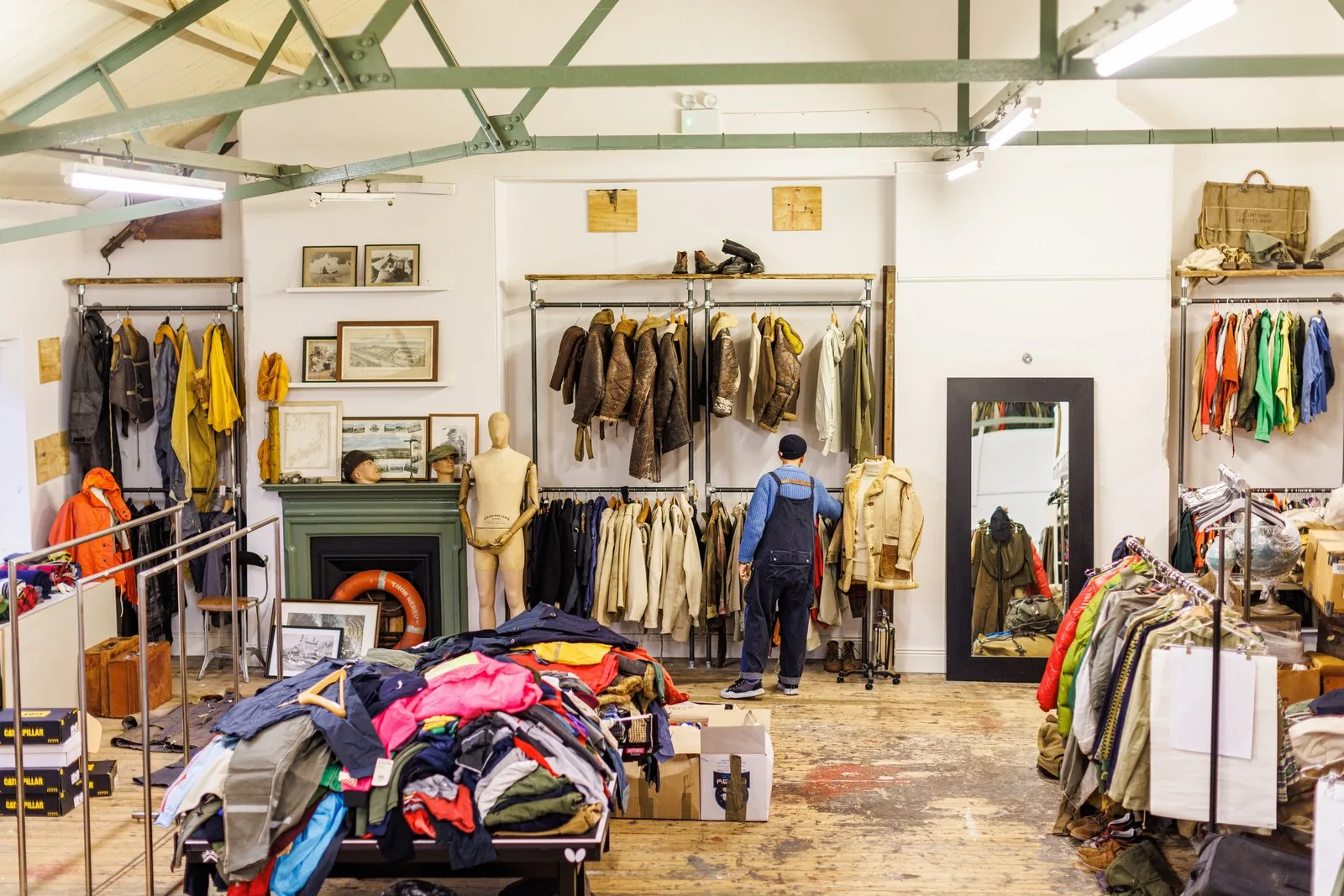
OX’ed Silver and the Man Called ZUKI
OX’ed Silver is one of those Japanese lines, launched around 2023. OX’ed Silver is a distinctive part of Nigel Cabourn’s design world, exploring the intersection of traditional workwear and tailoring. Rather than focusing on military uniforms, the line looks to the everyday clothing of laborers, farmers and craftspeople, drawing on historical garments to inform its silhouettes and details. Jackets, waistcoats and trousers evoke an era when work clothes were built for practical use, with proportions and construction that give them a character different from contemporary tailoring.
Fabric is central to OX’ed Silver’s identity. The collection features textured woven cloth, hemp moleskin, linen blends, and other materials chosen for their connection to historical workwear. Japanese textile production plays an important role, with traditional weaving methods and specialist manufacturing creating fabrics with an irregular, tactile character. The material choices give the garments much of their visual interest, while allowing texture, fading and wear to become part of their appeal over time.
Seasonal collections explore different occupations, including ranch workers, coal miners, and firefighters, translating their clothing into contemporary jackets, trousers, and coordinated suits. The result occupies an unusual space between rugged utility and relaxed tailoring: pieces can be worn together as a workwear-inspired suit or incorporated individually into an everyday wardrobe. Within Nigel Cabourn’s broader output, OX’ed Silver stands out for its emphasis on historical workwear, considered textile development, and the idea that a garment’s character comes as much from its material as from its design.
Cabourn handed the reins of the OX’ed Silver line to Ryuji Tsuzuki, known as ZUKI, who has led the design since its inception. ZUKI had worked alongside him for 17 years, and Lee Japan’s own feature on the collaboration calls him Cabourn’s “shadow.” His background in yarn, weaving, sewing, and finishing is exactly the knowledge Brurry Denim depends on.
↑ Table of ContentsHow Lee Found ZUKI
Lee launched their “Cowboy Waist Overalls,” also known as Cowboy Pants, in 1924 and labeled them as the 101 in 1925. For the anniversary, Lee Japan director Hosokawa asked a mill the brand trusted whether they knew anyone who could make “interesting denim.” The mill recommended they talk to ZUKI. ZUKI doesn’t work for the mill. He was a client who had already developed cloth there, and when Lee looked for someone who could make something new, the mill knew he was the right person for the job. The conversation that followed became this collaboration. The launch materials credit ZUKI and OX’ed Silver, but not Cabourn personally.
ZUKI didn’t start from American denim. According to the Japanese launch page, he started from a concept: What if the 101 had been born in Europe in 1925 instead of in America? Everything about the fabric follows from that premise, so instead of copying an old pair of jeans, it reimagines what it might have been.
“I wanted to use a unique denim, something unexpected,” ZUKI said. “I was inspired by European vintage garments from the 1920s and their fabric imperfections: irregular, unstable, and beautifully inconsistent. That’s how Brurry Denim was born.”
↑ Table of ContentsA Scrap of 1920s French Underwear
The reference garment was a pair of 1920s French underwear from ZUKI’s own collection. He was drawn to the uneven stripes, so he sent a scrap for testing.
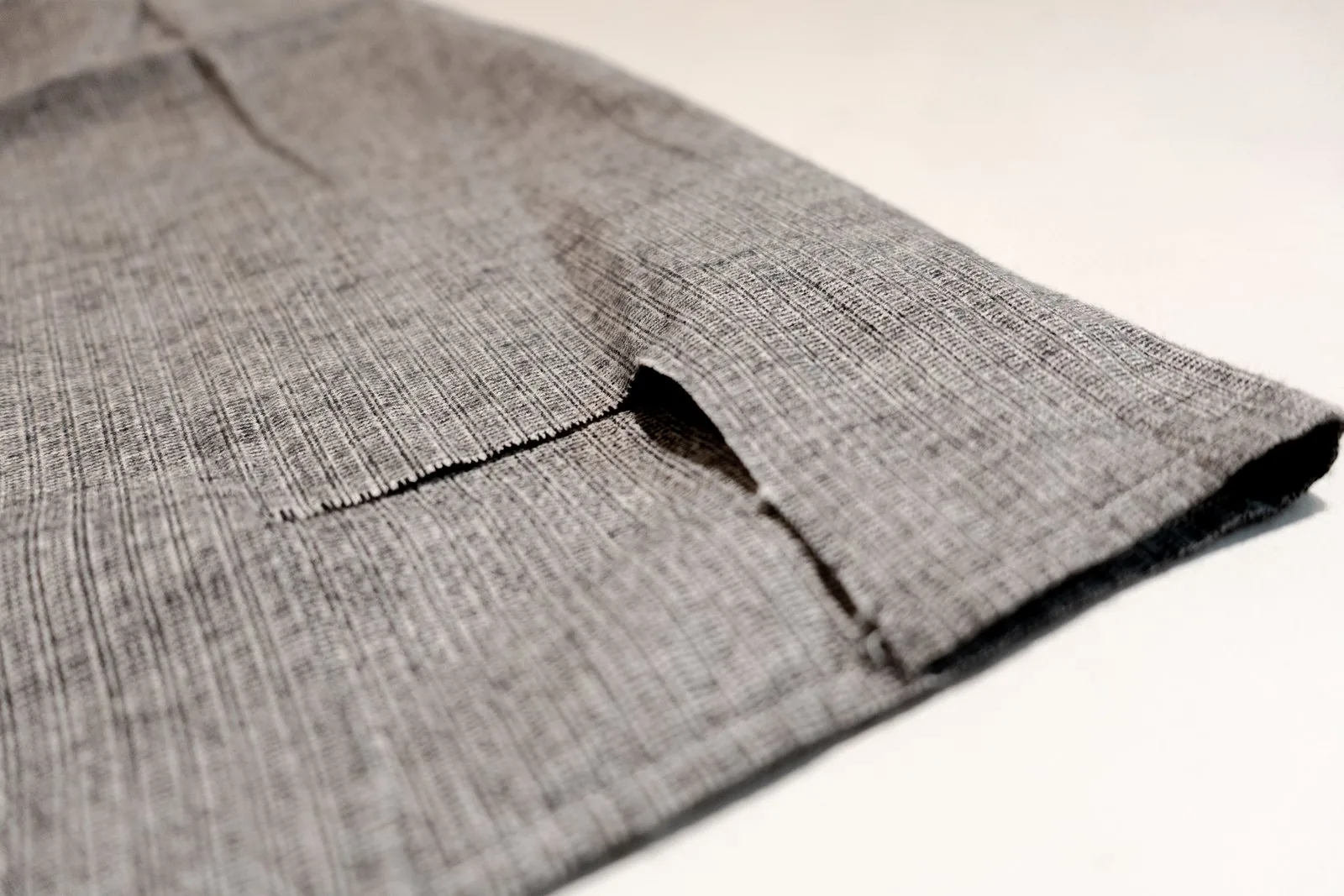
The test found that the yarn twist varied by about 50% within a single meter. Some stretches ran thick, some thin, and some carried slubs. The launch page offers a guess as to why it was made this way — European spinning after the First World War likely ran on unsteady water or steam power, and the yarn recorded every surge.
Brurry Denim rebuilds that instability on purpose. The warp mixes three yarns, each with a different thickness and twist. Some are twisted hard enough to kink back on themselves into small loops called snarls, which most mills treat as a defect, and this cloth treats as character.
The yarn also goes into the dye unbleached, in its natural greige state, as much yarn was in the 1920s. The launch page says this makes dyeing it considerably harder.
↑ Table of ContentsOld Looms and Unpredictable Lots
The cloth is woven on modified vintage shuttle looms run at low tension, which leaves neps and an uneven surface. Old power looms need constant upkeep, and according to the launch page, they behave differently with the season and even the day.
Irregular yarn on temperamental machines leads to the line from the launch copy that resonated with me as a texture lover (my translation from the Japanese): “Even with the same design, no one knows how the next lot will turn out.”
Shuttle looms are already the bottleneck for Japanese selvedge, which I wrote about in Your Favorite Brand From Japan Is Having Trouble Making Denim. Brurry Denim depends on exactly the quirks of those machines that most mills try to minimize.
↑ Table of ContentsWhat Makes Brurry Denim Different
Brurry Denim is slubby, neppy, and rough on purpose. The Nigel Cabourn store describes Railway Man cloth as grainy, with a pronounced bumpy surface from neps, small knots of fiber that sit on the fabric’s face.
Most of that texture starts in the warp. Three yarns of different thickness and twist run side by side, so the cloth carries thick and thin stretches, slubs, neps, and the snarls described above all at once. The low-tension looms add their own unevenness on top.
Slub itself has a long history in Japanese denim. Pure Blue Japan built much of its identity on it, which I covered in Beyond the Replica. A conventional slub yarn carries its irregularity in its thickness, spun with thick and thin stretches along one yarn. Brurry Denim also varies the twist across three yarns never meant to match, and keeps the snarls that hard twist produces, even though mills avoid them because they cause loom trouble and weaving flaws.
The weave adds another layer. Lot 2602 is a left-hand twill, and several garments pair it with right-hand twill from Lot 2601, so one pair of jeans ages in two different ways. This isn’t broken twill, where the diagonal reverses every few threads within a single cloth. Each Brurry lot runs in one direction and is mixed into a single garment at the sewing table.
The dye recipes matter too. Rope-dyed indigo leaves a white core in each yarn, which is what high-contrast fades expose, as I covered in Dyed in the Wool. The olive lots are cheese-dyed, which has nothing to do with food. In a dye house, a “cheese” is a cylinder of yarn wound on a perforated tube, named for its resemblance to a wheel of cheese. Unlike in the indigo dyeing process, dye pumped through the cylinder reaches the yarn’s core, meaning it won’t yield the same fades.
The Ranch Worker copy says the team studied Britain’s CC41 utility label and American wartime material controls, when mills mixed different raw materials and yarn thicknesses because supplies were short. The cloth is noted to shrink on its first wash, as might be expected for this type of denim: about 1 to 2 cm on the jeans, according to the store, and up to about 5 cm across the Loco (short for locomotive) Jacket’s chest.
Neither brand publishes the fabric’s weight, cotton, yarn counts, or mill.
↑ Table of ContentsThree Lots, Three Dye Stories
Brurry Denim comes in three lots, each tied to a period of Lee’s archive.
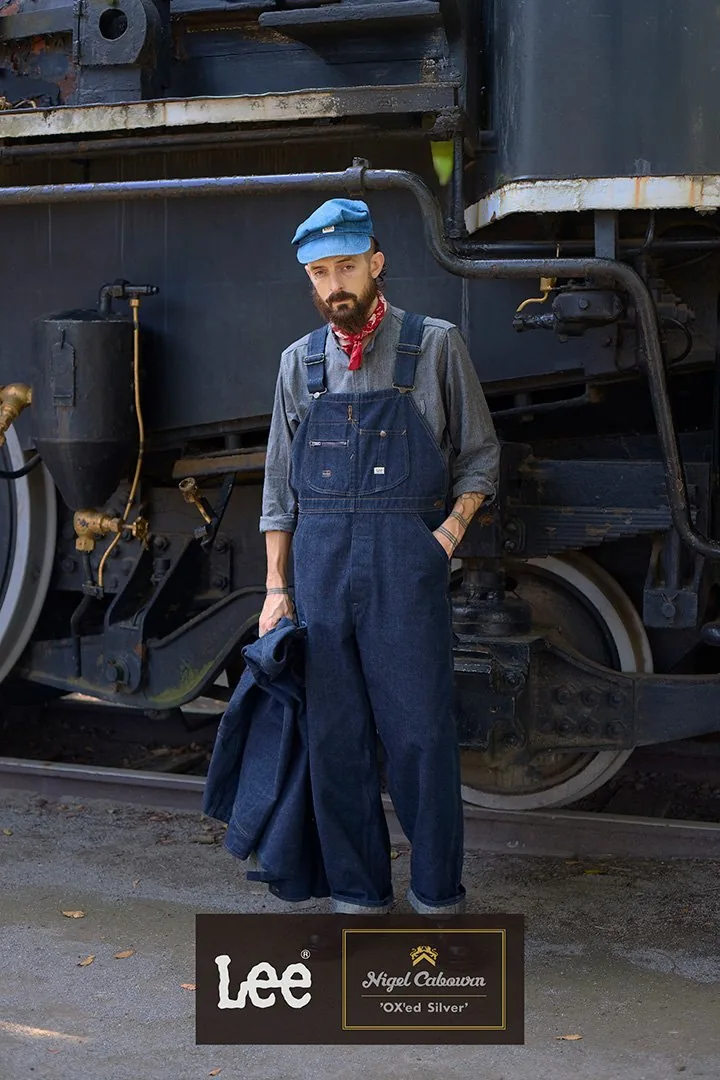
Lot 2600, the Railway Man cloth. A right-hand twill, hank-dyed in pure indigo, overdyed with tannin from fallen leaves, then treated with iron taken from old nails and metal fittings. The recipe comes from an imagined scenario. Denim was sometimes packed into house walls as insulation in that era, so the team pictured a length of it sealed between the walls for decades alongside dead leaves, nails, and metal fittings. The leaves stand in for tannin, and the nails for iron.
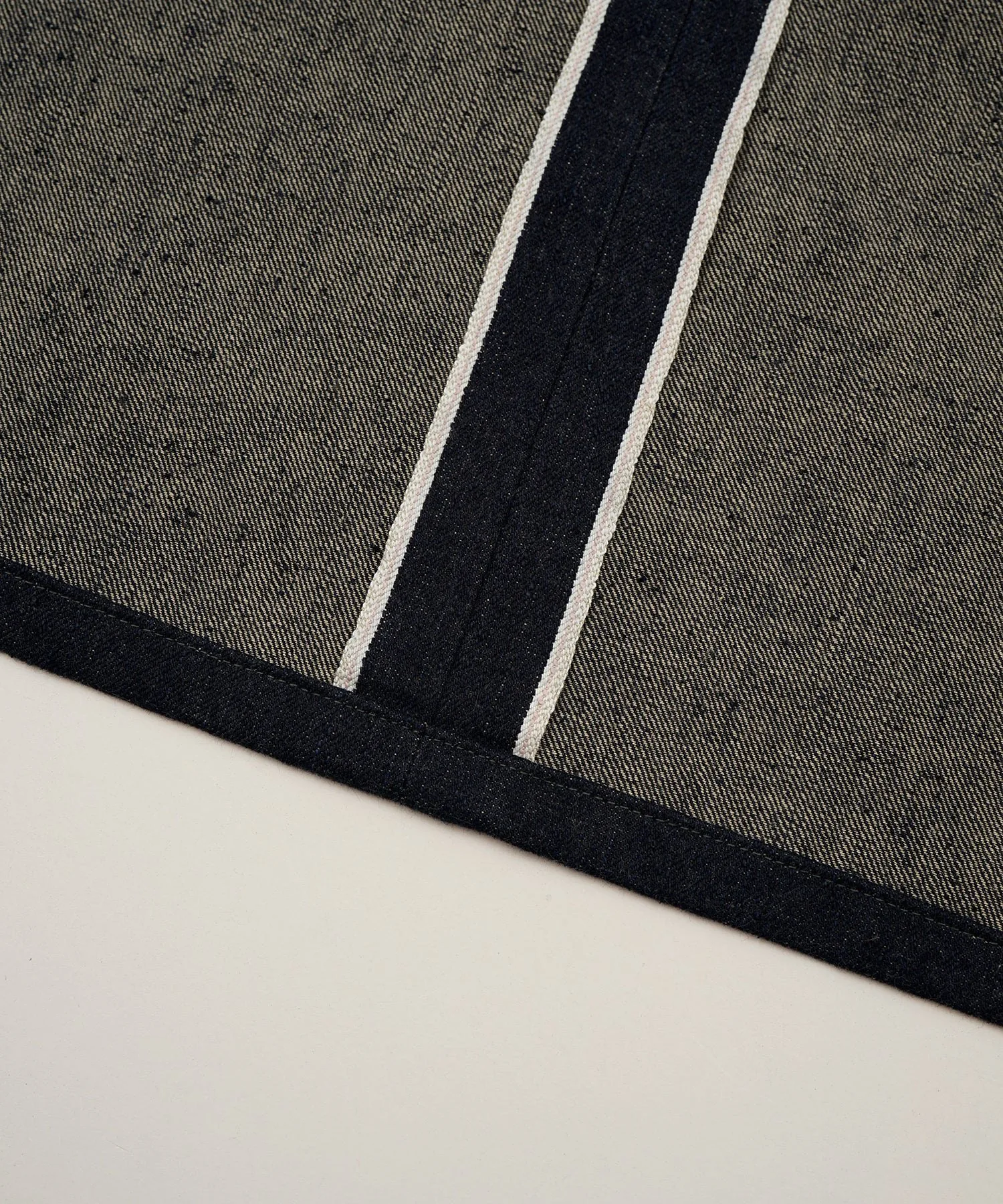
Hank dyeing dips loose skeins of yarn rather than running bundled rope through a mechanized vat, as I covered in Beyond the Replica. Readers of Built for Color will recognize the overdye chemistry. In Part One, iron “saddens” a dye, darkening and dulling whatever it touches. In Part Five, tannin and iron together are the basis of Japanese mud dyeing, where tannin-soaked silk is worked through iron-rich mud. Lot 2600 layers that same pairing over indigo. The iron darkens it rather than turning it black, and in the product photos the Railway Man cloth reads noticeably darker and flatter than the rope-dyed Ranch Worker indigo.
Lots 2601 and 2602 are the Ranch Worker and Rodeo Clown cloth. Both use the same materials, but with different yarn counts. 2601 is a right-hand twill and 2602 a left-hand twill. The yarn mix nods to the 1940s, when wartime shortages meant mills spun with whatever they had.
Each lot comes in indigo and olive. The indigo version is rope-dyed in pure indigo, then overdyed with sulfur. The olive version uses the same cheese-dyeing process described earlier. That color references British Army green denim.
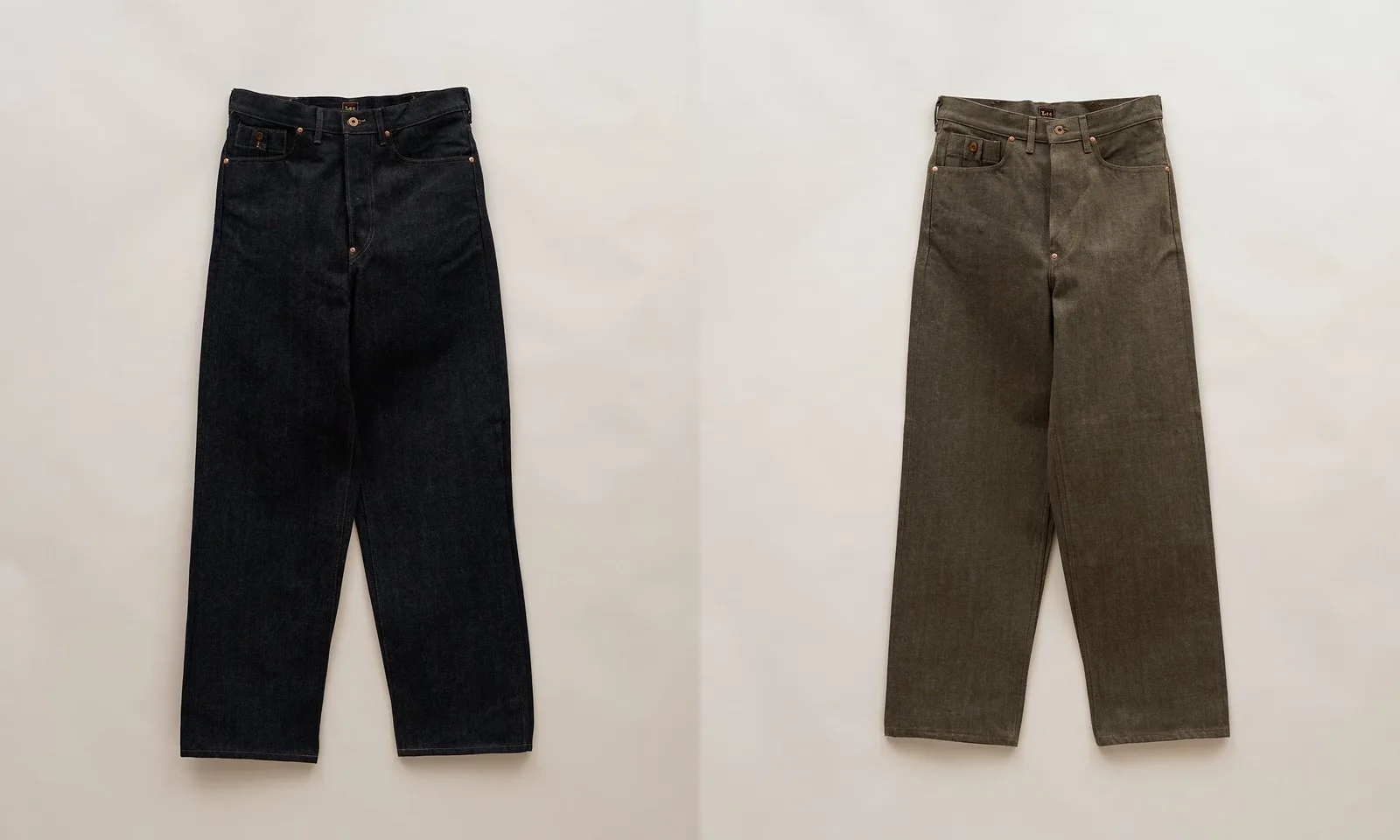
Several pieces combine right-hand and left-hand twill in one garment, so the two weaves age at different rates side by side.
↑ Table of ContentsThe Jeans, the Sizes, and the Prices
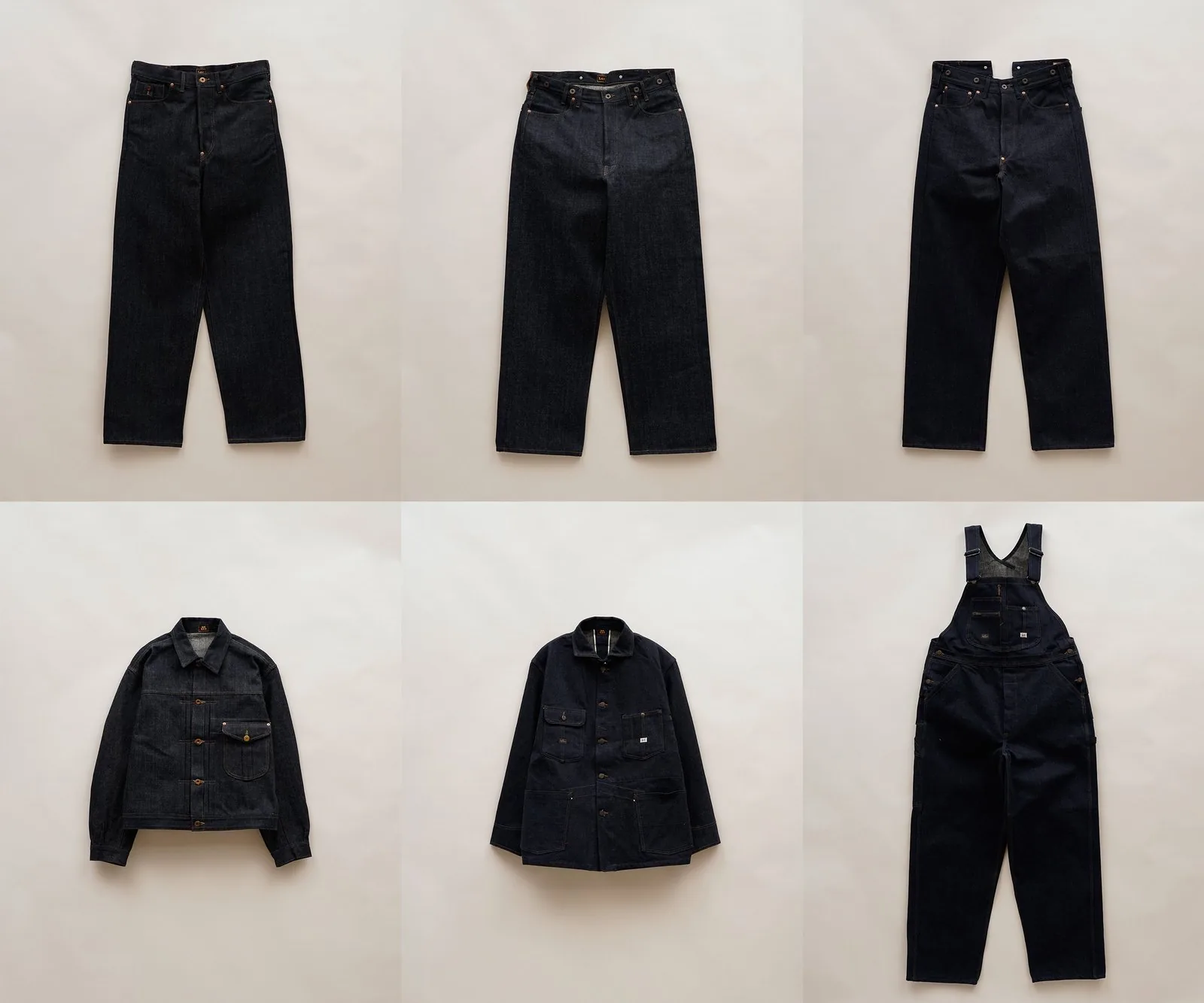
The capsule runs ten pieces in three series, all made in Japan. “Each piece tells part of Lee’s history while highlighting the artistry of Japanese denim,” said Sedgwick Cole Jr., Lee’s global design director.
Each series carries its own archival details: hair-on-hide leather patches on the Railway Man pieces, laurel-wreath buttons on the Ranch Worker, and a zip fly and rear waistband cinch on the Rodeo Clown, after Lee’s Cowboy 101-Z. The Rodeo Clown is also the widest of the three jeans, with nine belt loops, and outside Japan, its indigo version uses Lot 2602 rather than 2601. The rest of the capsule is a chambray work shirt, suspenders in Lot 2602 denim with tannin-tanned leather, a two-pack of tees, and a bandana.
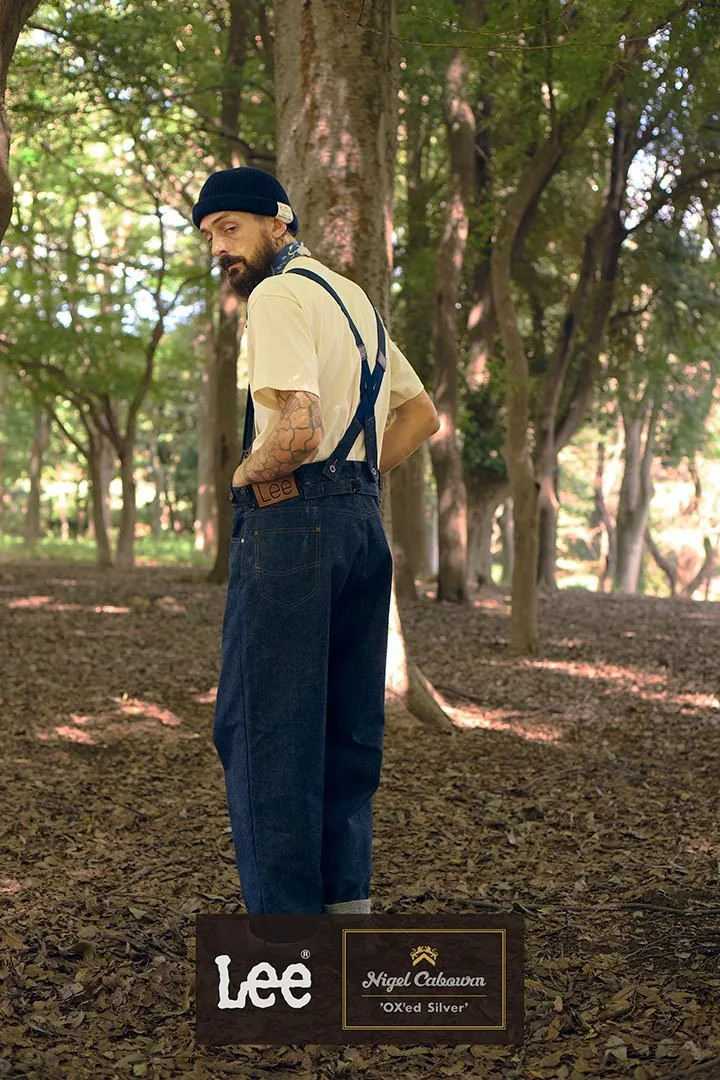
The tag sizes don’t line up across the three jeans. According to the Nigel Cabourn store’s charts, a size 34 measures 33.75” around the waist in the Railway Man, 36.25” in the Ranch Worker, and 38” in the Rodeo Clown. All three are now in Fit Finder, with waist, rise, thigh, hem, and inseam for every size: the Railway Man 101B, the Ranch Worker 101B, and the Rodeo Clown 101Z.
Some of the links below are affiliate links. If you buy through one, I may earn a small commission at no cost to you.
The collection launched in Japan on September 12 at Nigel Cabourn stores, with a pop-up at the Omotesando shop, and later that month reached Lee.com in the US and Europe. The denim pieces, with Japanese retail prices including tax and US prices from Lee.com:
- Ranch Worker 101 jean: ¥49,500 in Japan, $400 on Lee.com. Lot 2602 in indigo or olive.
- Rodeo Clown 101Z jean: ¥52,800 in Japan, $420 on Lee.com. Lot 2601 or 2602.
- Railway Man 101 jean: ¥63,800 in Japan, $510 on Lee.com. Lot 2600.
- Ranch Worker 101J jacket: ¥79,200 in Japan, $630 on Lee.com. Lot 2601 in indigo or olive.
- Railway Man Loco Jacket: ¥90,200 in Japan, $720 on Lee.com. Lot 2600.
- Railway Man Overalls: ¥99,000 in Japan, $790 on Lee.com. Lot 2600.
A Name Carried Forward
Cabourn died in June at 77, after a battle with cancer. He kept working until his illness, designing from his Newcastle studio, and Highsnobiety notes that his last promotional appearance was a video for a store opening in Osaka in May. Three months before his death, Drapers had given him the first Outstanding Contribution Award at its Conscious Fashion Awards.
The brand’s announcement of his death ended with the hope he and the team shared: that their clothes “could endure the passage of time and one day become true vintage pieces.” Brurry Denim comes at that idea from the other side. The launch page calls it a vintage that could never have existed, a cloth built from the irregularities of yarn spun a hundred years ago.
This capsule arrived in September under his name, and it works the way he did: it starts from an old garment and builds something new.
↑ Table of ContentsDesigned Not to Repeat
Heritage denim is usually judged by how faithfully it reproduces something that existed. Brurry Denim imagines a jean that never existed, then makes the cloth irregular enough that even its makers can’t reproduce it exactly.
The brands say every piece will age into a patina of its own. Only years of wear will show whether that holds. For now, I think the method is the story, right down to the misspelled name.
I’d have loved to see the cloth up close. For a denim sold on its texture, a few macro shots of the neps and snarls would go a long way.
The olive lots are dyed green with sulfur, and Part Nine of my dye series, Built for Color, focuses on green. Subscribe to get it the day it publishes.