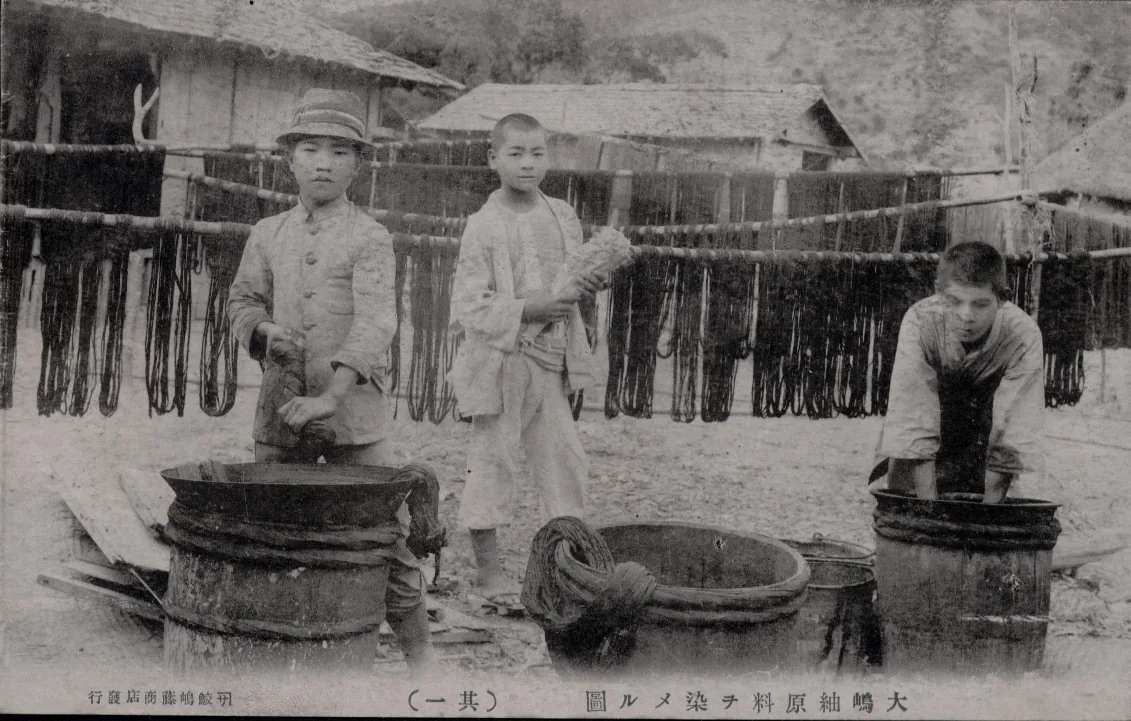
There is a piece of cloth from Amami Ōshima, a small Japanese island roughly halfway between Kyushu and Okinawa, that takes over a year to make. Not because of the weaving, though the weaving is extraordinary, but because of the dyeing. The silk threads are dipped in a tannin broth made of wood chips from the Techigi tree, then carried to an iron-rich mud field and pushed through the mud by hand. Then rinsed, dried, and returned to the broth. Then through the mud again. This cycle repeats over and over. The standard count for Ōshima tsumugi, one of Japan’s most prized textiles, is nearly eighty repetitions before the color is considered finished. The final color is black. But for most of that process the threads are a very specific shade of dark, complex brown.
That brown is the result of a tannin–iron chemistry that humans have used, in various forms, on every inhabited continent for at least two millennia. It is the same basic mechanism that produces one of the most durable, most technically demanding, and least glamorous colors in the history of natural dyes.
The Color Left Out of the Story
In the history of natural dyes, brown often gets left out. I covered the exciting history of red at length — cochineal and kermes at the luxury end of the market, the colors of power and prestige. Blue will have its own story too: indigo, the colonial economy of the Indigo Acts, the politics of the Bengal trade. Tyrian purple, also upcoming, bankrupted the Phoenicians and lent its name to an entire category of imperial authority. Brown is the color of the fields, the forest, the ordinary backdrop that everything else was dyed against.
Before anyone dyed anything on purpose, most cloth was already some shade of brown. Undyed wool comes off a sheep brown, grey, or near black depending on the breed. Unbleached linen is a pale tan. Tanned hide is brown. For most of human history, brown fabric required no decision at all. It was simply the story of the ordinary.
There are various colours of wool; so much so, indeed, that we want terms to express them all. Several kinds, which are called native, are found in Spain; Pollentia, in the vicinity of the Alps, produces black fleeces of the best quality; Asia, as well as Bætica, the red fleeces, which are called Erythræan; those of Canusium are of a tawny colour; and those of Tarentum have their peculiar dark tint.— Pliny the Elder, Natural History 8.73 (43)
And that ordinaryness is misleading. Producing a reliable, lightfast brown from natural materials turns out to be technically demanding in ways the luxury colors are not. Red was hard to find, but once you had cochineal or kermes, the chemistry was relatively cooperative: you mordanted the fiber with alum, applied the dye, and got a stable, brilliant color. Brown is infinitely abundant in nature. Most of the plants that look brown do not produce a stable brown on textile fibers. The plants that do produce stable brown tend to do so through a mechanism that requires iron, and iron is notoriously harsh on protein fibers: it degrades wool and silk over time. The very thing that makes the brown stable is the thing that slowly destroys the cloth.
The technical solutions to brown tell you something interesting about how different cultures understood the relationship between color and material. Each one found a different way to navigate the same problem.
Walnut: The Easiest Brown
Starting with the most ubiquitous brown, the one available everywhere in the temperate world for the longest time: walnut. The active compound is juglone, a naphthoquinone found in the green hulls of black walnut (Juglans nigra), found in North America, and the related species used across Europe and Asia (Juglans regia).
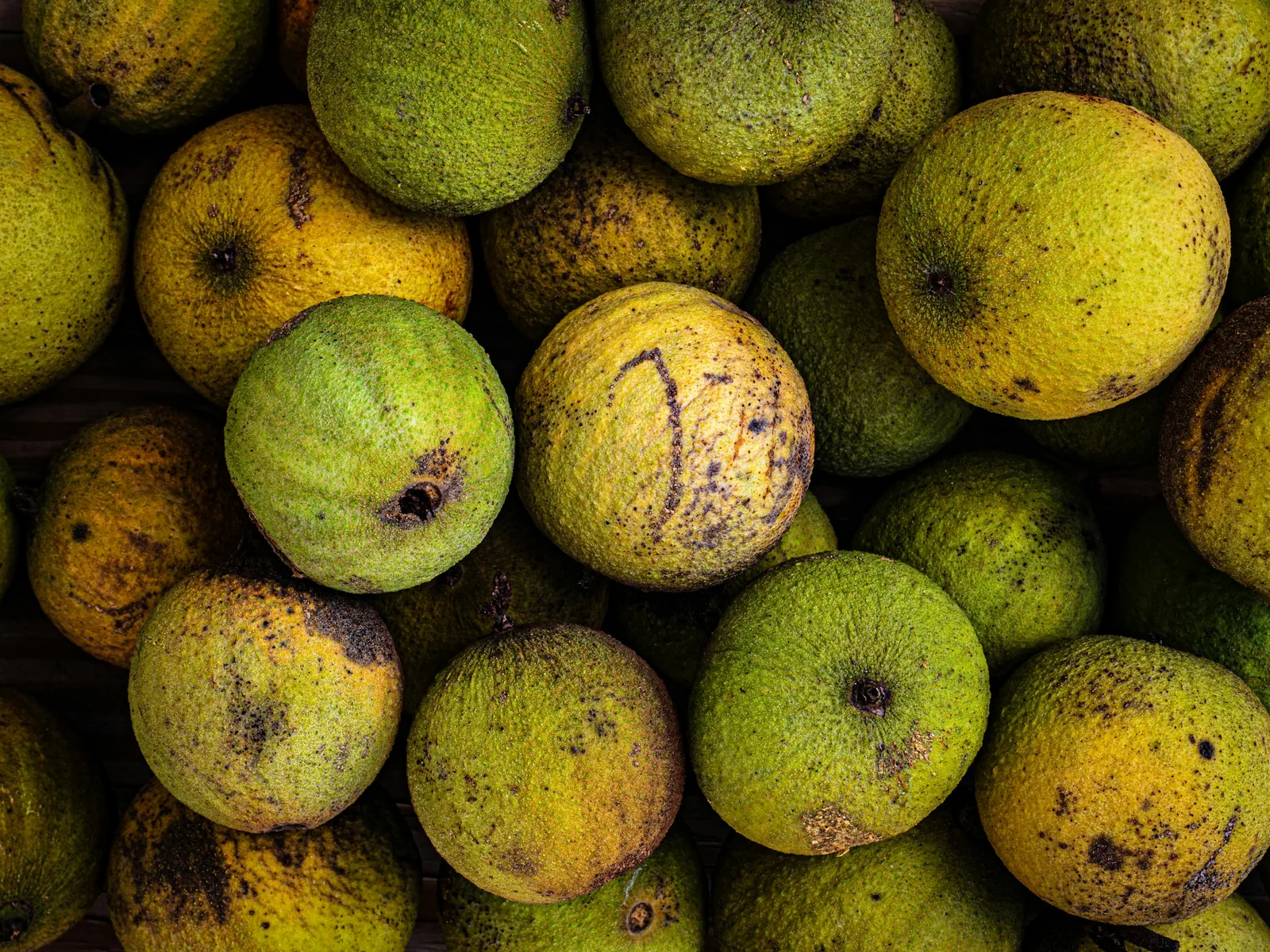
Juglone is a direct dye, which means it bonds to protein fibers (wool and silk) without requiring a mordant. It’s actually more interesting than that, as the walnut hulls are a two-for-one special. The hull of the walnut contains both a high tannin content and the coloring compound. While dyeing cotton requires treating the fabric with a tannin to allow dye bonding, here no pre-treatment is required, allowing the walnut to bind to all types of fibers without additional help. You crush the green hulls, steep them in water, simmer the fiber in the resulting bath, and you get brown. In the context of natural dyeing, this is almost embarrassingly simple.
Of all the ingredients used for the brown dye, the walnut rind is the best.— James Haigh, The Dyer’s Assistant, 1778
Pliny the Elder describes walnut preparations for dyeing wool brown and also mentions walnut juice as a hair dye for darkening gray hair. By the medieval period, walnut-hull dye appears in European dye manuals as a standard material. It’s cheap, available wherever walnut trees grew, requiring no mordant chemistry, and producing a warm, stable brown.
The green shell of the walnut is used for dyeing wool, and the nuts, while still small and just developing themselves, are employed for giving a red hue to the hair: a discovery owing to the stains which they leave upon the hands.— Pliny the Elder, Natural History 15.22 (24)
The limitation of walnut is also simple: walnut-dyed cloth, left in sunlight, fades toward a grayer, more muted tone over time. It is not the most lightfast dye in the natural dyer’s toolkit. What it is is accessible. Every culture with access to walnut had a brown dye. The interesting cases are where access to walnut was limited, or where a deeper, richer, cotton-friendly brown was needed, and a different chemistry had to substitute.
Cutch: The Deeper Brown
The darker, more saturated brown comes from a completely different plant family and a different part of the world. Cutch, also called catechu, is an extract from the heartwood of Senegalia catechu (formerly Acacia catechu), a tree native to India and Southeast Asia. Cutch is a direct dye, similar to walnut, but the chemistry is different altogether. Walnut’s juglone is a genuine direct dye in that it bonds protein fiber on its own. Cutch is a tannin that mordants itself. When you dye cotton with cutch, the catechin molecule acts simultaneously as the color and the bridge. It doesn’t need an added mordant because its own polyphenols grip the cellulose the way any tannin would. However, iron is still often added to increase the depth of the color from a yellow-brown.
The heartwood is boiled down to a concentrated paste or dried cake. What you get is a concentrated source of catechin compounds, the same family of molecules found in tea, which is also used as a mordant-free brown dye.
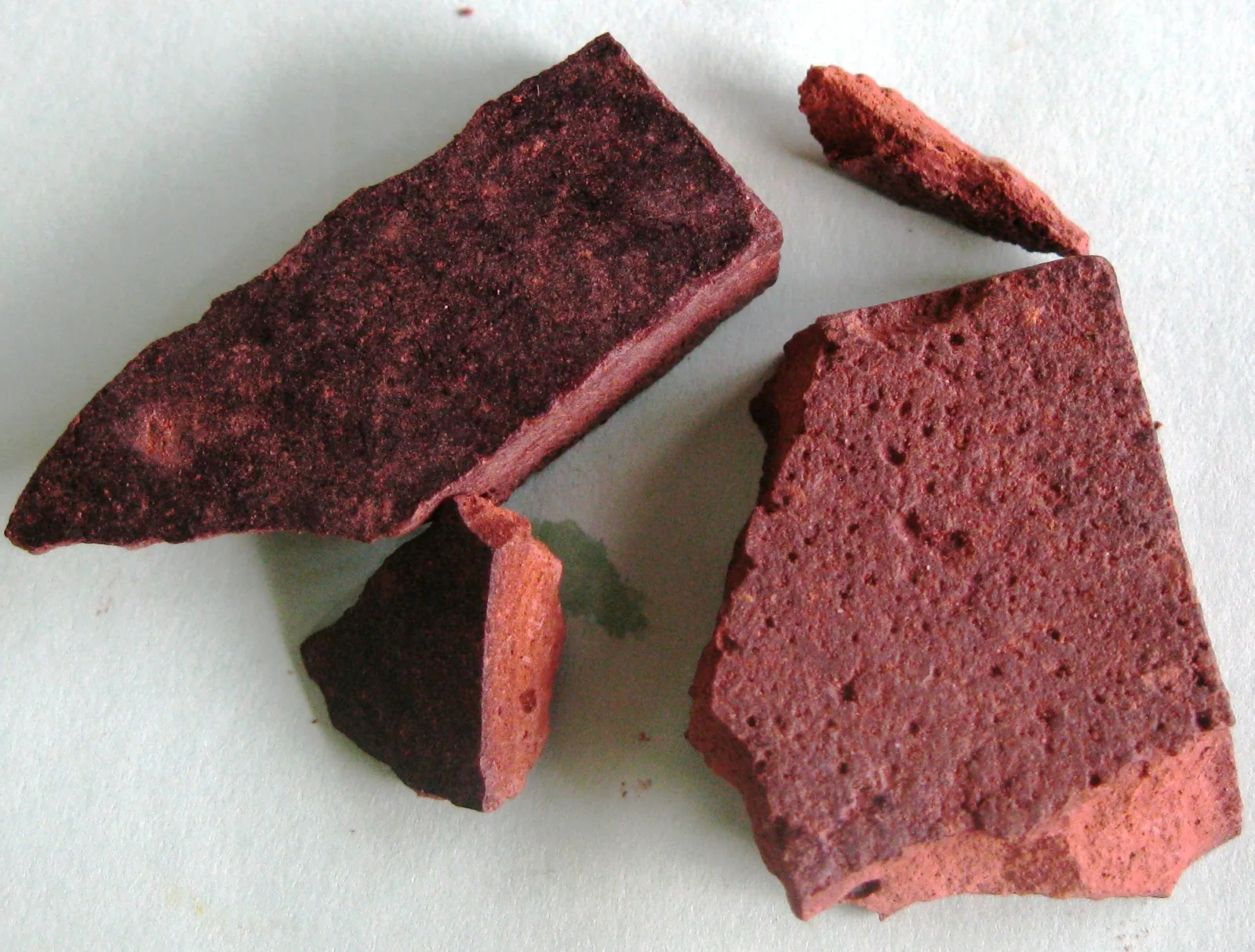
Cutch has been in use in India since ancient times. It produces brown on cotton without any mordant at all, which is very important in a region where silk and wool were not the primary textile fibers. Paired with iron mordants, cutch shifts toward darker brown and near-black shades. By the 1500s, cutch was being exported from India to Japan and China through the maritime trade networks of South and Southeast Asia. It did not reach Europe in significant quantities until the 19th century, when cotton dyeing had become the central problem of the industrial textile trade.
Cutch represents the same pattern we saw with lac and kermes: a high-quality regional solution that was simultaneously dominant within its geography and almost entirely invisible outside it. While European dyers were using walnut for brown, Indian and Southeast Asian dyers had a dye that was better on cotton, more concentrated, and part of a sophisticated commercial trade network. The two traditions were solving the same problem and barely aware of each other.
Dorozome: Amami Ōshima’s Mud Dye
Dorozome (泥染め, “mud dyeing”) is the process used in the production of Ōshima tsumugi silk on Amami Ōshima. This island sits in Kagoshima Prefecture but culturally in a tradition entirely its own. Ōshima Tsumugi is ranked alongside Gobelin tapestry and Persian carpets as one of the world’s most technically accomplished textiles.
The tannin source is the tichigi tree, known in standard Japanese as sharinbai (Rhaphiolepis umbellata), a coastal evergreen in the rose family. The choice of tree is not arbitrary: tichigi grown on Amami Ōshima, in the island’s specific coastal soil under the salt-wind conditions of the East China Sea, contains unusually high concentrations of tannin. The Ōshima Tsumugi association mandates both the tichigi source and the island’s mud be used. Substitute either, and you cannot call the cloth Ōshima Tsumugi. Until recently, yarn-dyed silk that would be handwoven into fabric for kimonos was the primary focus of dorozome. However, similar to walnut, the high tannin concentrations in the sharinbai mean that this process can dye both protein and cellulose fibers. With the decline of the handwoven silk industry over the last few decades, the dorozome process has become increasingly popular for garment dyeing not only silks, but cellulose-based garments as well.
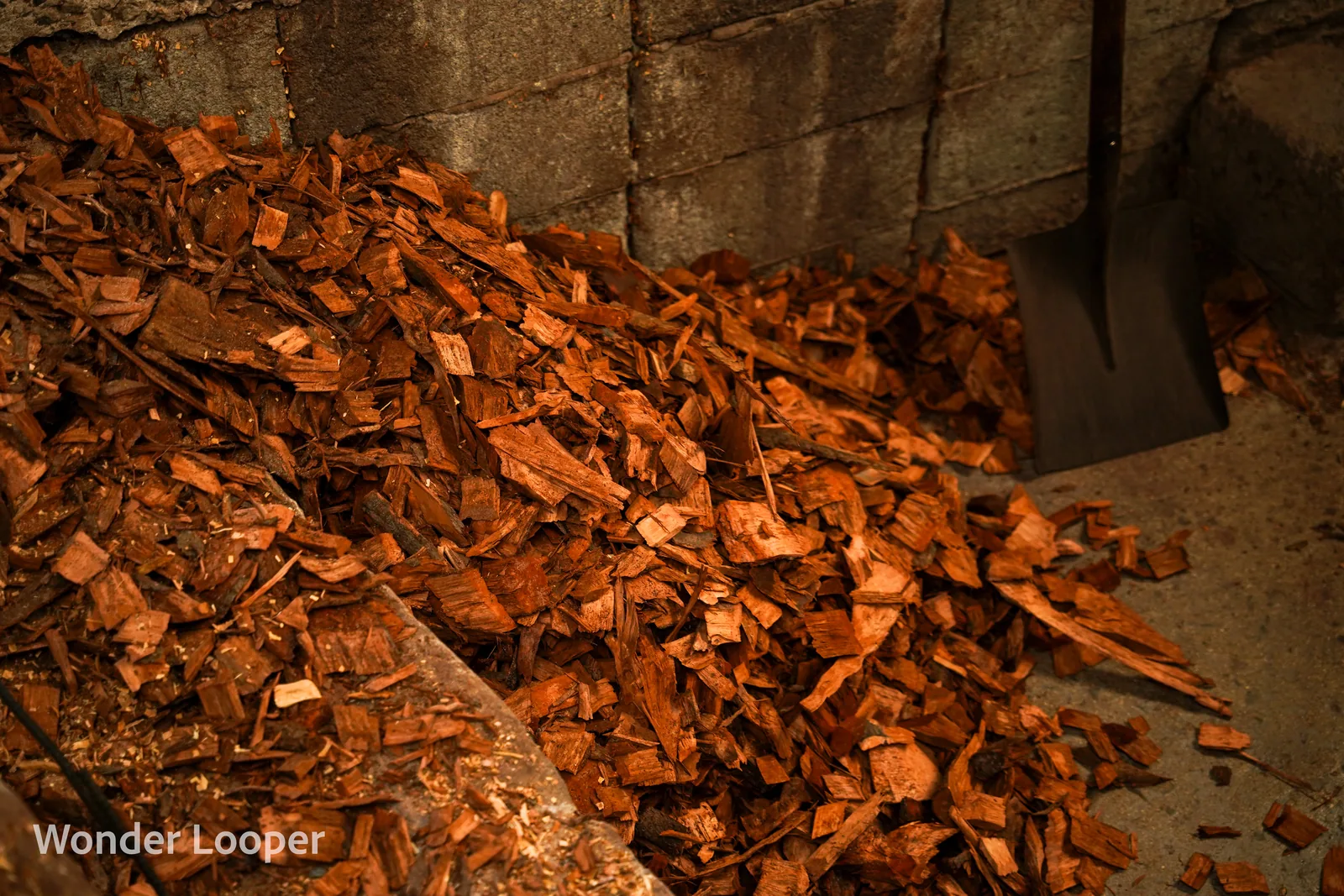
The preparation required is significant. About 600 kg of sharinbai chips are boiled in a large kettle for more than 16 hours over two days. The resulting dye is then left to cool and ferment naturally for about 10 days, during which microorganisms shift the chemistry from alkaline to acidic and the dye thickens and develops a distinctive smell. This fermentation changes the structure of the tannin compounds and affects how they bind to fibers.
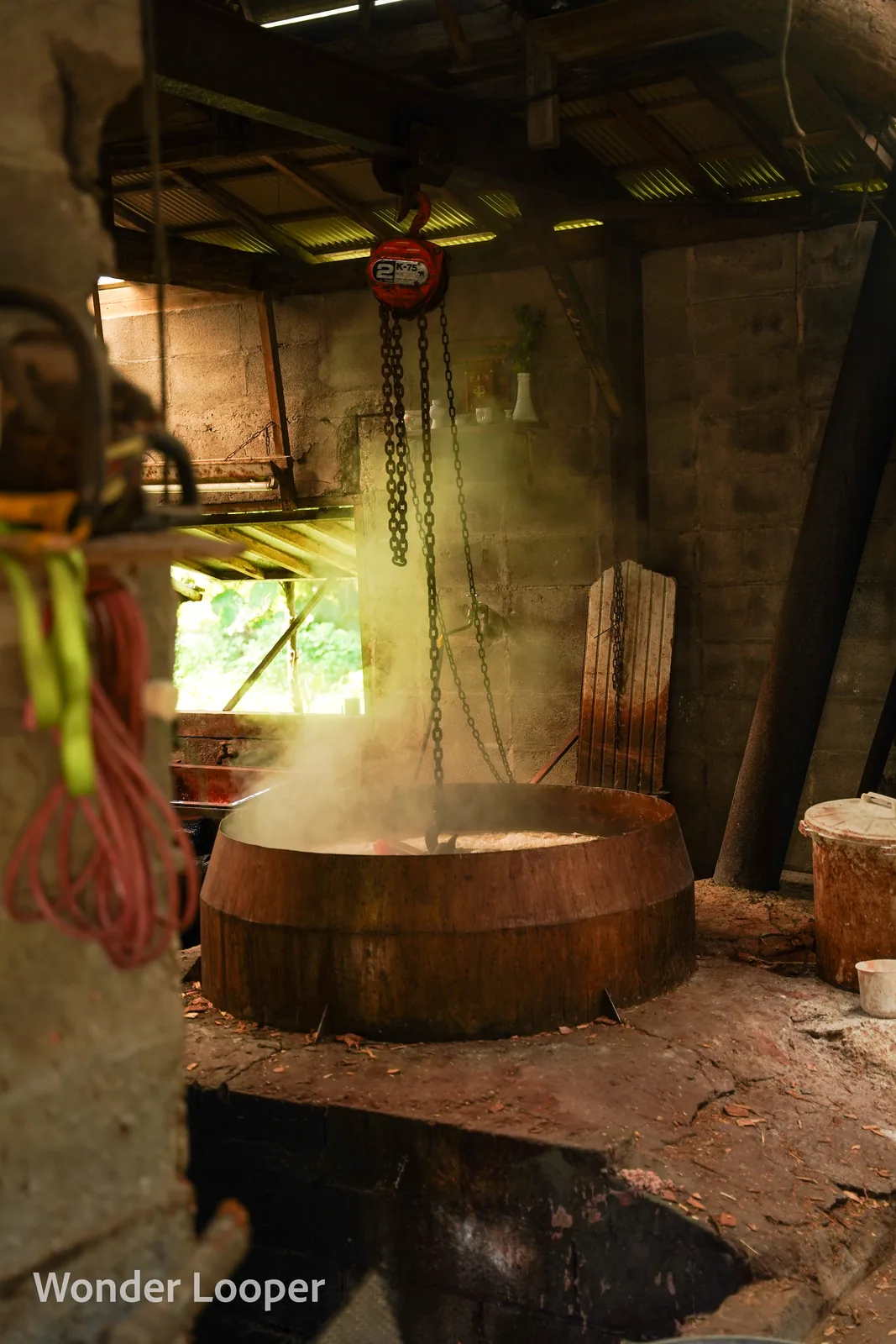
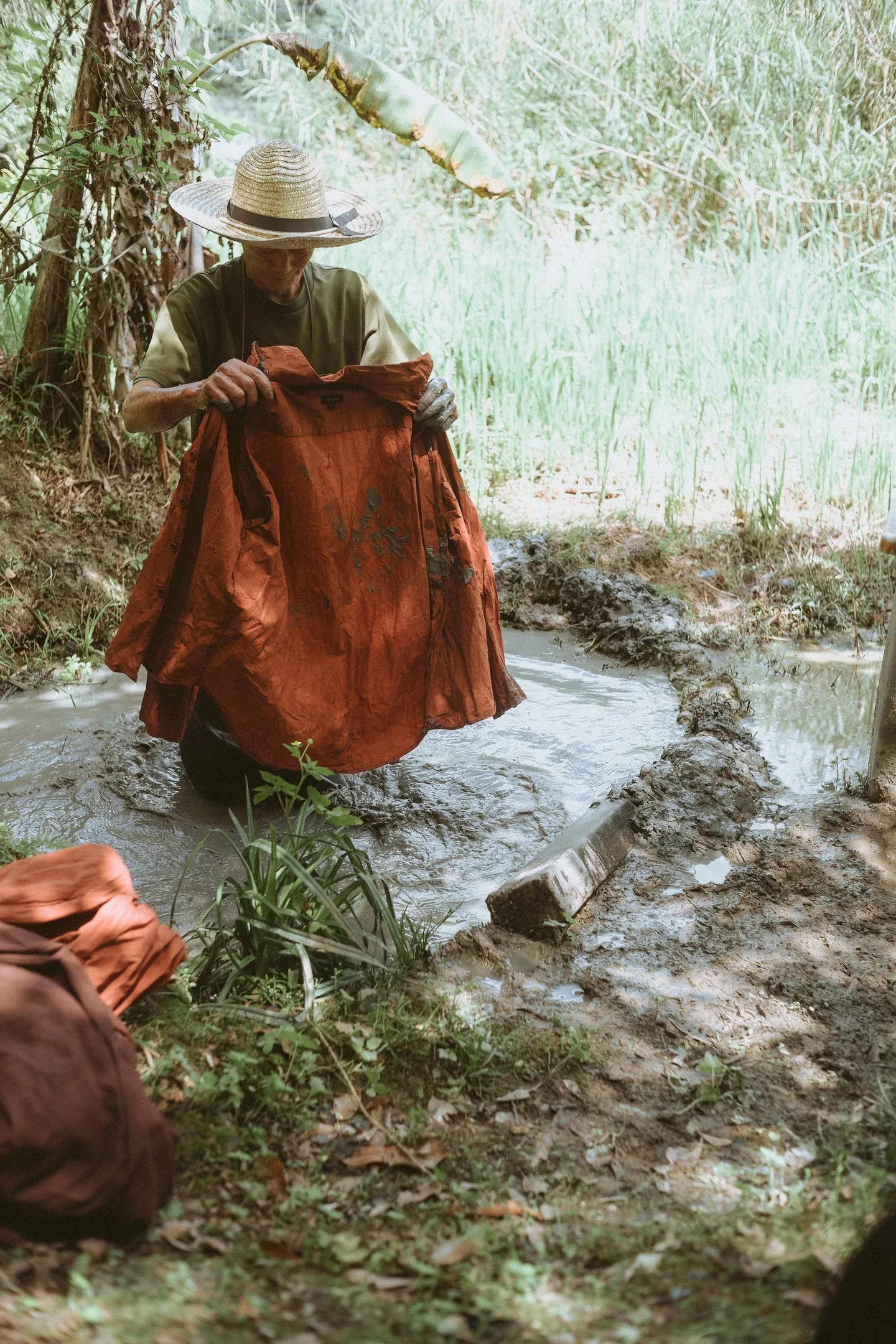
The threads or full garments are then immersed in the tannin broth, wrung out, and taken to iron-rich mud patties on the island. Before immersion in the mud, the sharinbai renders the fabric a gentle reddish brown color. The island mud is worked through the garment or yarn by hand. The tannins imparted into the fiber by the sharinbai react with the iron compounds in the mud, producing the dark iron–tannin color. The threads are rinsed, dried, returned to the tannin bath, and the cycle begins again. This is repeated roughly three to four times per session, and the sessions accumulate until the dyer has reached the desired color. For Ōshima Tsumugi, that means up to eighty sessions.
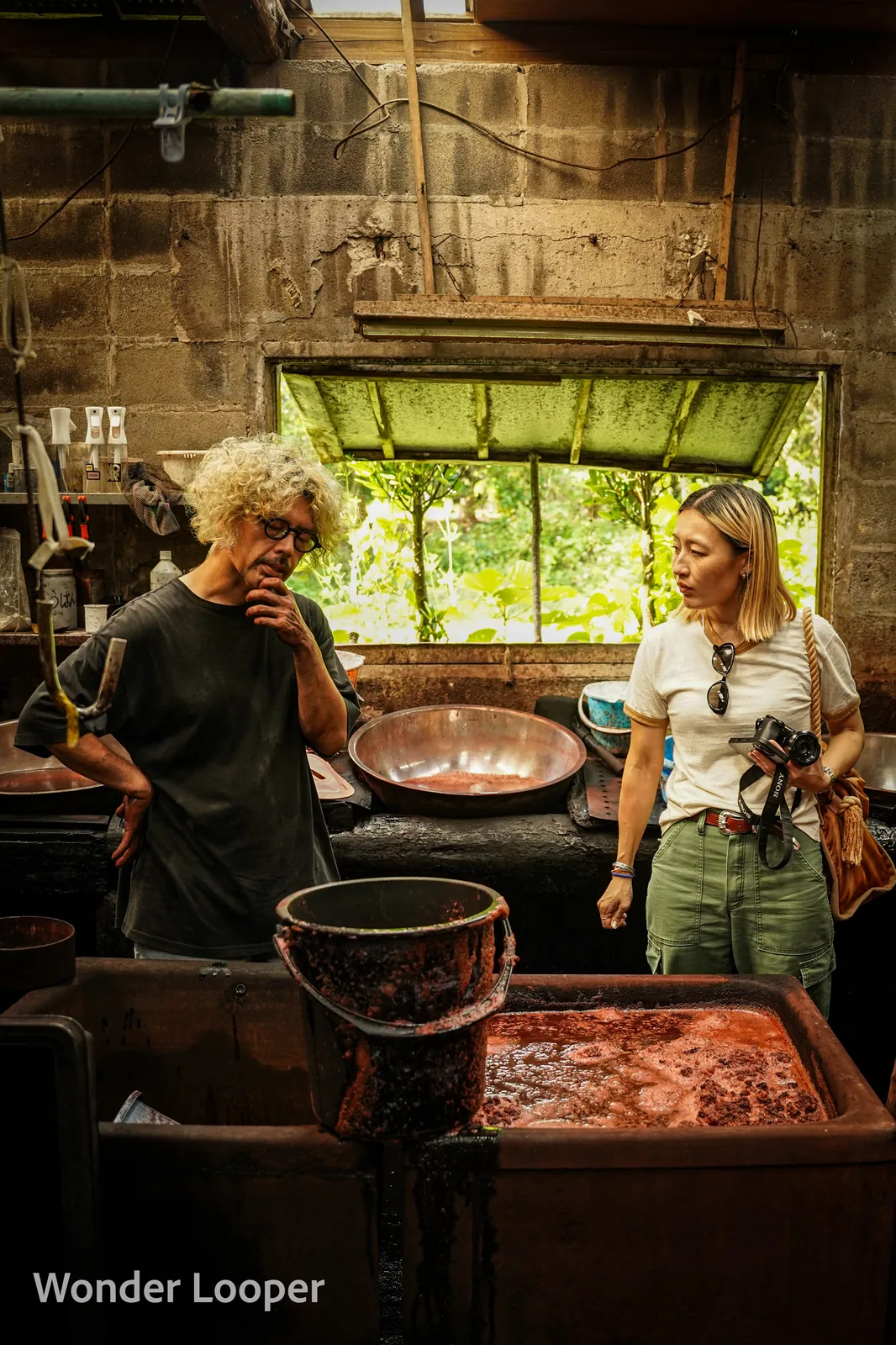
The result is a color that is neither a simple dye coat on top of the fiber nor a surface treatment. The iron–tannin complex is bound throughout the fiber itself, and the color has a depth that reflects this. The characteristic darkness of dorozome browns and black are unlike anything else.
Bògòlanfini: Shared Chemistry, Different Continent
The comparison with dorozome is striking, and the two traditions were unaware of each other. Bògòlanfini, Bamana mud cloth from Mali, arrives at the same fundamental chemistry: tannin plus iron, applied in sequence, through an independent path.
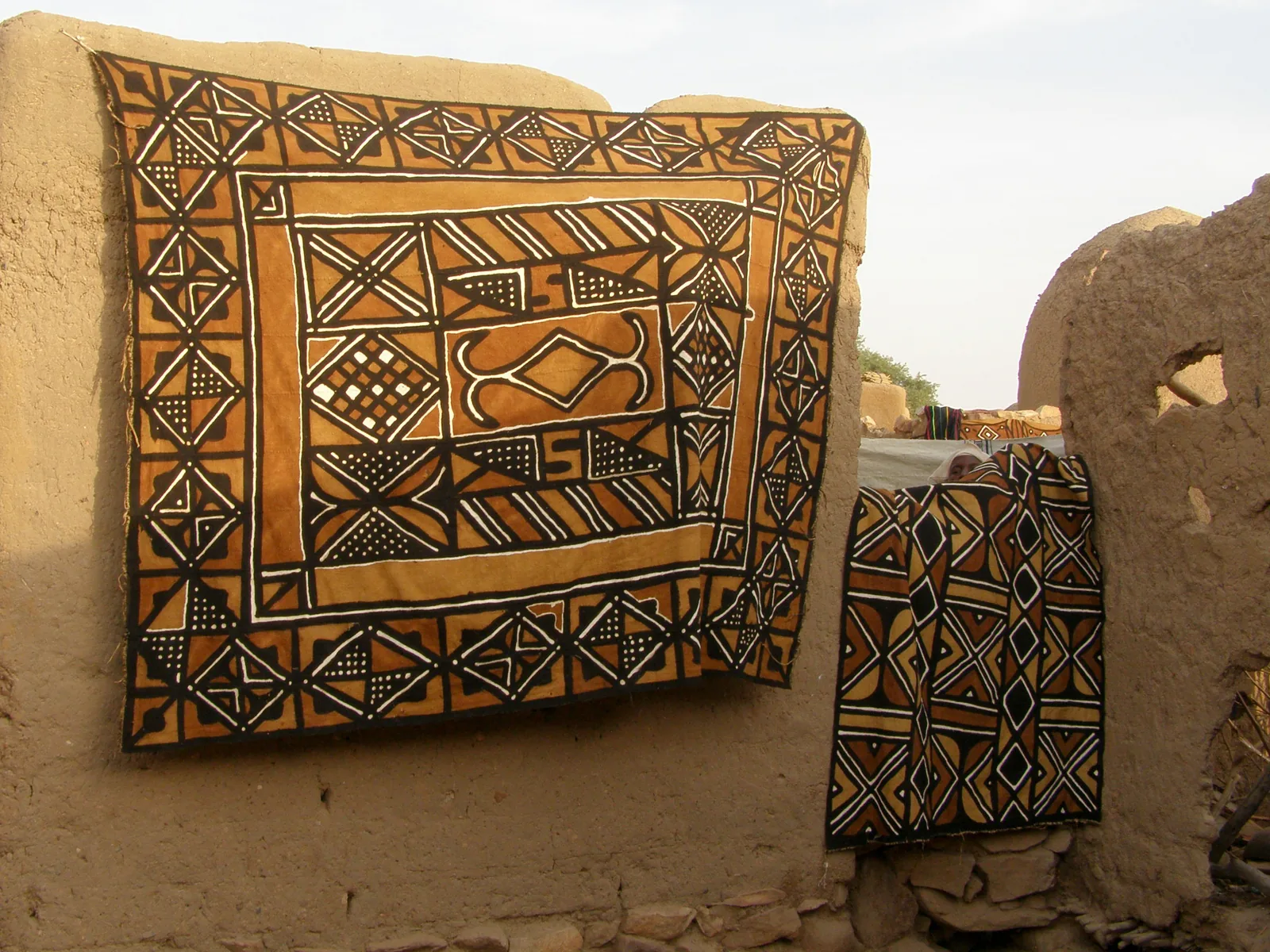
In the Bamana tradition, men weave narrow strips of cotton that are sewn together, and women dye them. The cloth is first soaked in a dye bath made from the leaves of the n’gallama tree (Anogeissus leiocarpa), a tannin source that leaves the cloth a yellow-brown that is not color-fast. The dyed cloth is left to dry in the sun and then painted with iron-rich mud from riverbeds over the tannin-treated surface. The iron and tannin react, fixing a dark pattern in place. Because the n’gallama dye is not color-fast, the parts of the cloth that were not painted with mud are removed upon washing, leaving behind intricate patterns and motifs.
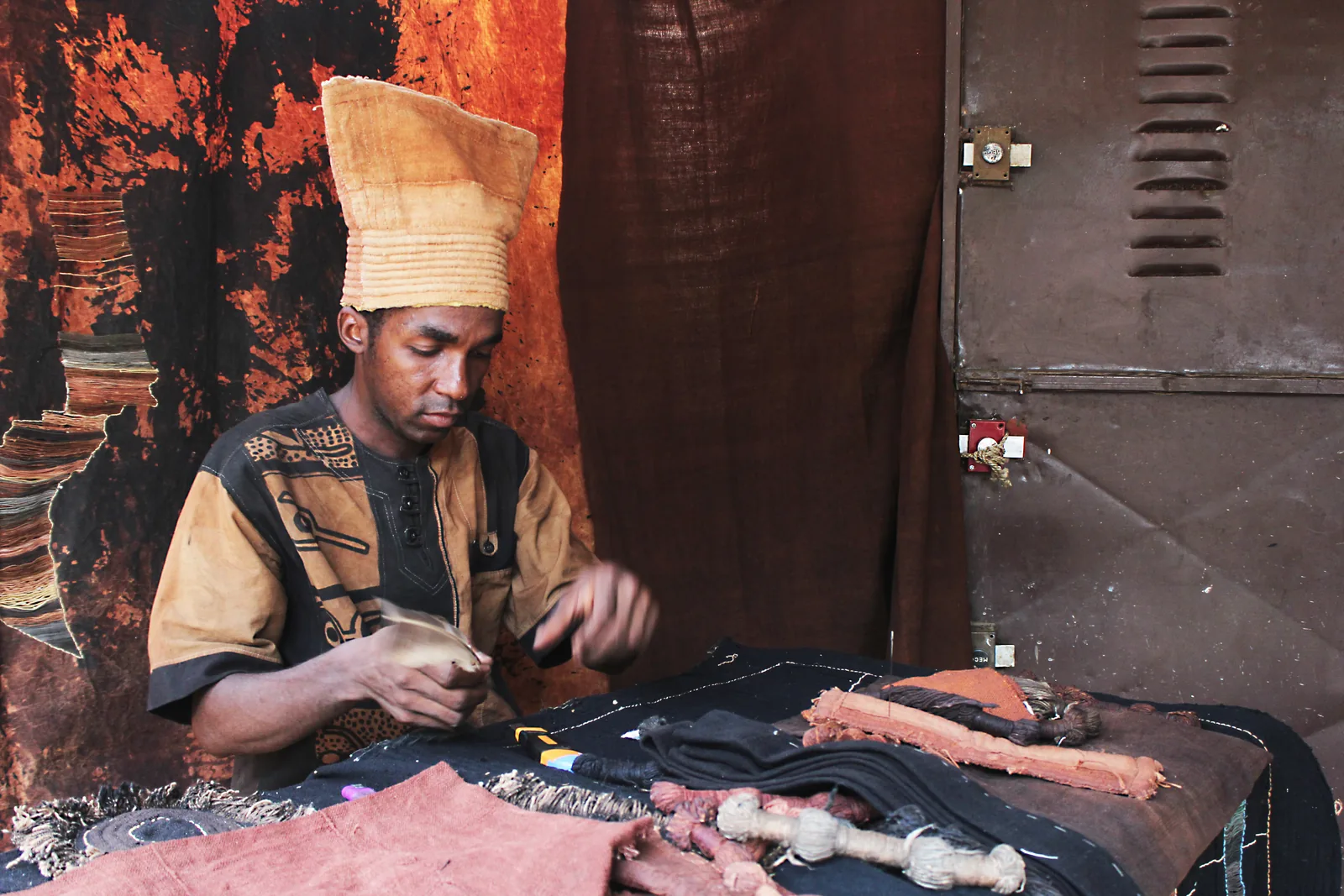
In Japan, the goal was a deep, even black for luxury silk weaving. In Mali, the goal was a patterned, symbolic cloth that carried social meaning. The Metropolitan Museum describes bògòlanfini patterns as communicating proverbs, songs, and historical events; the cloth was a form of notation as much as decoration. What both traditions share, beyond the chemistry, is a deep engagement with the specific materials of their landscape. Dorozome requires Amami Ōshima’s specific mud and Amami’s specific tree. Bògòlanfini requires the iron-rich mud of Mali’s rivers and the tannin of the Sahel region. Neither technique is portable: you cannot take dorozome to Kyoto or bògòlanfini to Senegal and expect the same result. The geography is a key ingredient in the equation.
Tannins, Iron, and Geography
Underneath walnut, cutch, and the mud-dyeing, the chemistry is the same. Tannins are polyphenolic compounds, and plants produce them in a huge variety, in bark, leaves, galls, heartwood, and seeds. Their job, evolutionarily, is defense: they bind aggressively to proteins, which is exactly what makes an unripe persimmon or a mouthful of strong tea taste chalky and astringent, and exactly what makes them useful on protein fiber like wool and silk. When a tannin encounters iron, whether in soil, in a mordant bath, or in the iron salts dyers have used for centuries, the two form an iron-tannate complex. Those complexes are dark. Depending on the tannin involved and how much iron is present, the result runs anywhere from warm brown to grey-brown to something close to black.
Dorozome and bògòlanfini point to the same chemistry, but it’s the geography that makes both possible. In each case, the place is not just where the dye happens to come from; it is part of the dye itself. Amami Ōshima’s coastal trees and iron-rich mud produce a brown-black that cannot be replicated elsewhere. In contrast, Mali’s river mud and Sahel tannins create a cloth whose meaning is inseparable from the land that made it. The chemistry is shared, but the result is local.
Kakishibu: The Dye That Deepens Over Time
Most dyes develop their color in the bath, through heat and time, and are finished once the cloth comes out. Kakishibu is different. It’s made by fermenting the juice of unripe persimmons, specifically the astringent shibu variety, for months or years, and the result is roughly 95 percent tannin by weight. Unlike everything else we’ve discussed thus far, kakishibu is an oxidation dye: the color continues deepening after the cloth leaves the bath, driven by air and sunlight. Historically, Japanese dyers treated that instability as a feature. They watched a piece change over a week, then a month, then a year.
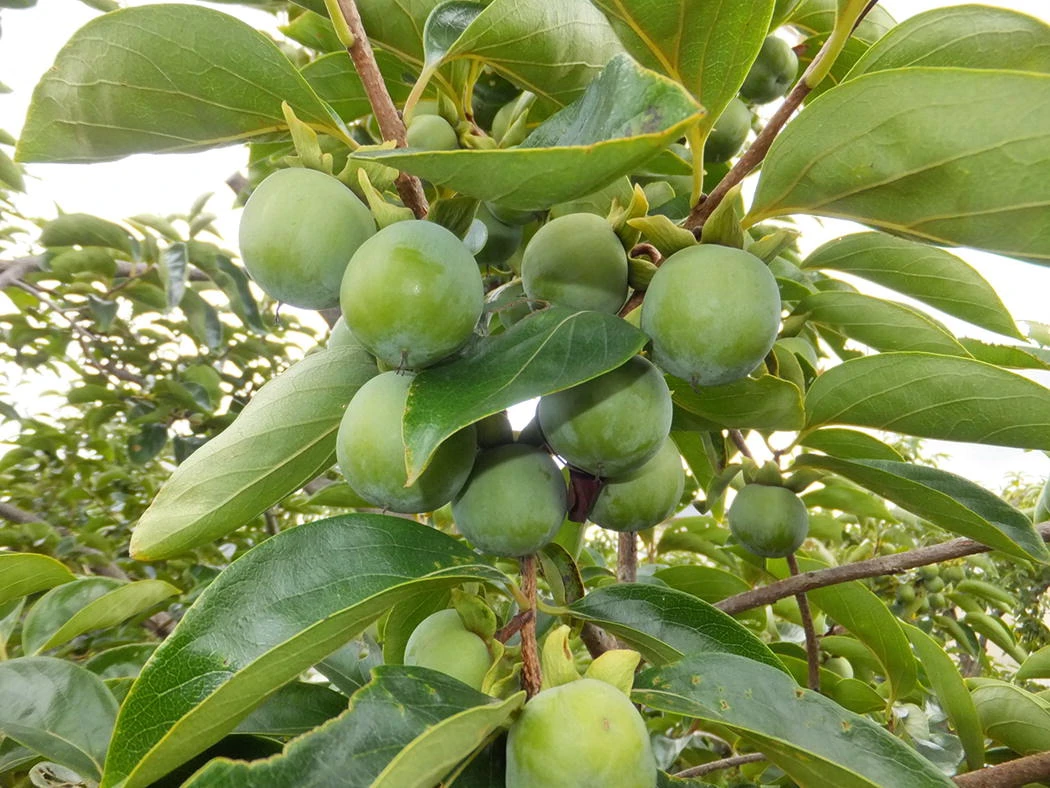
Kakishibu’s uses span well beyond clothing. For more than seven hundred years, kakishibu has coated fishing nets and farm tools, primed wood ahead of lacquer work, strengthened handmade paper, and preserved furniture as a natural fungicide. In garments, kakishibu has been used in the plain kakiso robes worn during the Heian period by lower-ranking samurai and by yamabushi, the mountain ascetic monks whose entire aesthetic ran against color. Demand collapsed after the Second World War once synthetic alternatives took over most of those jobs. A recent revival, driven by interest in low-toxicity alternatives to synthetic wood and fabric treatments, has brought it back as a working material rather than a museum curiosity.
The Industrial Revolution
In 1863, the German chemist Carl Alexander von Martius described what became known as Bismarck Brown, an azo dye built from a coal-tar diamine and named, in the fashion of the era, after the chancellor. Bismarck Brown never became a serious textile dye. It ended up mostly in the lab, staining tissue samples and mast cell granules, and later as a component of the Papanicolaou stain still used in cytology today. Its one real commercial footnote outside of the science lab was tinting soap amber. If you compare that to what alizarin did to madder farming — thousands of acres converted or abandoned within a couple of decades — the invention of Bismarck Brown barely registers as an economic event at all.
That’s not to say that these natural brown dyes weren’t impacted by the industrial revolution, however. Chrome tanning, patented by Augustus Schultz in 1884 and commercialized by Robert Foerderer’s “Vici” brand in 1889, replaced the vegetable tannins such as cutch that had darkened and preserved leather for centuries, with chromium salts. The adoption curve was brutal by period standards: US goat leather production, the category chrome tanning suited best, grew 1,600 percent through the 1890s while sheep and cattle hide usage grew in the low double digits. One trade writer called it more progress in tanning than any prior decade in the industry’s history. Cutch, which had spent centuries as one half of the standard tanning bath, is recorded as becoming obsolete somewhere between the world wars, which aligns with chrome tanning’s several-decade run to full dominance. Chrome tanning still dominates this market to this day, making up 85–90% of all tanned leathers produced worldwide.
On the cotton side, a separate and unrelated chemistry did the same job in dyeing. The first sulfur dye, developed by Croissant and Bretonnière in France in 1873, was called Cachou de Laval. Cachou and catechu both trace back to the same Malayalam word, kāccu, meaning “to boil” or “to heat.” Sulfur dyes became a workhorse class for cotton, brown included, because they were cheap, washfast, and easy to run at industrial volume. They still are. Sulfur dyeing is being phased out across the West now over pollution concerns, but it runs at full scale in China, which is part of why so much inexpensive brown-dyed cotton in stores today traces back there.
Wool and silk have their own synthetic story running in parallel. Sulfur dyes only work once they have been chemically reduced into a soluble form, and that reduction bath is strongly alkaline and close to boiling. Cotton can tolerate those conditions, but protein fiber doesn’t. That alkalinity will hydrolyze wool or silk’s structure and degrade it. The workhorse class for protein fiber became acid dyes, which bond ionically to the cationic sites that occur naturally in wool, silk, and nylon rather than needing an alkaline bath to fix.
Modern Makers
Walnut is fairly uncommon among artisans due to the availability of cutch, which is considered to be the superior brown dye. But there are still a few brands out there utilizing the ancient tradition. Merely Made has a series of Lazy Shirts dyed with natural products. Lady White Co has announced a walnut-dyed shirt as part of their SS27 collection. HARDENCO has a worker’s jacket hand-dyed in walnut and has made pants from the same material in the past. Solid State Clothing has a t-shirt dyed with locally-foraged walnuts for a very reasonable price.
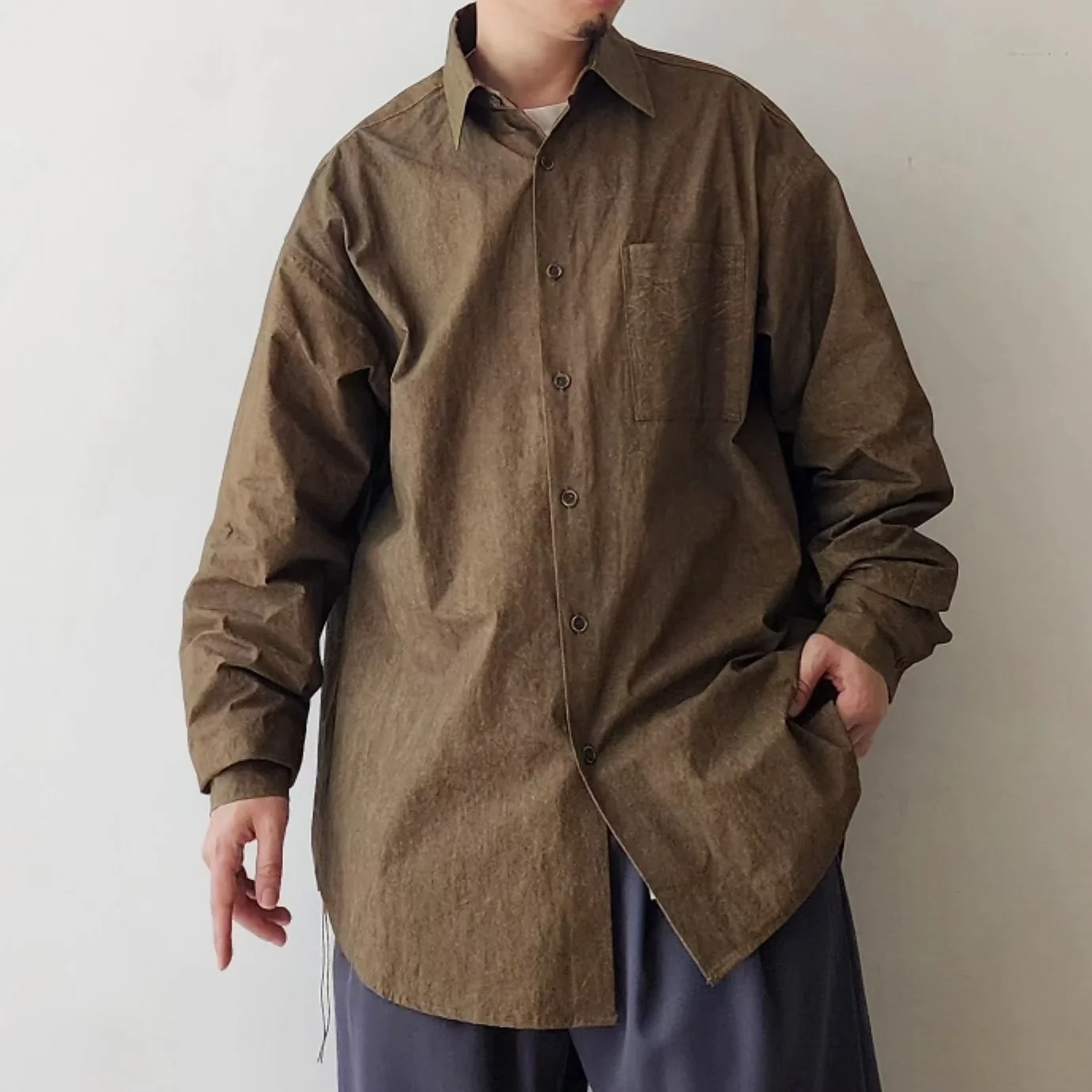
Indi + Ash has an extensive collection of garments dyed with cutch, which also feature Kala cotton, a cotton variety native to the Kutch region of Gujarat, India. The new 3sixteen collaboration with Blue Owl Workshop features a tee dyed with cutch and denim with a cutch overdye. Tintoreria has a cutch-dyed utility jacket made in partnership with Green Matters Natural Dye Company. The William Frederick Airport Half-Zip is made in collaboration with Soft Goods and dyed with cutch and iron by Cara Marie Piazza.
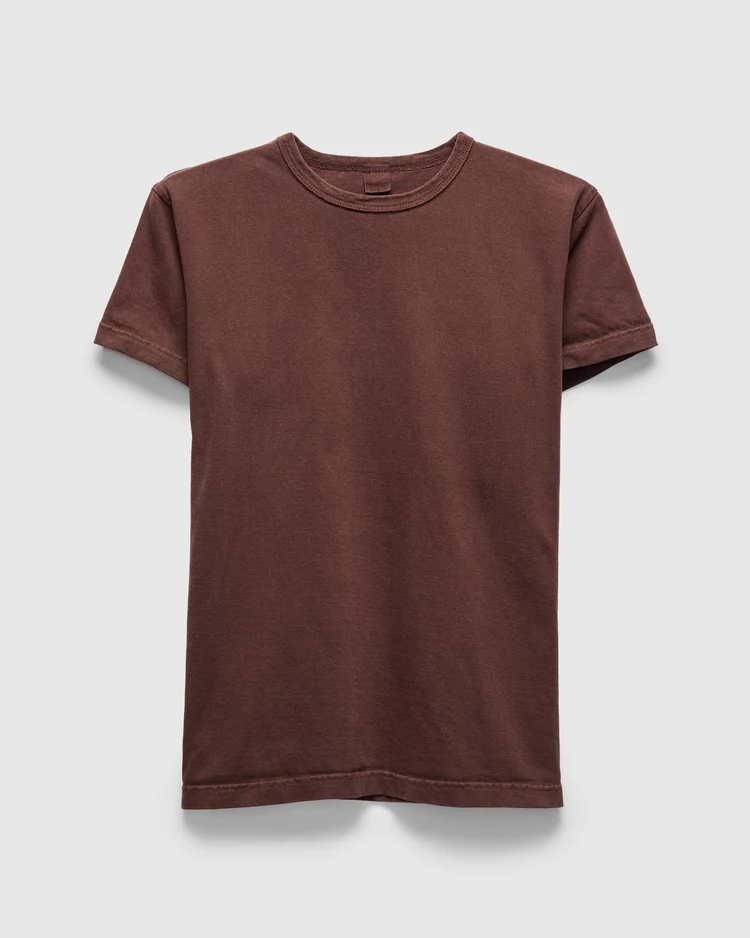
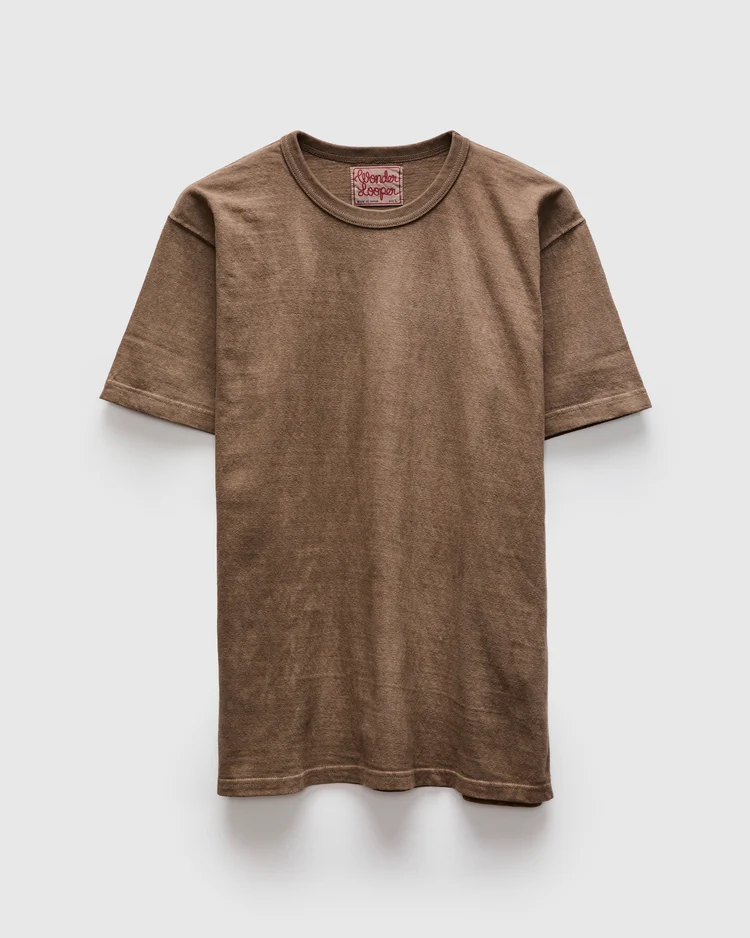
Dorozome is massive in the heritage menswear space right now. Wonder Looper, who I’ve spoken with extensively in the making of this article, recently put out a dye pack featuring dorozome-dyed tees in varying intensities. Studio D’Artisan has also been doing a lot with dorozome in recent months, everything from tees to linen and boro shirts, to some of the most incredible sashiko jeans you’ll ever see.
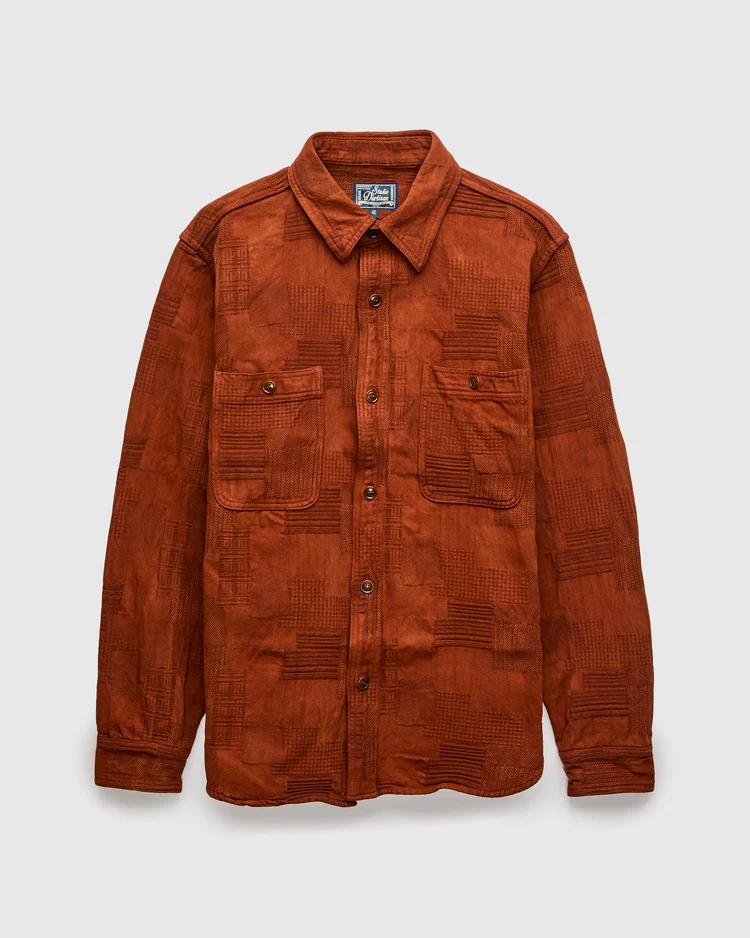
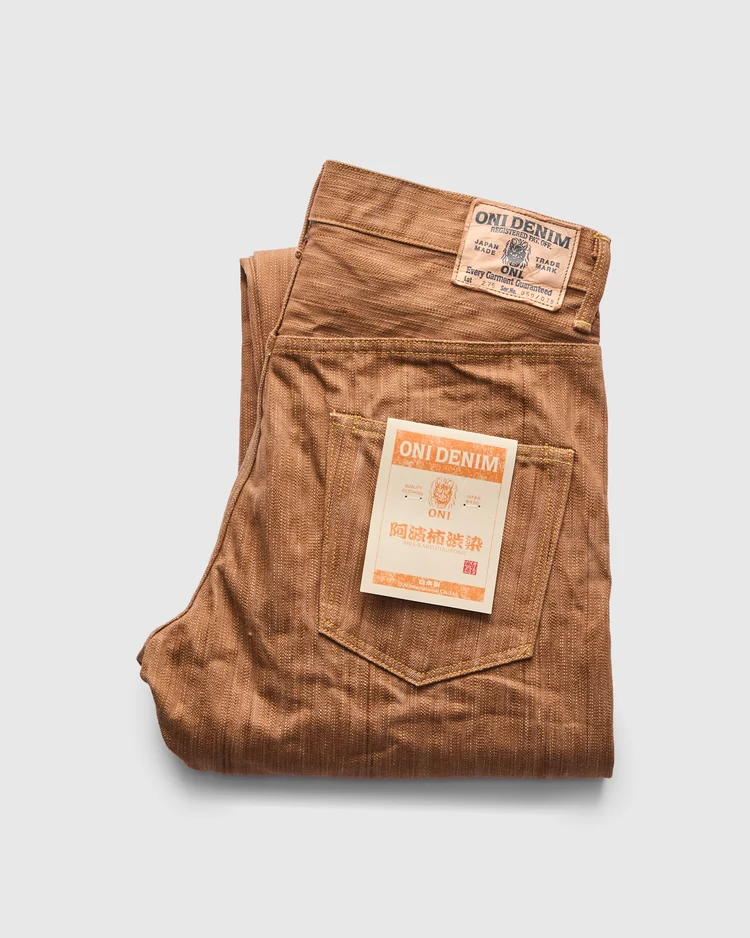
Kakishibu had its moment just before dorozome took the market this summer. Graph Zero developed a denim with a kakishibu warp and natural indigo weft. Oni put out a similar concept but with an undyed ecru weft. Studio D’Artisan put out a stunning super slub Type II Jacket for their 45th anniversary. Kaptain Sunshine has a pair of painter’s pants made with a cotton-hemp blend. Y2 Leather put out a horsehide leather jacket tanned with kakishibu. The Kapital Monkey Cisco 5S Jeans are a sashiko topstitched kakishibu denim.
Conclusion
Brown is the color of things that have been weathered, worked, steeped, and left to deepen. It lives in bark and walnut hulls, in tea and tobacco, in mud, tannin, iron, and the darkening of cloth over time. Unlike red, which announces itself, brown accumulates quietly: layer by layer, bath by bath, wear by wear, until the distinction between dye and material begins to blur. Its history is not a record of excess, but of attention — of learning how to make beauty from what the landscape provides, and of discovering that the colors closest to the earth are often the hardest to get right. What brown lacks in spectacle, it makes up for in depth. It is the color of place made visible.
If brown is the color of what settles and deepens, the next step is to look at the colors that emerge from sunlight, flowers, bark, and the golden parts of the natural world.
Next in the Dye Series: Yellow. In the meantime, the Fit Finder is the best way to find denim that fits your body — your actual measurements, not vanity-sized tags.