And yet pearls may be looked upon as pretty nearly a possession of everlasting duration—they descend from a man to his heir, and they are alienated from one to another just like any landed estate. But the colours that are extracted from the murex and the purple fade from hour to hour; and yet luxury, which has similarly acted as a mother to them, has set upon them prices almost equal to those of pearls.
— Pliny the Elder, Natural History, Book IX, Chapter 60
The Phoenicians built one of the ancient world’s most lucrative industries on a smell so bad that it became part of their cities’ reputations.
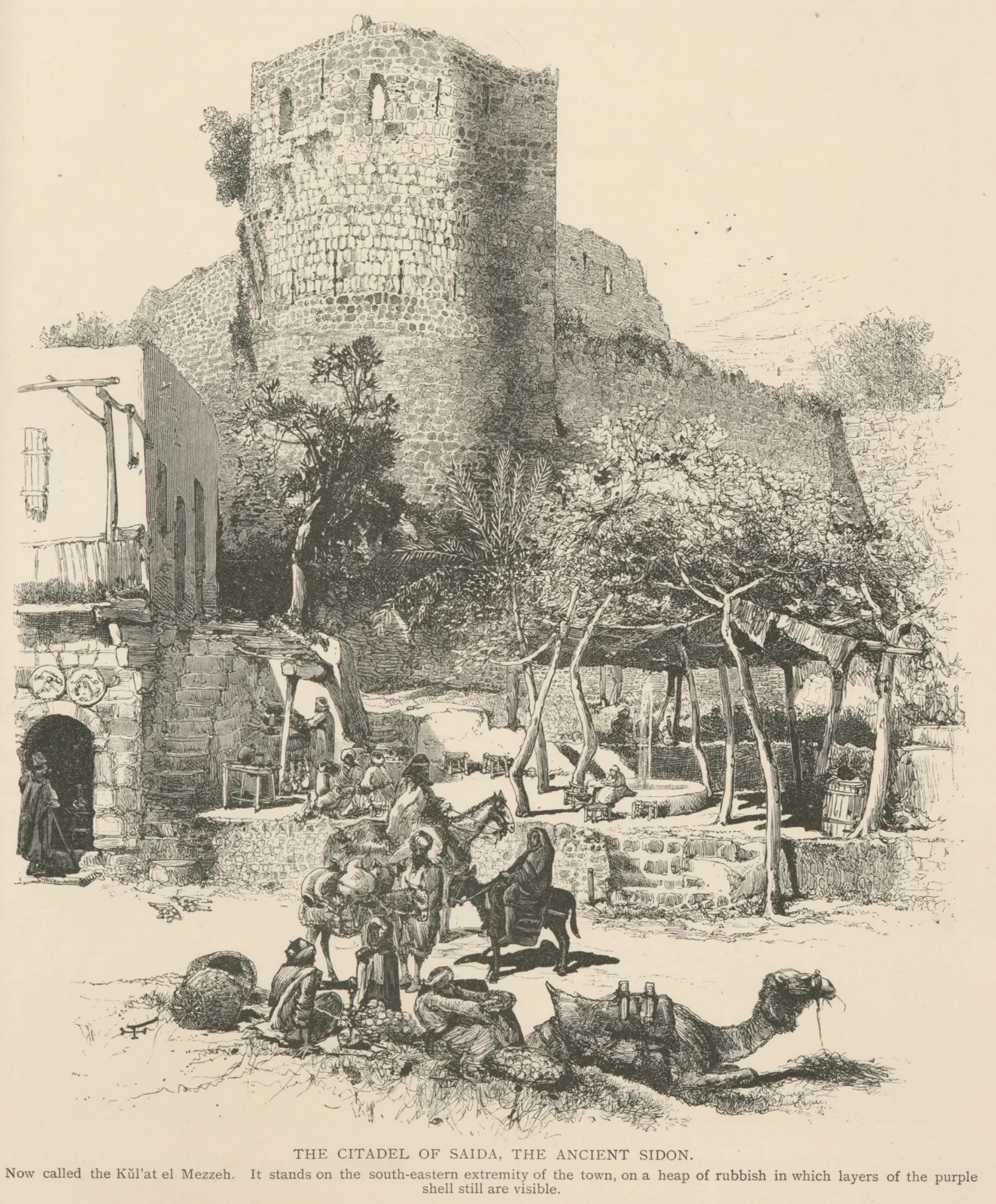
At Tyre and Sidon, on the Levantine coast, the dyeworks were a part of the city itself. Archaeologists still find the evidence in the ground: mounds of crushed sea snail shells, hundreds of thousands of them, piled where the vats used to be.
The people doing that work were producing what may have been the most expensive substance, by weight, traded in the ancient Mediterranean.
The Gap Between Red and Blue
Purple is common in nature. Blackberries, elderberries, red cabbage, black beans, purple corn, and eggplant skin can turn boiling water violet within minutes. Their color comes from anthocyanins, the most abundant purple pigments on Earth. On cloth, however, they are nearly useless.
Anthocyanins change color with pH, shifting from red in acid to purple at neutral, then blue and green as alkalinity rises. That makes a stable purple difficult to reproduce. The water, the wearer’s sweat, and even the soap used to clean the vat can alter the result.
They are also water-soluble and sensitive to light and heat. They can rinse out in the first wash, while a hot dye bath can destroy the pigment before it reaches the cloth.
Durable natural purples were scarce, and their sources were geographically isolated. Logwood grew in Central America, murasaki in East Asia, and orchil on Atlantic and Mediterranean cliffs, although orchil faded in sunlight. Most dyers instead layered red and blue or used iron to push a red dye toward violet.
The Mediterranean, where purple became larger than life, had no plant source within reach. It had a snail.
↑ Table of ContentsTyrian Purple: The Color of an Empire
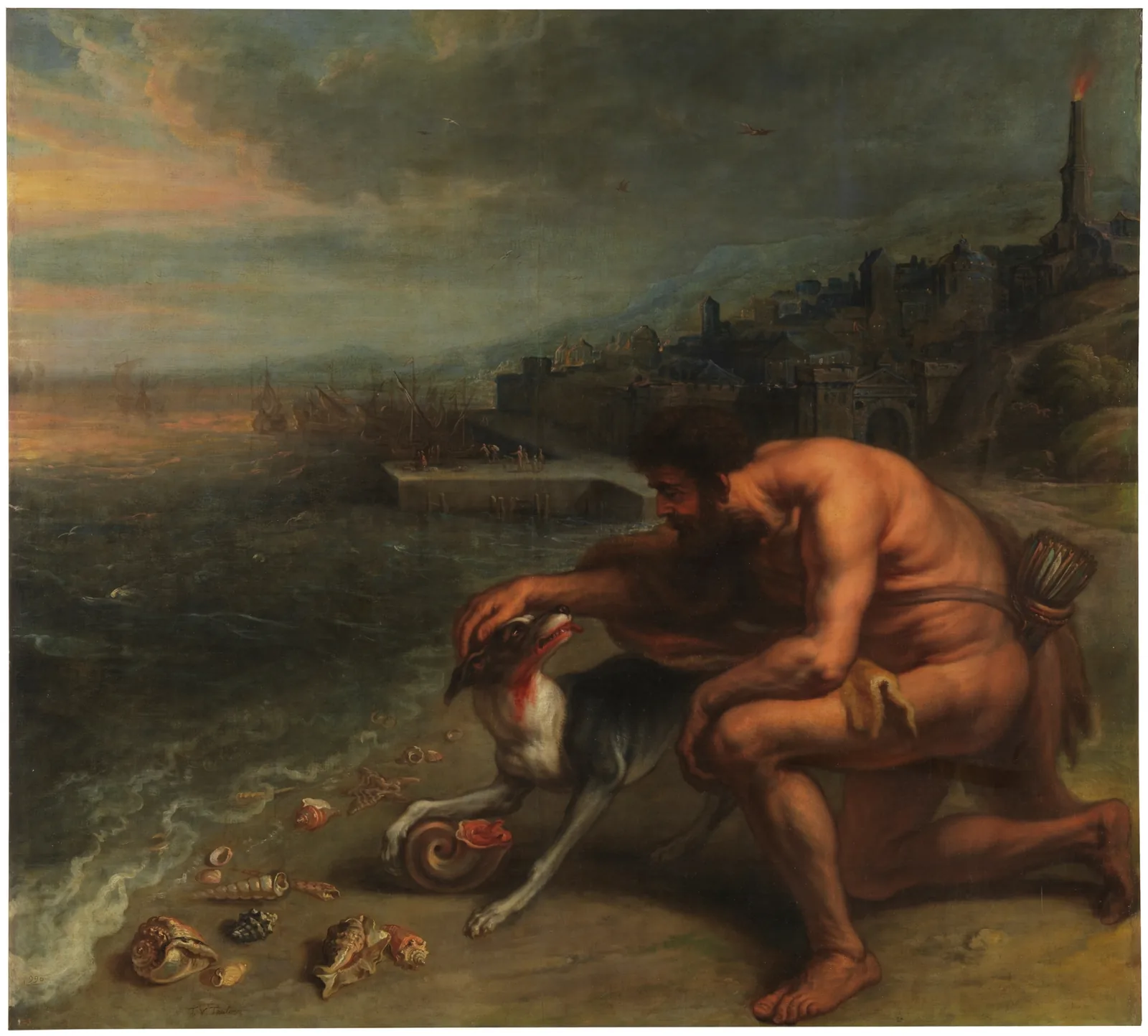
The discovery of Tyrian Purple is attributed to Hercules’s dog in a legendary tale recorded by the second-century scholar Julius Pollux in his Onomasticon. According to the myth, Hercules was walking along the Mediterranean coast with his lover, the nymph Tyro, when his dog bit into a spiny murex sea snail washed up on the shore. The snail’s defensive secretions stained the dog’s mouth a deep violet. Captivated by the color, Tyro declared that she would not marry Hercules until he gave her a robe dyed in that exact shade. Hercules gathered more snails, extracted their fluid, and dyed the fabric, inadvertently inventing the ancient world’s most luxurious and exclusive pigment.
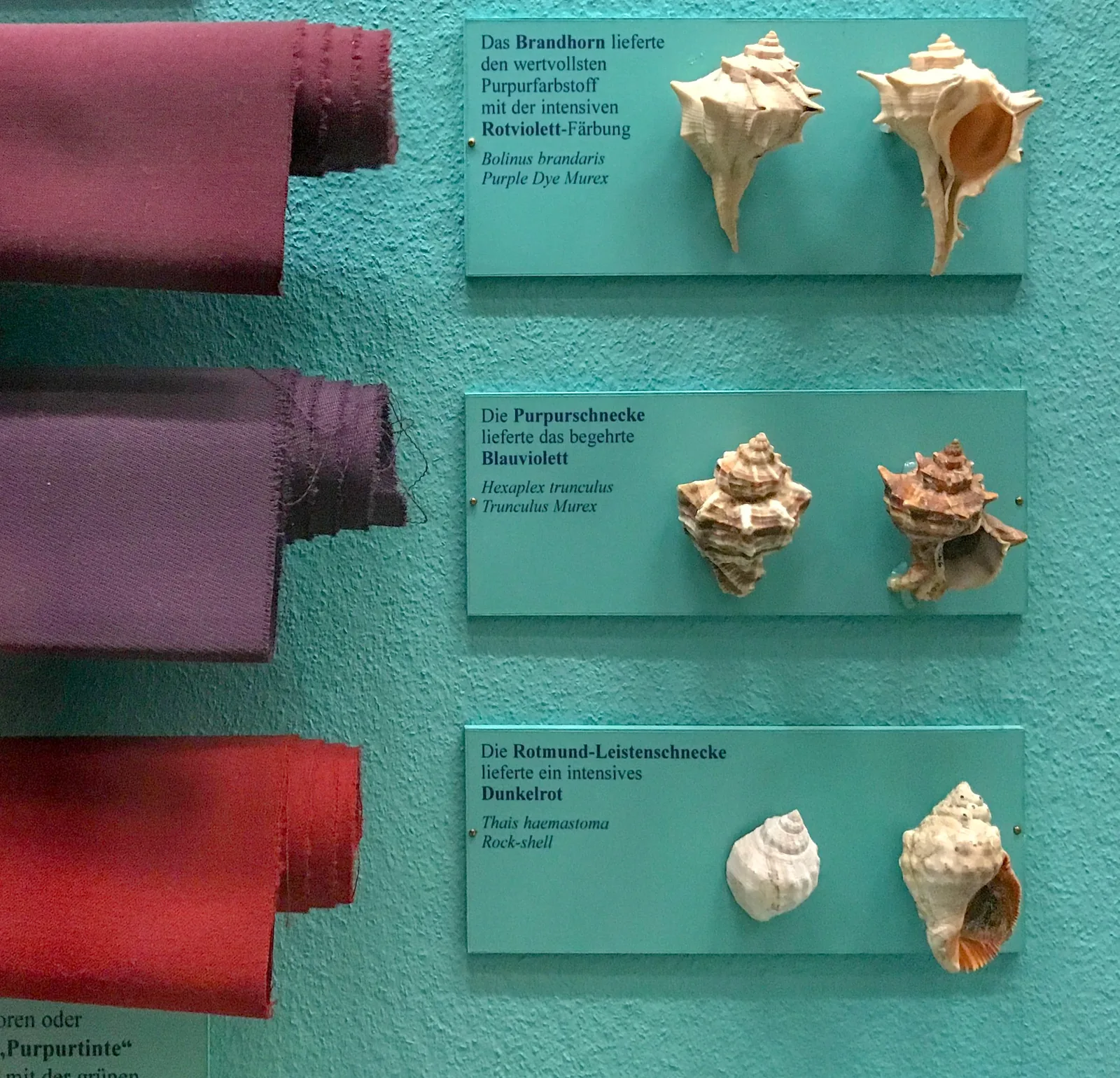
Three Mediterranean species sustained the trade: Bolinus brandaris, the spiny dye-murex; Hexaplex trunculus, the banded dye-murex; and Stramonita haemastoma, the rock-shell. Each has a hypobranchial gland that secretes mucus loaded with colorless precursor compounds. In the living animal, the mucus appears to provide defensive and antimicrobial protection. Cut the gland open and the fluid runs clear or faintly yellow, not purple.
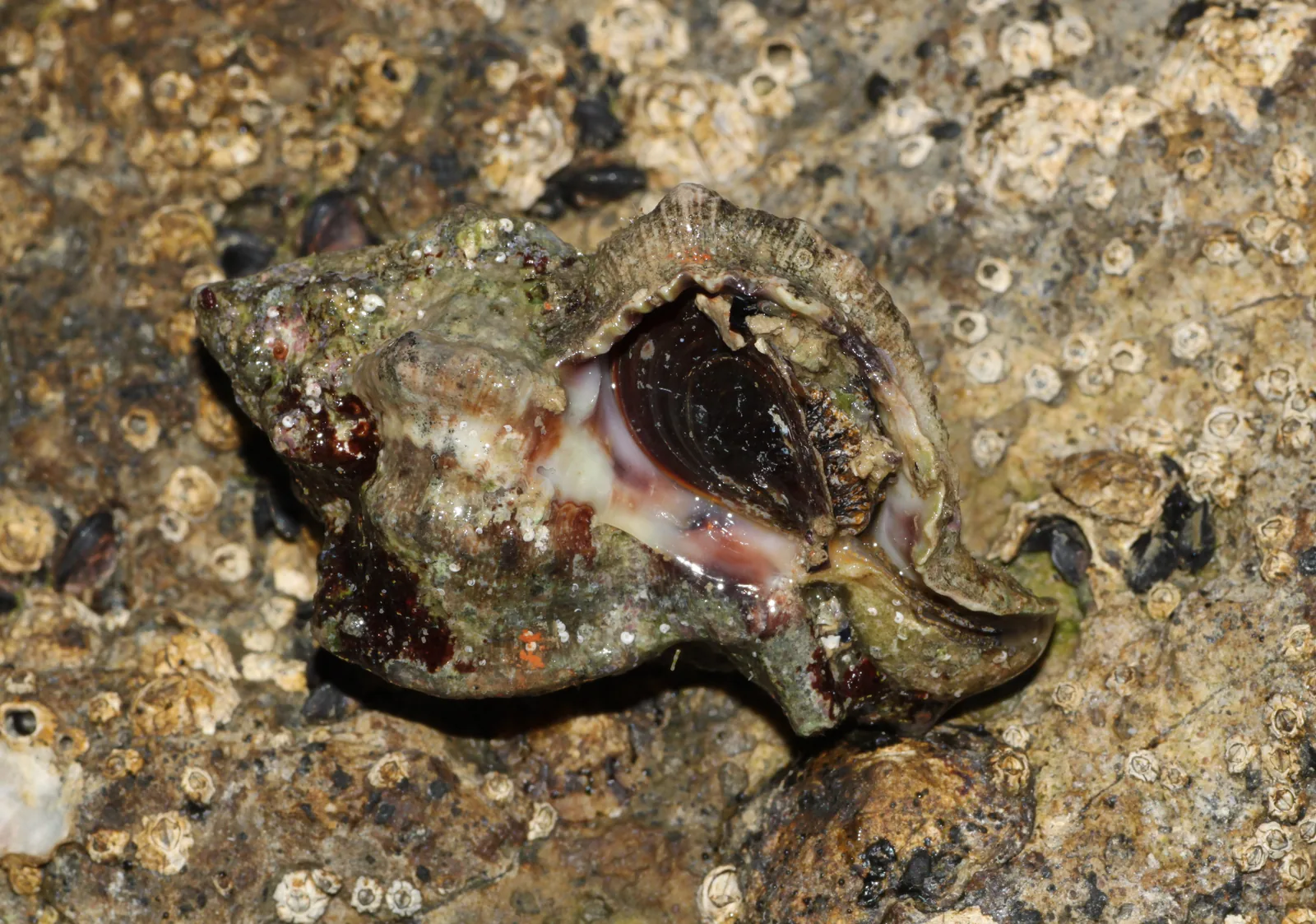
The transformation follows a sequence: enzymes in the mucus release the precursor, oxygen in the air oxidizes it, and light drives the final reaction. The color develops in front of you, moving from yellow to green to blue before settling into purple within minutes. If you have read Part One of this series, you will recognize the same mechanism in indigo.
The molecule responsible for Tyrian Purple is 6,6′-dibromoindigo, a form of indigotin with bromine atoms at two positions on the ring. It belongs to the vat-dye category described in Part One.
Bromine makes the dye purple rather than blue, and it also gives the color a useful kind of instability. Light strips bromine from the molecule. A vat containing Hexaplex trunculus dye, exposed to strong sunlight during processing, can debrominate and drift toward blue. Kept in the shade, it holds its violet color. Ancient dyers controlled the hue by regulating sunlight exposure.
Like indigo, the color is trapped inside the fiber rather than chemically bound to it, which helps explain Tyrian Purple’s extraordinary colorfastness. Pliny claimed that the dye improved with age rather than fading. In 2021, archaeologists working in the Timna Valley recovered wool fibers dyed with Tyrian Purple and dated to roughly 1000 BCE. After three thousand years in the ground, the fibers remained visibly purple.
The Price of a Gram
In 1909, the chemist Paul Friedländer set out to determine the structure of the ancient dye. First, he had to make some. He processed twelve thousand specimens of Murex brandaris and recovered 1.4 grams of pure pigment, enough to dye the trim of a single garment.
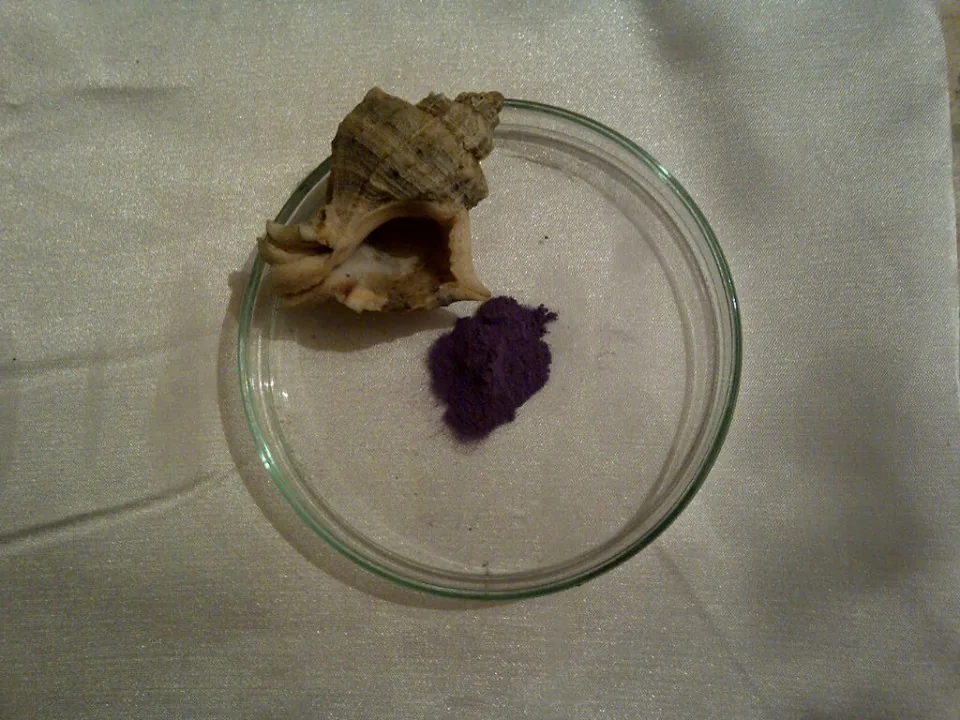
Most of what we know about ancient Tyrian Purple comes from the only surviving description of the process, in Pliny the Elder’s Natural History. Tyrian dyers extracted the glands from larger snails, added salt at a fixed ratio, and steeped the mixture for three days. They then boiled it over moderate heat, repeatedly skimmed away the flesh, and reduced it for roughly ten days. The snails had to be alive when opened because the precursor degrades quickly after death. For smaller snails, whose glands were difficult and time-consuming to extract, workers dumped thousands of specimens into mortars and crushed them whole. The vats sat in the sun as the material putrefied for days. The decomposition produced an overwhelming stench of rotting shellfish and sulfur compounds that blanketed the island city.
…and although the great number of dye-works makes the city unpleasant to live in, yet it makes the city rich by reason of the superior skill of its inhabitants.
— Strabo, Geography, Book XVI, Chapter 2, Section 23
Pliny described the process as requiring 200 pounds of dye solution for every 50 pounds of wool. Compare that ratio with Friedländer’s yield, and the shell mounds archaeologists still uncover at Tyre begin to make sense. A single high-status Roman garment, fully dyed rather than merely trimmed, could require a quantity of snails almost impossible to describe without sounding exaggerated. An entire coastal extraction economy was required for a single garment.
Tyrian Purple was not the bright violet the word purple suggests today. Pliny described its most prized shade as “the colour of clotted blood, blackish at first sight but gleaming when held up to the light.” Rome’s premium purple, dibapha, was dyed twice to produce a deep red-violet closer to dried blood or aubergine than lilac.
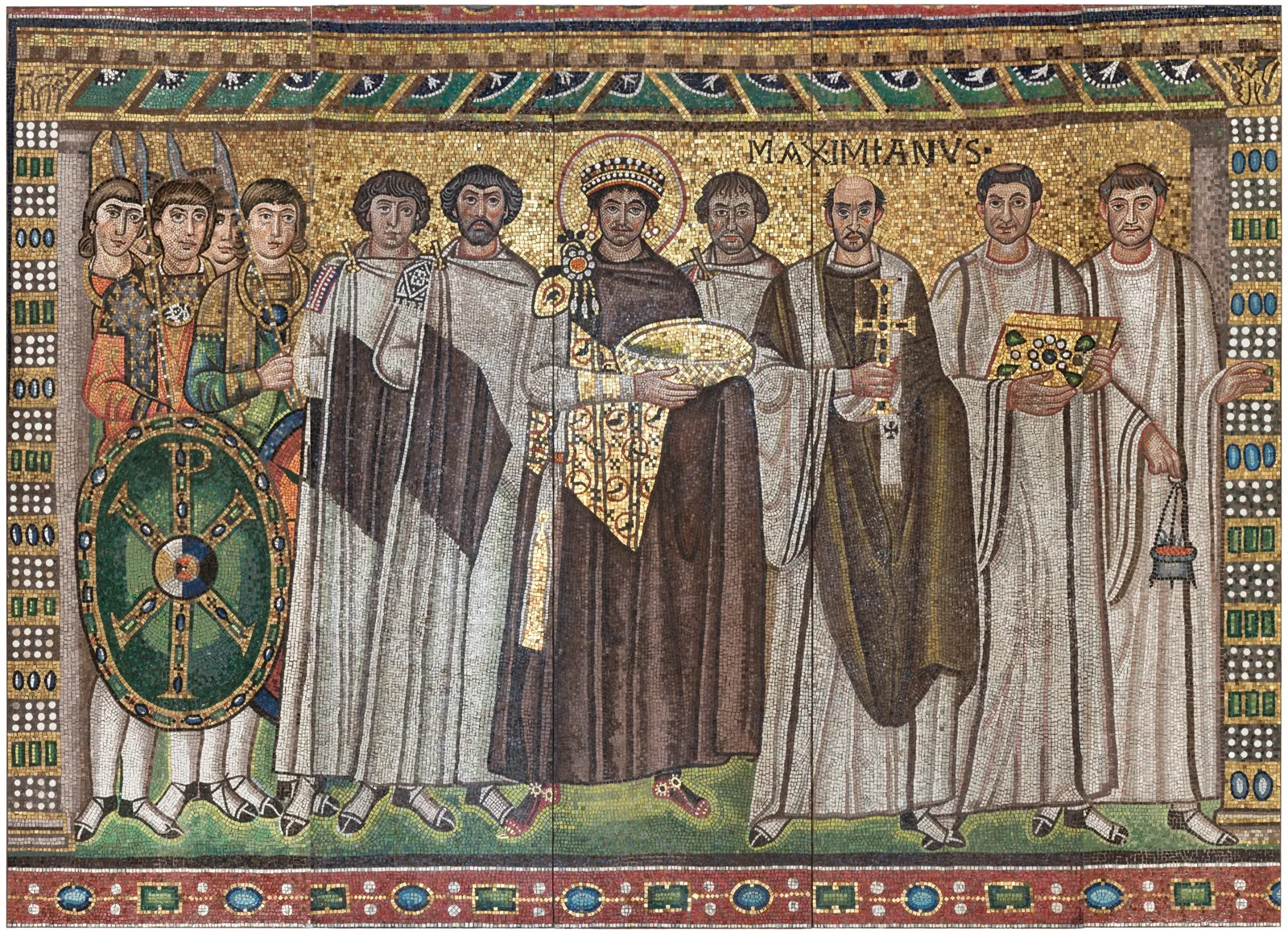
Then the supply chain broke. Murex purple production was concentrated in imperial workshops, and it did not survive the sack of Constantinople in 1204. The knowledge remained, but the new rulers no longer funded it. No one afterward seems to have assembled the capital, access to the coastline, and labor required to sustain a dye whose production consumed twelve thousand snails per gram. Cardinals eventually switched to scarlet dyed with kermes, the insect red covered in Part Four, and the color of Roman authority went out of production for roughly seven centuries.
Tixinda: The Purple That Survived
The one place where shellfish purple never went out of production was far from the Mediterranean.
On the Pacific coast of Oaxaca, Mixtec dyers from Pinotepa de Don Luis have colored cotton with sea snails for roughly three thousand years. The snail is Plicopurpura pansa. In Mixtec, it is tixinda; in Spanish, caracol púrpura. The chemistry is closely related to that of Mediterranean murex, and the color develops in the same way, through air and light.
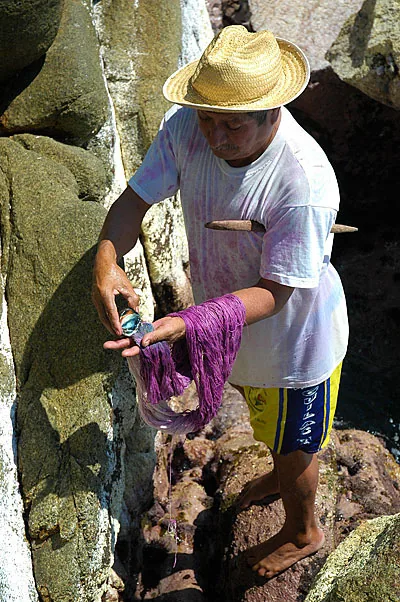
Whereas the Phoenician process required killing the animal, the Oaxacan method does not. Dyers walk the rocky shoreline at low tide, pry a snail loose with a small wooden stick, and press on it until it releases its secretion directly onto the waiting cotton thread. The snail is then wetted and returned alive to its rock. The fluid goes on the thread white, turns yellow, then green, then settles into purple as it oxidizes in the sun, with a sharp smell that dyers describe as somewhere between low tide and garlic.
It is careful work with a poor yield. Roughly three hundred snails are needed to dye a single 250-gram skein of cotton. Dyers work a stretch of coast on foot for weeks, and the thread they produce goes to the weavers of Pinotepa de Don Luis, where it becomes the purple stripes in the posahuanco, the wrapped skirt that is the community’s central ceremonial garment.
The tradition nearly ended in the 1980s. A Japanese venture, Púrpura Imperial, contracted local fishermen who lacked the traditional knowledge to harvest at commercial volume near Huatulco, and the snail population near those beaches collapsed within a few years. Mexico’s fisheries authority began regulating collection in 1988. The resulting rules, advocated by Mixtec dyers, recognized the community as the only party legally permitted to extract the dye, using a sustainable method that returns each animal to its rock.
Only a few people hold those licenses, and no additional licenses are issued. Reports estimate that roughly fifteen men, all over fifty, provide thread to a weaving cooperative of about sixty women. It is a functioning craft economy — and an endangered one.
↑ Table of ContentsMurasaki: Japan’s Forbidden Color
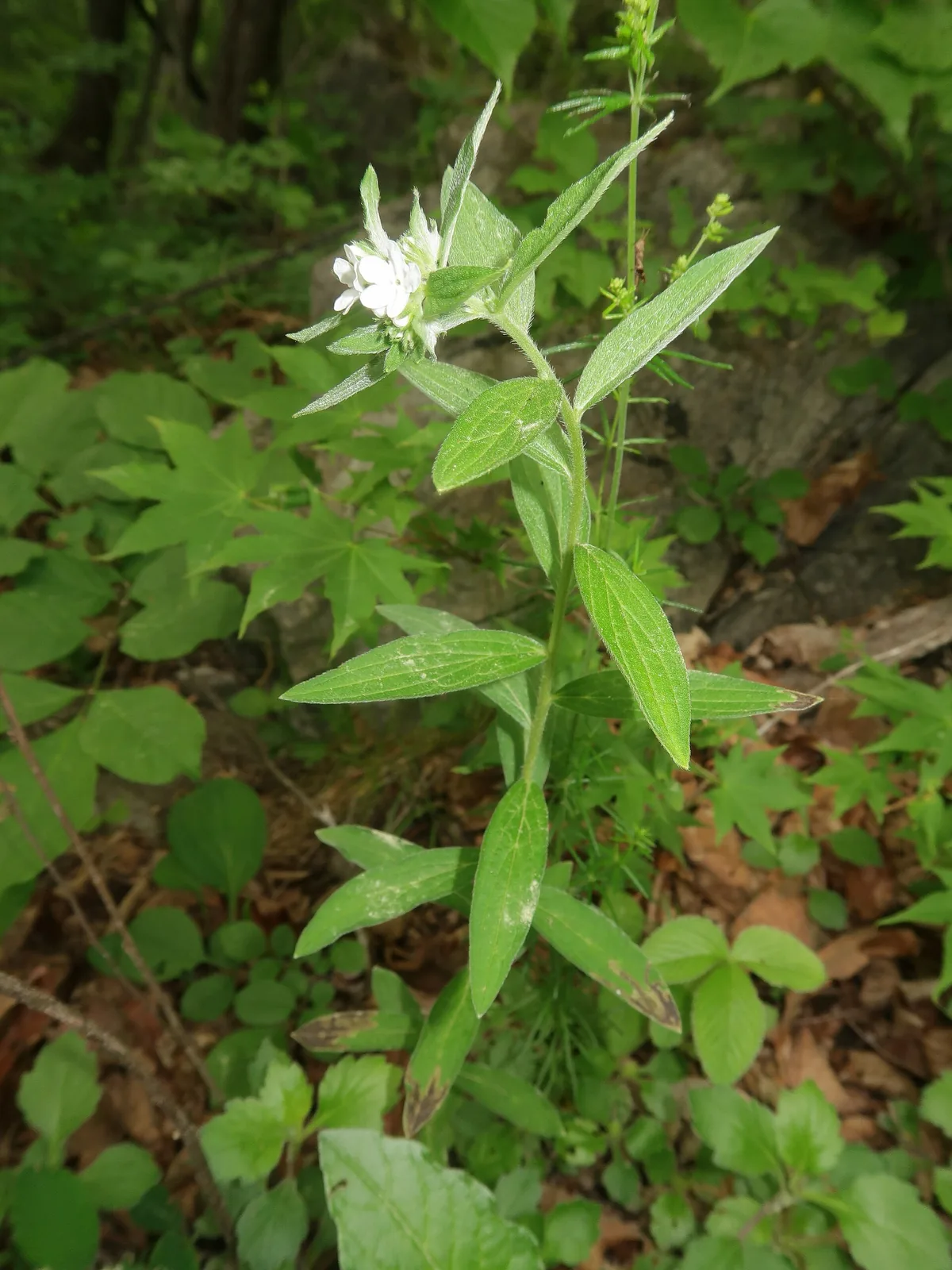
Across the Pacific, Japan developed a separate purple using murasaki (Lithospermum erythrorhizon), a small gromwell whose roots contain the red-purple compound shikonin. It is one of Japan’s three great traditional dyes, alongside ai (indigo) and benibana (safflower), which we met in Part Six. By the eighth century, deep purple was reserved for the highest court ranks in Japan, much as Tyrian Purple had been in Rome.
In 603 CE, Prince Shōtoku established the Kan’i Jūnikai, the Twelve Level Cap and Rank System, which assigned a cap color to each grade of court official. Purple sat at the top with light purple immediately below it.
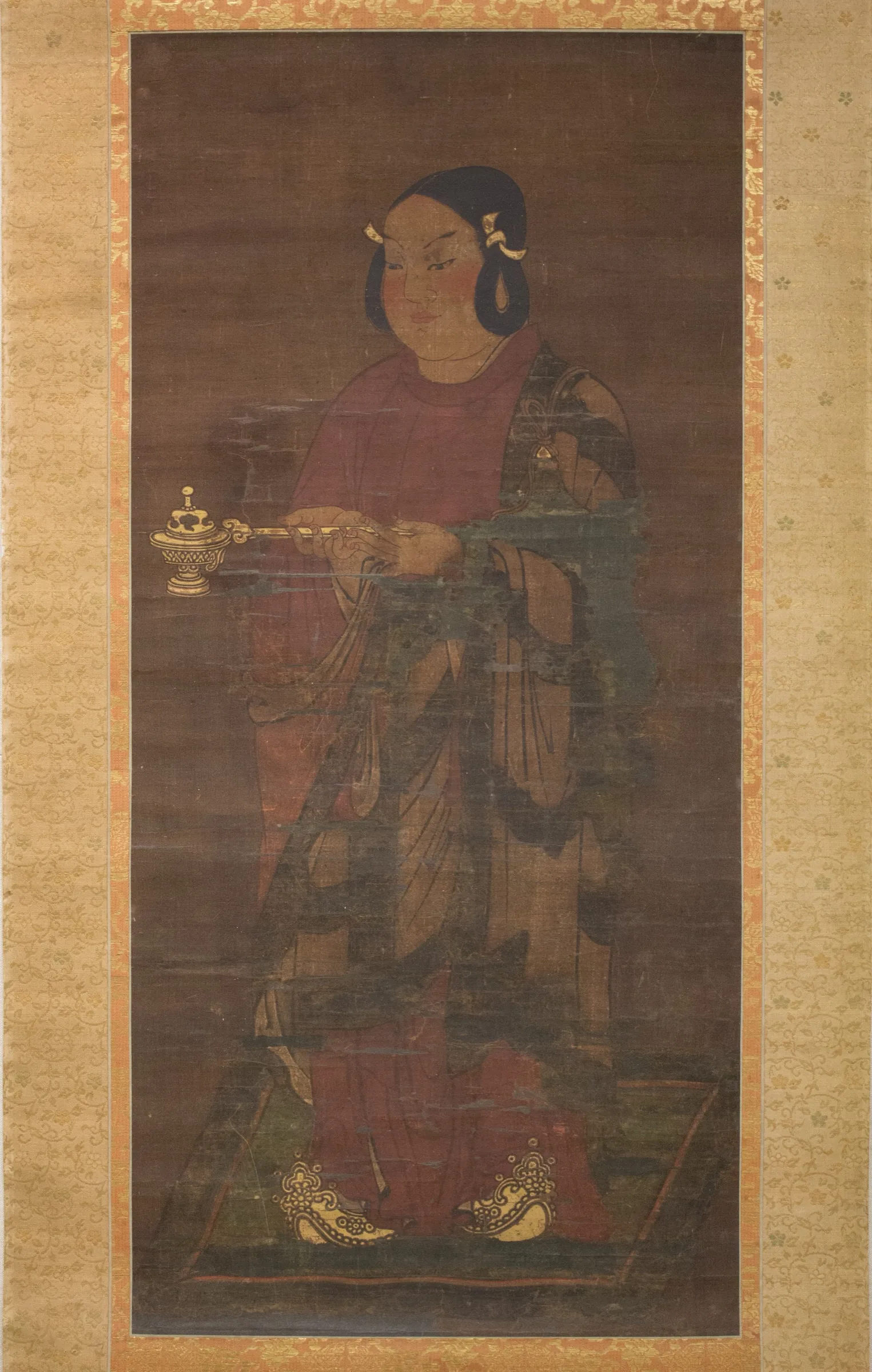
The Taihō Code, enacted at the start of the eighth century, hardened it into law. Specific colors were pulled from circulation and assigned to specific bodies: kōrozen, a dark reddish brown, to the emperor; ōni, an orange, to the crown prince; kokimurasaki, deep purple, to imperial princes and first-rank nobles. These were the kinjiki, the forbidden colors, and wearing one without authorization was viewed as a challenge to the imperial hierarchy.
Japanese law drew its line at saturation, not hue. Deep purple was forbidden. Pale purple was yurushiiro, a permitted color, and anyone could wear it. Rome had arrived at the same decision about three centuries earlier. Like Roman law, the system regulated color depth because deeper shades required more dyestuff. Unlike Rome, Japan restricted the dye method rather than banning every visual imitation. Sappanwood copies remained legal, just as Rome permitted orchil.
By the Tokugawa period, the military government held political authority, but purple still carried imperial weight. In 1627, the shogunate invalidated purple robes the emperor had granted to senior monks. The dispute, remembered as the Purple Robe Incident, ended with Emperor Go-Mizunoo’s abdication two years later.
The Chemistry of Shikonin
Shikonin behaves differently from Tyrian Purple and from its relative, indigo. Camellia ash lye, rich in alum, determines the alkalinity and steers the dye towards its final hue. Make the bath more acidic, and you get Kyō-murasaki, the warmer red-violet associated with Kyoto and the imperial court. Make it more basic, and you get Edo-murasaki, the cooler blue-violet associated with the shogunate’s city. A simple pH shift defined the regional identities of imperial Japan.
The plant also survived as medicine. Shikonin was used in salves for burns and inflammation, and Edo residents wore shikon-dyed headbands as supposed protections against illness. In 1664, the kabuki actor Ichikawa Danjūrō I wore one onstage, helping establish Edo-murasaki as a theatrical and urban color. Purple escaped the court through medicine and theater, rather than through a change in the law.
Rome’s shellfish purple vanished with the industry that sustained it. Murasaki survived because the plant remained part of Japanese medicine, though its dye tradition nearly disappeared. It takes five to seven years to produce usable roots, and cultivation remains difficult. Today, restoration projects are measured in plots rather than fields.
Orchil: The Imitation Purple
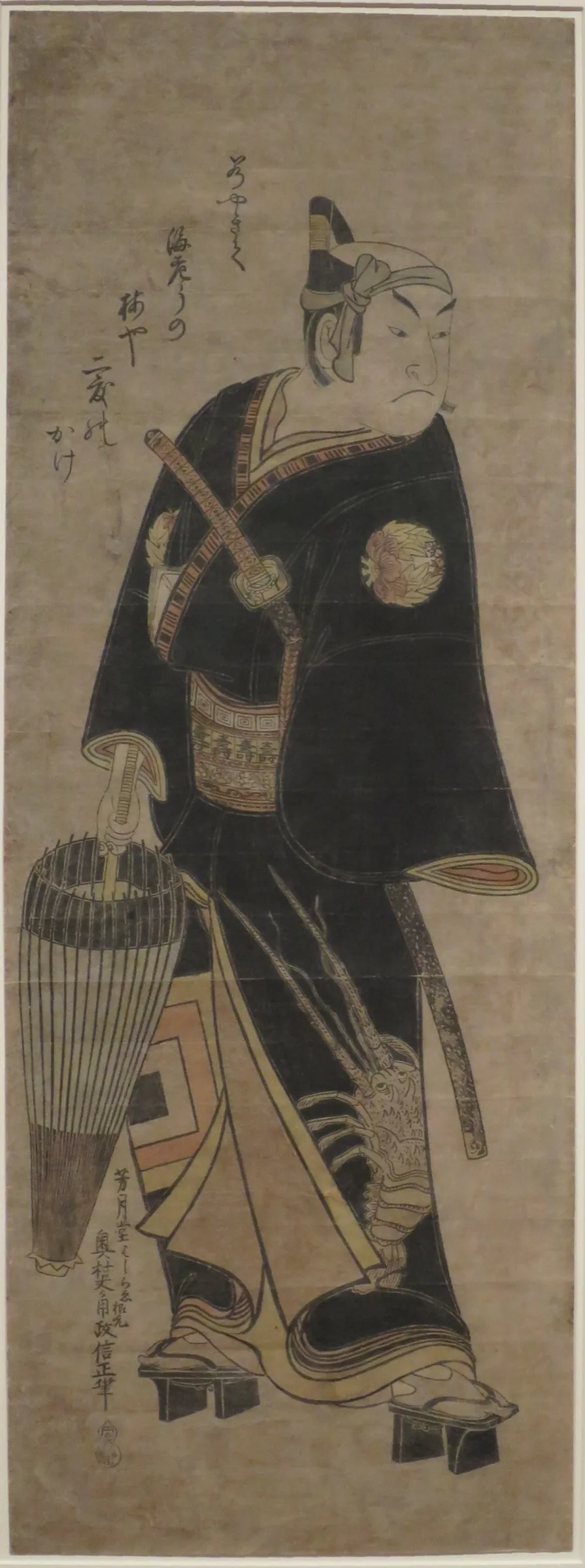
Long before the snail supply failed, a cheaper purple existed, and it came from rocks.
Orchil, also spelled archil, is made from lichens, principally Roccella tinctoria, collected from coastal cliffs. The lichen is dried, crushed, and steeped for weeks in an ammonia source, which historically meant stale urine, while being turned regularly to keep it in contact with air. Orcinol in the lichen reacts with ammonia and atmospheric oxygen to form orcein, a purple compound that can bond to wool without a mordant.
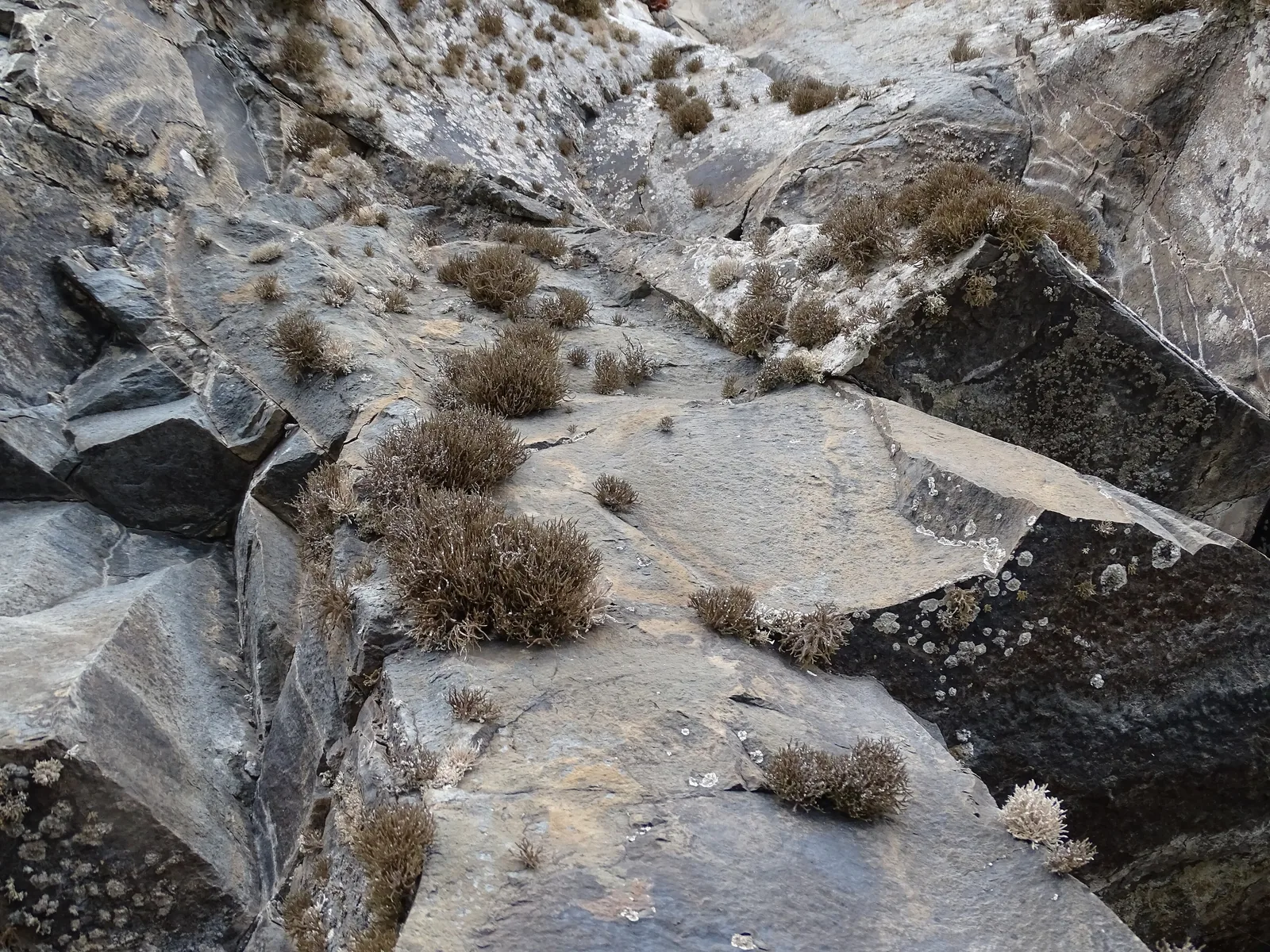
It is a beautiful but fugitive color that fades noticeably in sunlight. Orchil spent most of its history as an affordable stand-in for Tyrian Purple, not a rival. Pliny knew about lichen purples and regarded them as counterfeits. Dyers’ recipe books from late Roman Egypt likewise describe using lichen to imitate the expensive color.
As the Roman dye trade fell apart, orchil disappeared from Western European records for centuries. It probably survived in the eastern Mediterranean and certainly in household practice on northern coasts, but no one documented its use. It re-entered the commercial record in the fourteenth century, when a Florentine merchant reportedly learned the fermentation process in the Levant. The trade became lucrative. For centuries, workers shipped orchil lichen in bulk from the Canary Islands and Cape Verde, lowering it over sea cliffs on ropes.
In 1758, George Gordon and his nephew Cuthbert patented a powdered, standardized preparation of the dye and named it cudbear after Cuthbert. This was an early example of the color being sold as a consistent industrial product rather than a variable preparation, and it supplied the Scottish woolen industry for decades. Human urine remained part of the process at scale and was collected by the cartload. Cudbear remained in use in Glasgow until synthetic dyes replaced it.
↑ Table of ContentsLogwood: The Purple That Built an Industry
Logwood, Haematoxylum campechianum, is a small, spiny tree native to the Bay of Campeche and the Yucatán Peninsula. Indigenous peoples used its heartwood as a dye long before Spanish traders encountered it in the sixteenth century. The active compound, hematoxylin, is nearly colorless in the wood and oxidizes to hematein, the dye molecule. With an alum mordant, it gives purples and violets; with iron, it yields blue-black and eventually black.
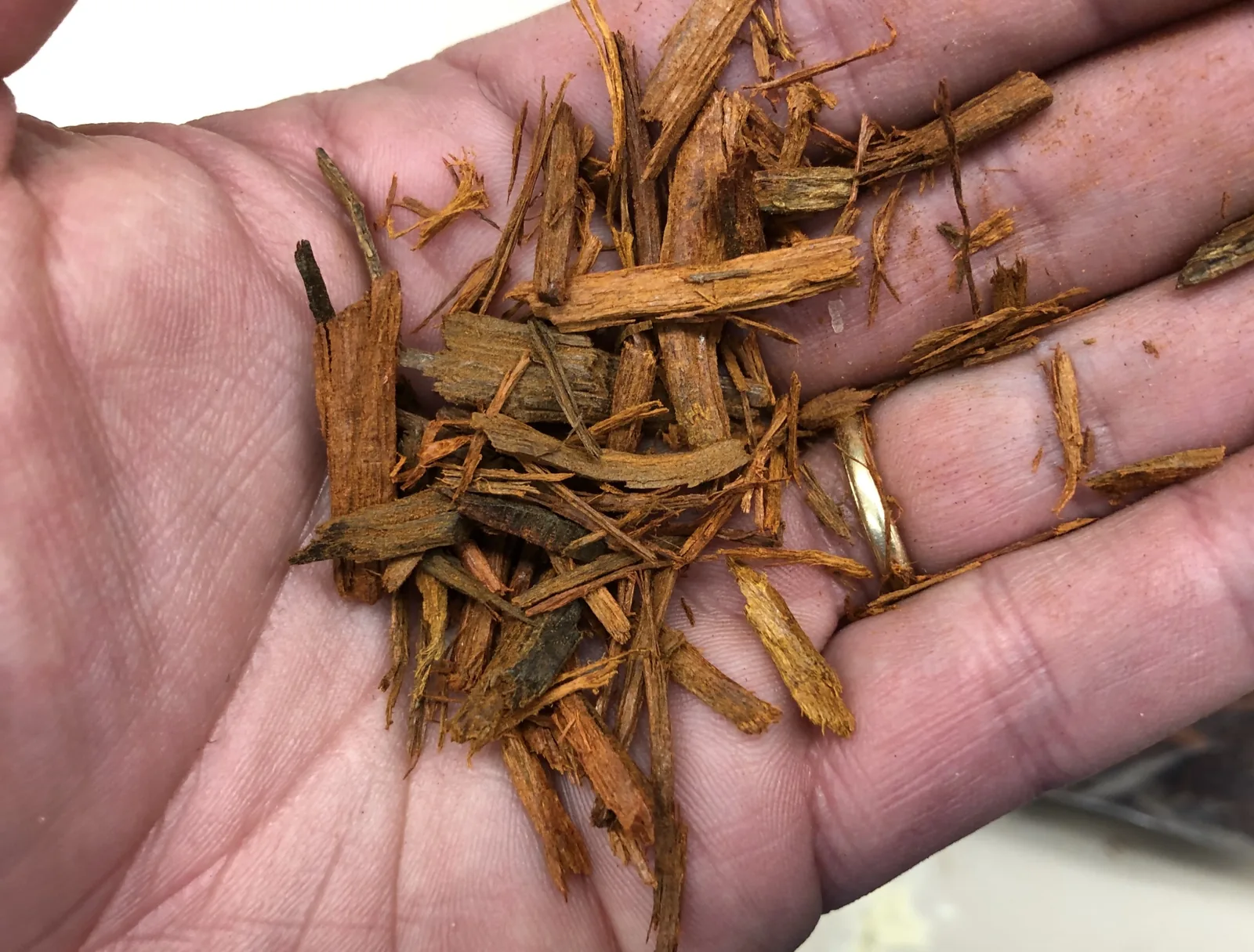
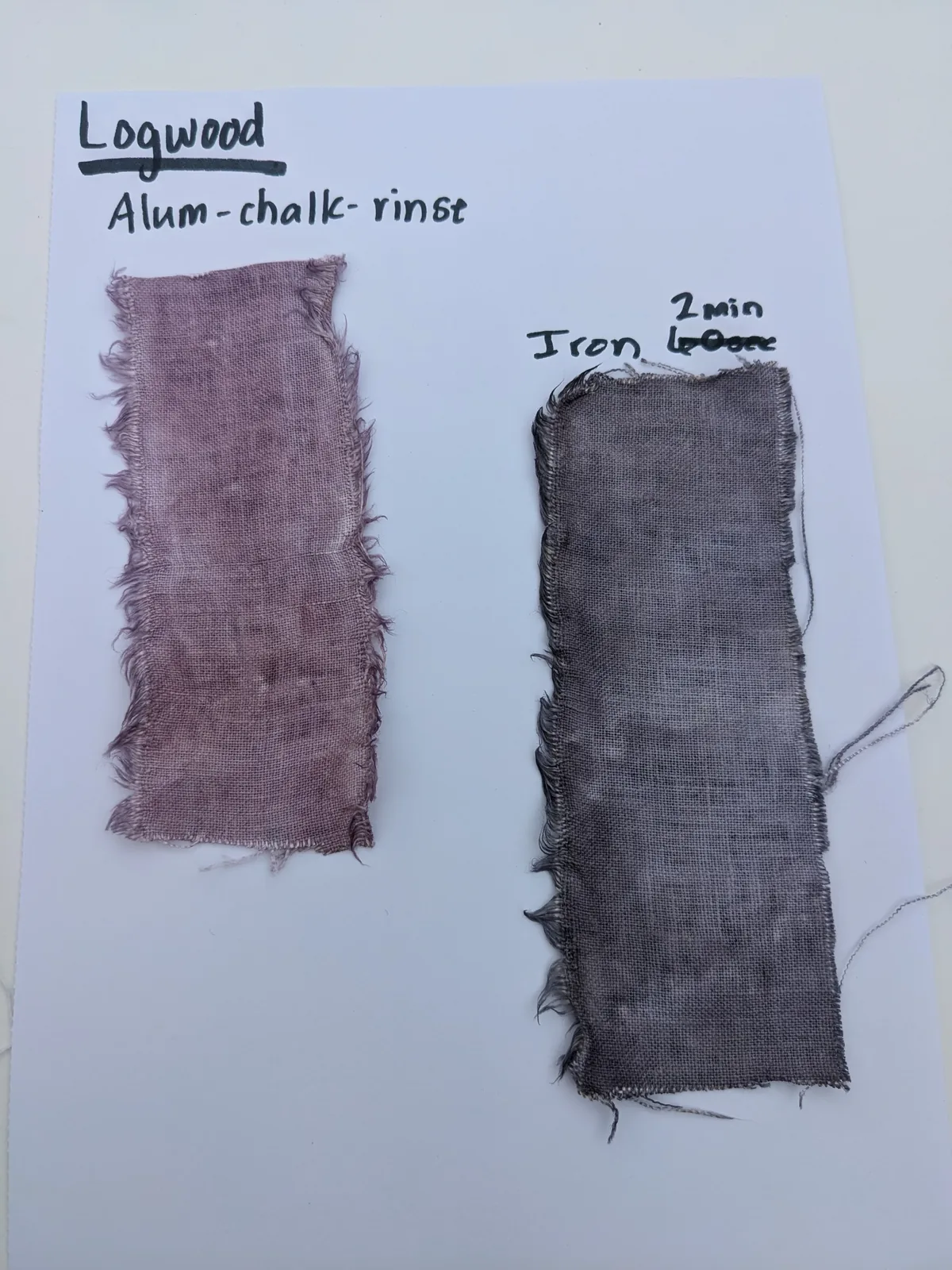
Logwood arrived in Europe with a reputation problem. Its purples faded, and dyers used it to counterfeit more expensive colors. England banned it outright in 1581 as a fraudulent dye. The ban remained in force for about eighty years and was repealed in the early 1660s, once improved mordanting techniques made the color more durable.
After the ban was lifted, Spain claimed the entire logwood coast. English, French, and Dutch crews cut it anyway, and the logwood camps of the Yucatán and Belize became staging grounds for Caribbean piracy. When Spanish forces cleared out the cutters in 1715, many went to Nassau, which within a few years became the Caribbean’s most notorious pirate base. The same wood England had spent eighty years calling fraudulent had become valuable enough to fight over, and some of the men trained by the trade went on to rob the ships carrying it.
The logwood trade was big enough that European powers negotiated over it in peace treaties. The 1763 Treaty of Paris let British subjects cut logwood on the Bay of Honduras coast while Spain kept sovereignty over the land, and later agreements redrew those boundaries. The cutters’ camps became permanent settlements, helping lay the foundations of modern Belize. The wood was shipped through Jamaica to the dye houses of London, Amsterdam, and Hamburg by the shipload. By the nineteenth century, factories in Europe, the United States, and the Caribbean were boiling it down into extract so dyers could buy it by the barrel rather than grind it by hand. For about two hundred years, logwood was the natural dye the Atlantic textile trade could least do without, and most of what it colored was black.
Once dyers learned to pair it with iron, logwood became the standard black for wool and silk across the eighteenth and nineteenth centuries: judicial robes, clerical dress, mourning clothes, uniforms. It is one of the few natural dyes that synthetic alternatives never entirely displaced, because hematein performs particularly well on protein fibers at low cost.
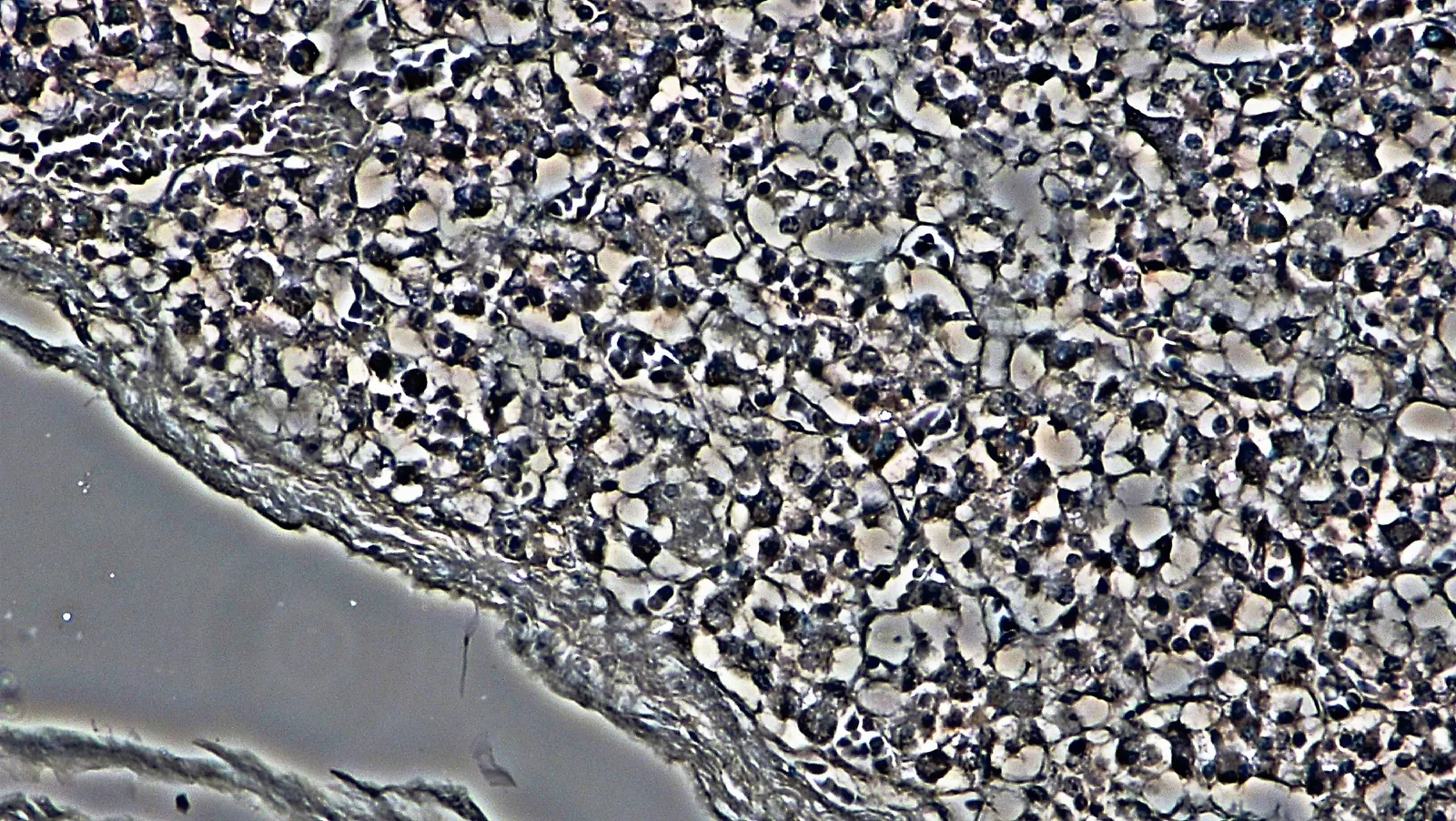
Hematoxylin is still the standard stain in histology labs. If you have ever seen a microscope image of tissue with purple-blue nuclei against pink cytoplasm, you have seen logwood at work. The tree that armed the pirates now arms pathologists.
When Red Meets Blue
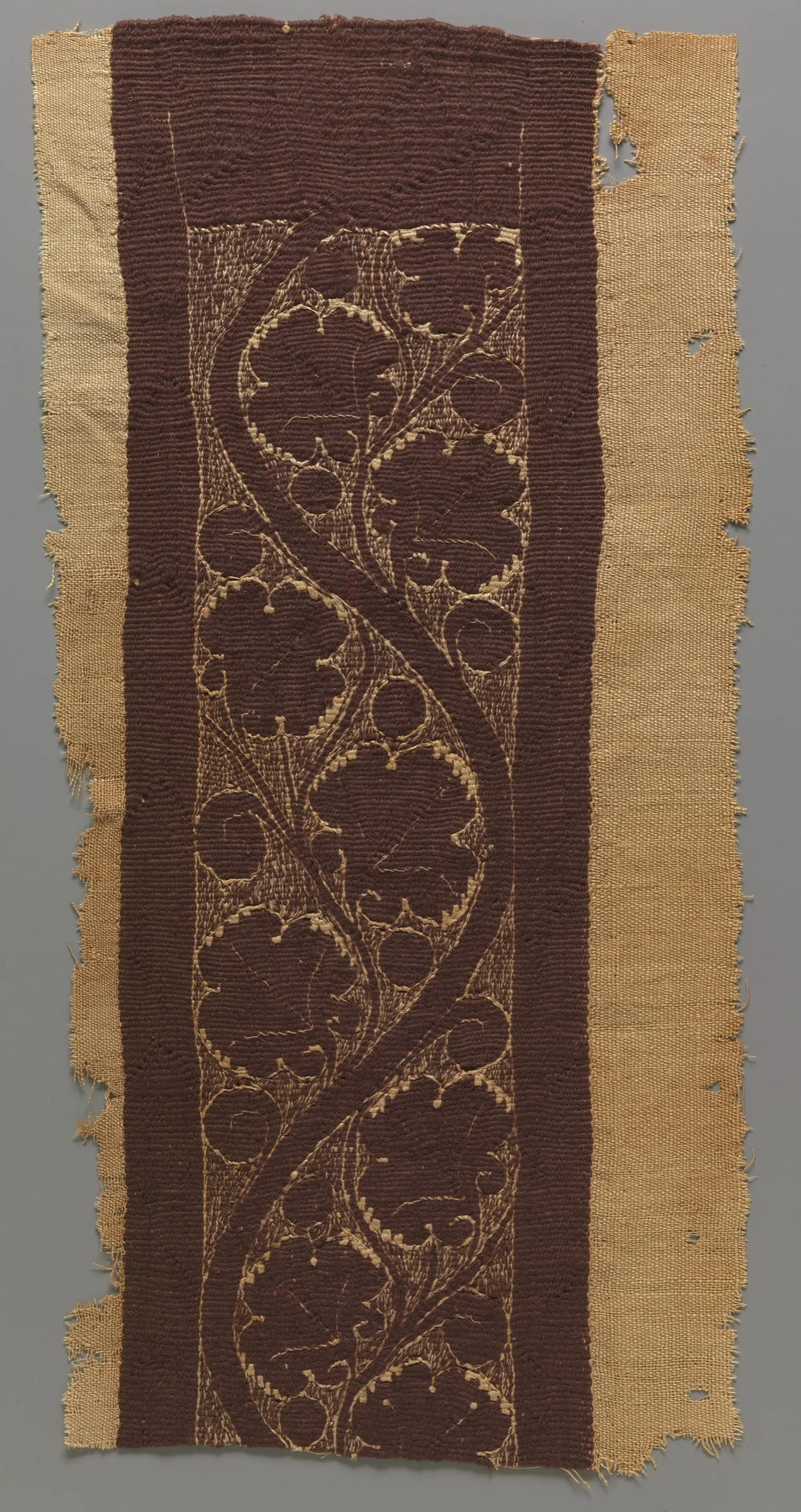
Much of historical purple was not a single purple dye at all. When conservators run chemical analysis on the purple wools that survive from late Roman Egypt, most of them turn out to be two dyes stacked: an indigo blue and a madder red. This was common anywhere that purple was expensive and red and blue were not. Europe layered woad under kermes and, later, cochineal; Andean weavers put cochineal over indigo.
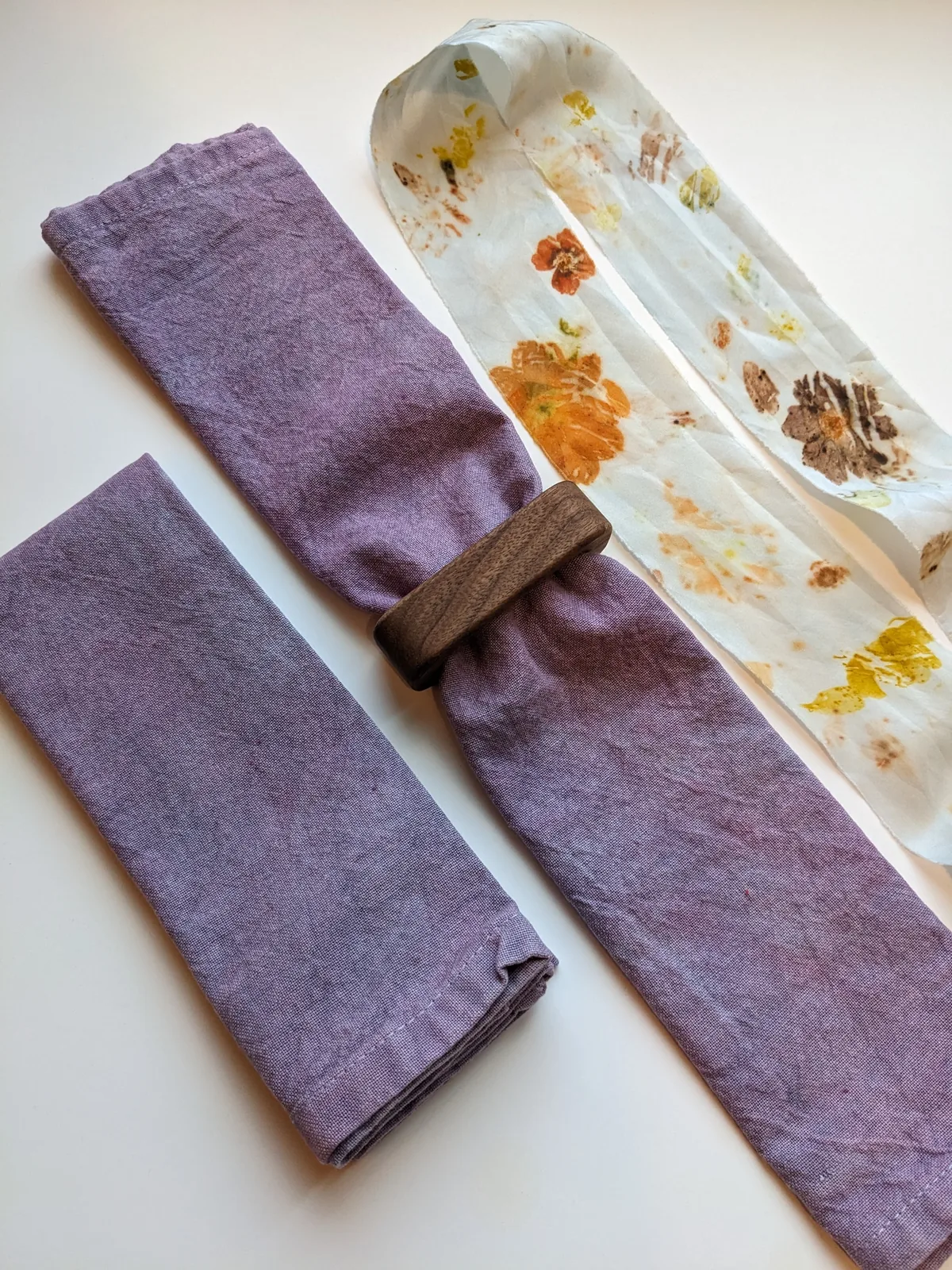
The second route to purple was mordant manipulation, whose chemistry I covered in Part One. Madder with an alum mordant gives Turkey red. Swap in iron and the same alizarin gives a dark purple to near-black. Sappanwood is the most abundant example of this in purple. Medieval Europe imported it too, under the trade name brasil. When Portuguese traders reached South America around 1500, they found a related tree, Paubrasilia echinata, that produced the same dye and gave it the old name: brazilwood. The country took its name from the wood, as covered in Part Four.
↑ Table of ContentsThe Industrial Revolution
The first commercially successful synthetic dye was purple, a story you may remember from Part Four of this series.
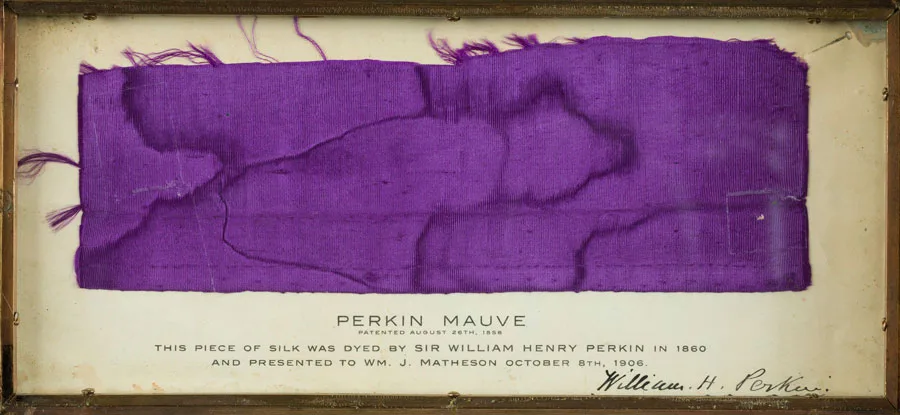
Mauveine’s effect on the natural purple-dye industry differed sharply from synthetic dyes’ effect on the red-dye industry. The expensive purple had been out of production for seven centuries, and mauveine itself disappeared from the market within a few decades, overtaken by cheaper synthetic violets. For the first time since Tyre, a deep, stable purple could be produced at roughly the cost of other colors, and purple no longer signaled status in quite the same way.
Within three years, mauve had become a mass fashion in Britain. The queen wore it, the middle class followed, and by 1859 the satirical magazine Punch was joking that London had come down with “the mauve measles.”
Orchil and logwood absorbed the damage differently. Orchil was gone commercially within a generation. Logwood, as noted, held on by being the best cheap black available and by finding a second career under a microscope.
↑ Table of ContentsModern Makers
Synthetic dyes reignited the world’s enthusiasm for purple and made it accessible to the general public. But they did not stop artisans from using natural dyes to keep older traditions alive.
Some of the links below are affiliate links. If you buy through one, I may earn a small commission at no cost to you.
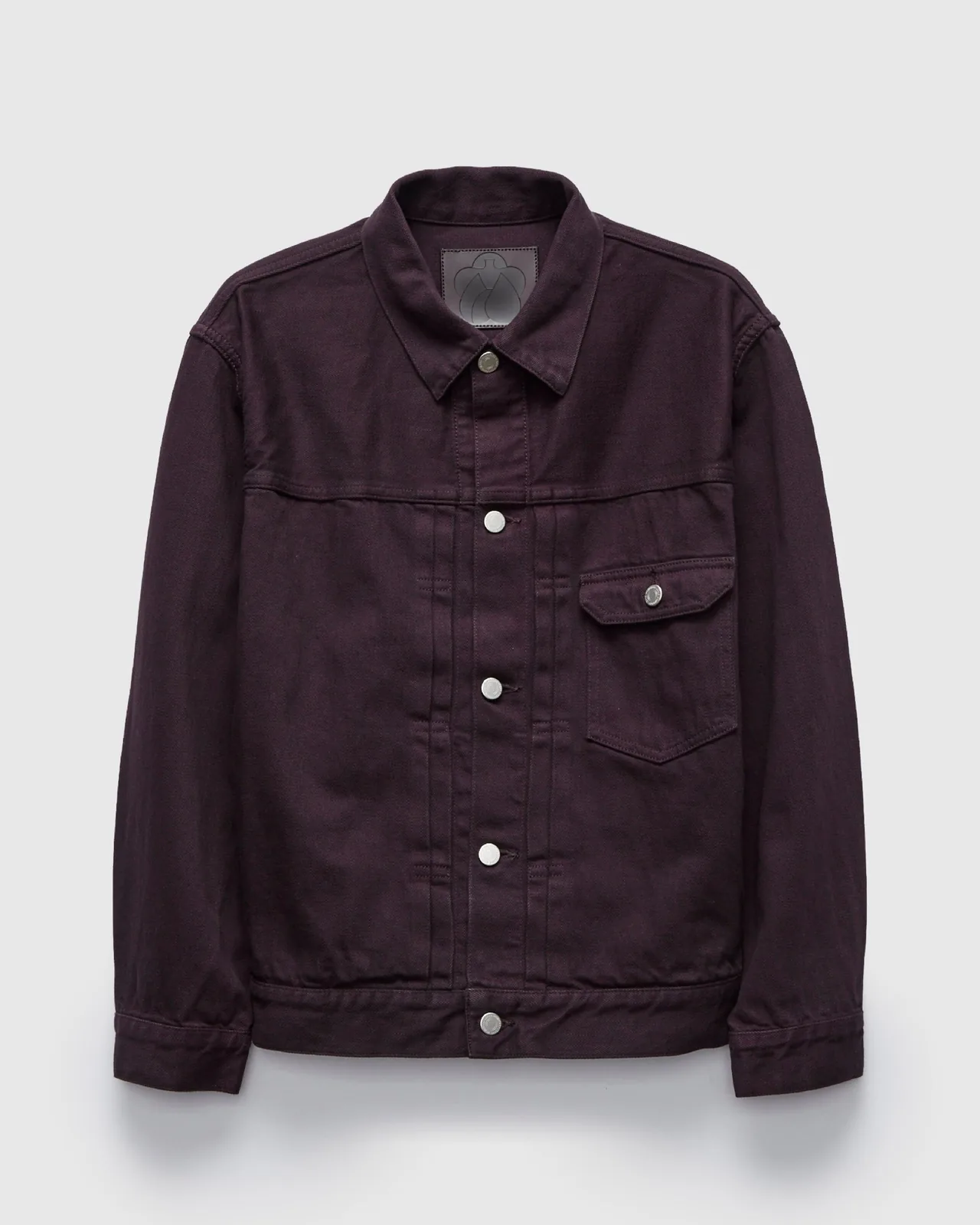
Momotaro, Shikon. Momotaro is one of the most prominent current examples of gromwell dye used in garments. The brand announced its Shikon run in the Botanical Dye series on August 20, 2026. According to Okayama Denim, it features 12.5 oz selvedge denim woven from Zimbabwe cotton and garment-dyed. The result is a warm, brown-toned purple, closer to the Kyō-murasaki end of the spectrum than to Edo-murasaki.
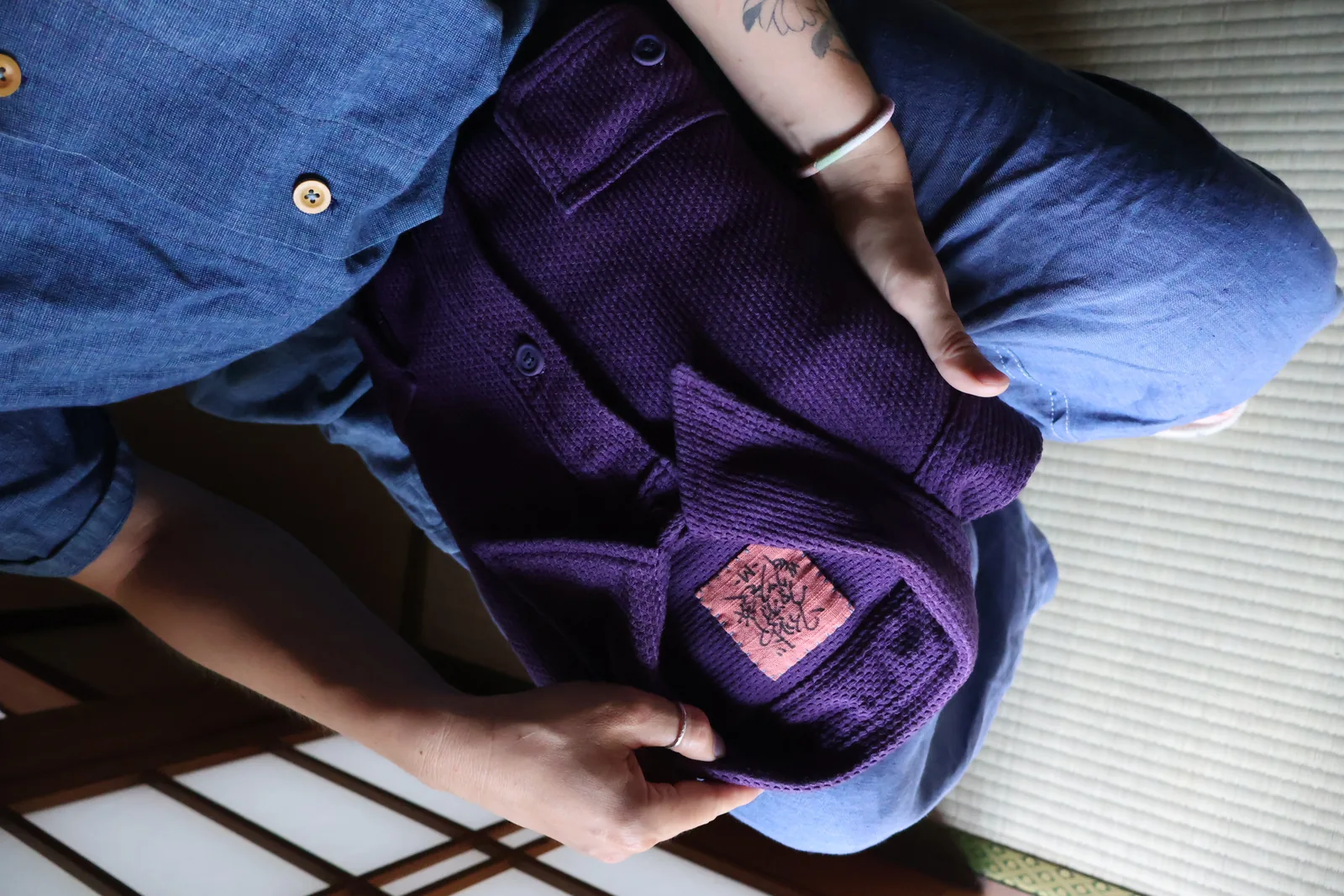
Wild Frontier Goods, Shikon. The two-person maker featured in Part Four for its use of cochineal also works with murasaki root, or gromwell, alongside other purple dyes. The made-to-order WFG Overshirt in Murasaki Sashiko uses Japanese selvedge sashiko cloth dyed with natural murasaki root, hand-stitched buttonholes in hand-dyed hemp thread, and Japanese cedar buttons. Producing it to order is a sensible approach for a scarce, heat-sensitive dye.
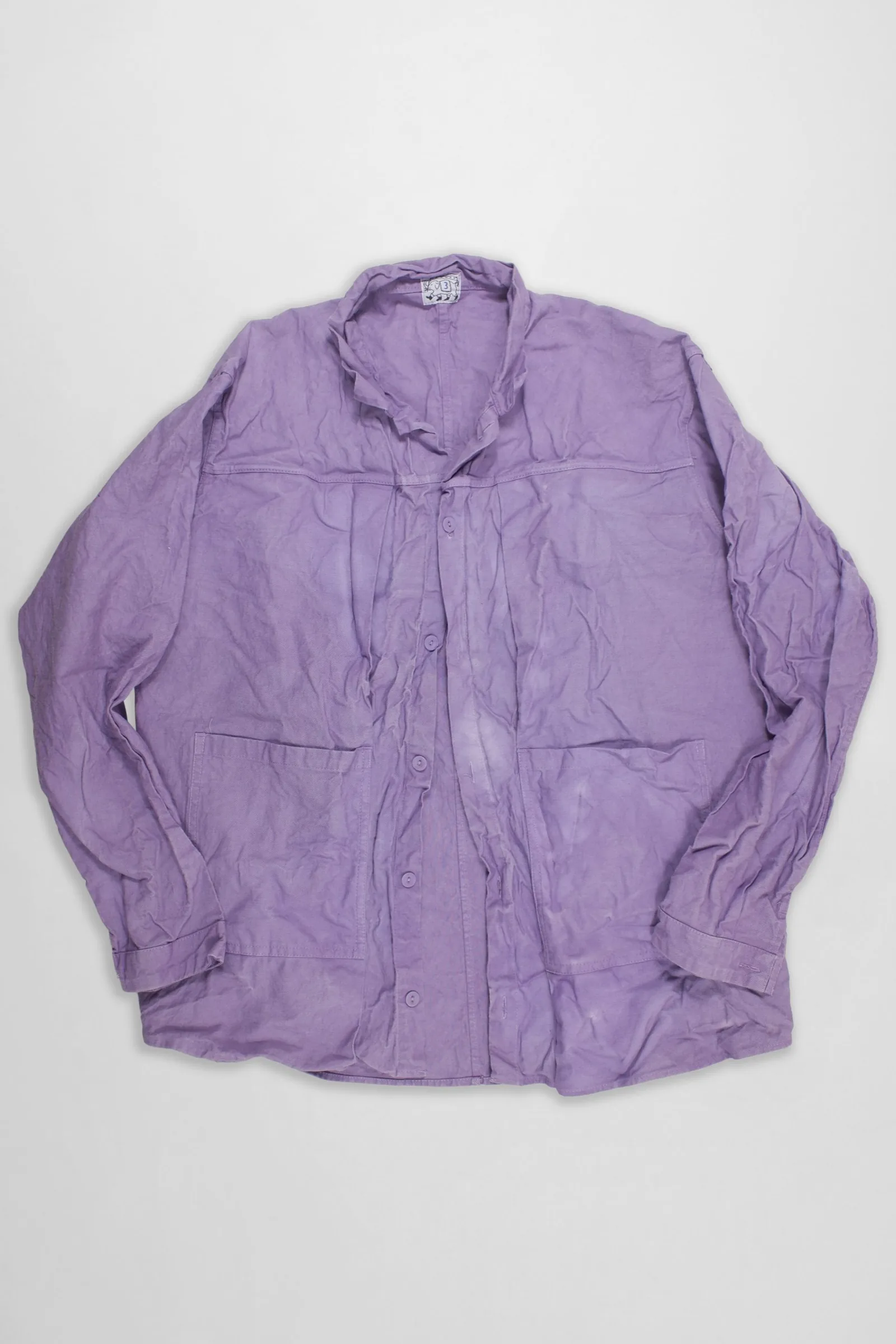
3sixteen × Blue Owl, logwood. The Natural Dye Pack was released in July 2026. The 14-ounce slub selvedge in 3sixteen’s Kibata Series is woven in Okayama, cut and sewn in California, rinsed, and then shipped to Seattle for hand-dyeing at the Botanical Colors dye house. The lavender colorway uses a logwood overdye on indigo denim. On the tee, the same logwood produces a soft, grayed lavender. I own this tee myself.

Tender Co., logwood. William Kroll has used purple logwood as a house color since founding Tender in London in 2009, applying it to cotton dropcloth shirting and denim. The brand moved from Stroud to Phoenixville, Pennsylvania, in 2024, and the logwood came with it. In an interview with Nubes Store, Kroll said, “Dyeing is more interesting to me than colour picking. You get whatever you get. You’re not trying to match a Pantone.”
What Purple Still Costs
Purple was never a single dye. Different places solved it with snails, roots, lichens, imported wood, layered colors, and eventually coal tar. What united those solutions was their cost. Purple demanded animal lives, years of cultivation, long trade routes, difficult chemistry, or closely guarded labor.
That cost made the color legible as power. In Rome and Japan, depth recorded material and effort, so governments converted shades into ranks. Mauveine severed much of that relationship. Once purple could be produced cheaply and consistently, the color remained, but its old economic meaning did not.
The two shellfish purples reached the present by opposite routes. Tyrian Purple did not survive as a living tradition. Modern examples are reconstructions made from ancient descriptions, chemical analysis, and experimentation. Mixtec dyers continue the tixinda practice today, working within the snail’s breeding cycle.
The ancient world made purple a symbol of power by making it almost impossible to produce. Today, its rarest forms tell a different story: not who can afford the color, but who is still willing to make it.
Next in the Dye Series: Blue, and the history of who paid for it. In the meantime, the Fit Finder is the best way to find denim that fits the body you have. Suggestions based on real measurements, not size-tag mythology.