In the same way that many people bought a sourdough starter and began baking, or in the way I began learning Spanish on Duolingo during the bleak and lonely year of 2020, Risa Saito bought a vintage Japanese chain-stitch embroidery machine. There was a lot of spare time and it seemed like an interesting thing to learn.
A chain-stitch embroidery machine uses a specialized hooked needle to pull a single thread up through the fabric from below, forming interlocking loops that create a flexible, chain-like pattern. Because the operator controls the needle’s direction using a 360-degree crank beneath the table, they can fluidly “draw” intricate designs freehand in any direction. Today you mostly find it in vintage country/western wear or kitschy bowling shirts. It’s a craft that survives because a handful of people in a handful of towns refuse to let it die.
Risa and her husband Bahzad Trinos had both built their careers around fabric. Chain-stitching was meant to be a hobby, maybe a small Etsy-style side hustle to cover the cost of the machine. They would buy blank t-shirts, embroider a logo or a name for whoever asked, and sell a few here and there on Japan’s version of Etsy. It worked, except for one problem: the blanks were cheap, and the embroidery was high quality. That discrepancy didn’t sit right with them, and they felt the quality of the embroidery was wasted on a cheap mass-produced t-shirt. They decided to make a shirt of their own that matched the quality of their craftsmanship.
“Being fabric people, we couldn’t live with that,” Bahzad told me. Once they were sourcing yarn and testing fabric, the side hustle stopped being a side hustle and became an obsession.
From Apparel Veterans to Brand Owners
The reason a t-shirt problem turned into an entire brand instead of a single project is that Bahzad and Risa weren’t new to any of this.
Bahzad was the first employee at Naked & Famous Denim, joining founder Brandon Svarc in 2009 and relocating to Montreal in January 2010. For over a decade, he was involved in nearly everything the company touched: fabric development, production, wholesale, the whole operation before it had any real staff to speak of.
Risa came from Big John, the original Japanese denim maker, which is how the two met. Before that she’d worked for a surf company in California. Between the two, they had over forty years of apparel, retail, wholesale, and customer-service experience before setting off on their own.
They moved to Japan at the end of 2019, planning to split time between Yokohama and Montreal while working remotely for Naked & Famous. COVID-19 changed everything. Bahzad’s visa status meant that if he left Japan, he couldn’t get back in, so the couple planted themselves there for the duration of the pandemic. While their colleagues in Montreal slept, they ran their side of the business overnight, and then picked up chain-stitching to pass the extra hours.
Their decades of knowledge in sourcing yarn, developing fabric, and running production made it much easier than one might anticipate when setting out to make the best t-shirt they could. When they had a small collection built of the now-infamous Double Heavyweight T-Shirt, they went to retail partners they already knew from their Naked & Famous years.
The shirts sold out quickly.
Being industry veterans, companies and customers alike already knew their skill and trusted their judgment. That mutual respect made their business model straightforward: make a high-quality product, show it to people who trust your judgment and get them to buy in, and repeat.
Wonder Looper ran part-time for years before Bahzad and Risa left Naked & Famous in the fall of 2024. That helps explain why Wonder Looper doesn’t seem particularly interested in following the usual rules of apparel.
They Make What They Like
A basic question I had for Bahzad was exactly how they decided which direction to take their collection once they’d perfected that first shirt. I couldn’t imagine that there was an audience out there demanding triple-heavyweight shirts or hoodies made from cotton fibers that came loose and lingered in the factory air during spinning. The answer, according to Bahzad, is not the market. “It’s really based on our taste. I’m not driven by whatever commercial trends are doing, because commercial trends don’t really translate into what’s happening in the heritage realm.” Samples that cost thousands of dollars to produce get shelved if they come back looking merely fine.
It has to spark joy. It has to mean something. It has to be special. I hate to sound cliche.
It’s a defensible business model, assuming the duo’s taste has already proven itself, and by Wonder Looper’s growth over the past year, it has. They only moved into a proper office a little over a year ago. Before that, inventory lived in a rented twenty-square-meter apartment. Bahzad credits some of the broader tailwind to The Bear, which he thinks did more than any single piece of marketing to get people outside the heritage-menswear world thinking seriously about what they put on their bodies. But growth in this space, he was careful to point out, looks nothing like mainstream growth. It’s slower, smaller in absolute numbers, and measured in a different currency: whether the people already paying attention are paying closer attention.
Talking to Bahzad confirmed what I’d suspected from the outside — that it’s not based on market research. It’s their personal curiosity made manifest.
That approach shows up clearly in the materials they choose to work with.
The Cotton Farmer They Talk to Every Week
Over the last few seasons, one of the things that has sparked the most joy for Bahzad and Risa is Foxfibre® cotton.
Foxfibre® is a registered trademark developed by breeder and grower Sally Fox. Using the name requires signing paperwork, but no licensing fee. Sally doesn’t charge for it. She just wants the trademark on the product, which makes sense to Bahzad for an obvious reason: if you’re using Foxfibre®, you want people to know it’s Foxfibre®.
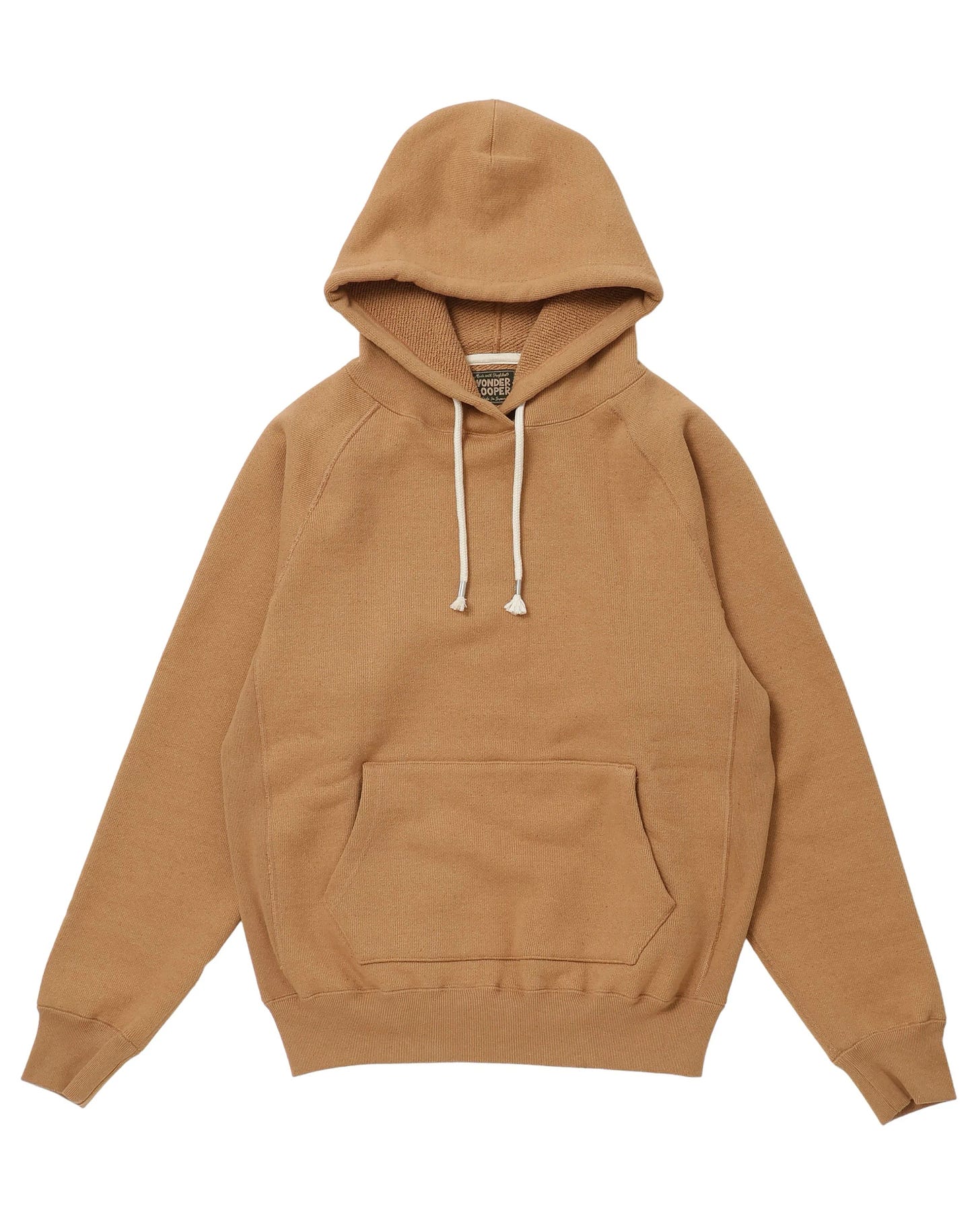
Foxfibre® is a naturally colored cotton developed by decades of cross-breeding different varieties to get the results Sally wanted. But naturally colored cotton is not a new idea. Brown and green cotton grew across the Americas for the last 5,000–6,000 years, but industrial spinning killed the colored varieties off: their fibers were too short for the machines, so a century of breeding pushed cotton toward longer, stronger, and whiter. Meanwhile, colored cotton turned into a niche curiosity nobody could actually manufacture with.
Sally Fox solved that in the late 1980s by crossing a short-staple brown cotton sample she pulled from a paper lunch bag in her boss’s greenhouse with a long-staple pima cotton, breeding them for roughly a decade before it was strong enough to run through a mill.
The relationship between Wonder Looper and Foxfibre® goes back to Naked & Famous, where Bahzad and Risa first introduced the naturally colored cotton to the line.
The tannins that give the fiber its color also make it naturally resistant to pests and mold. It also means the cotton can be darkened further by adding a mordant, if one wishes.
For Bahzad, the idea of creating color without needing dyes at all is an appealing one.
What started as a straightforward business relationship became something closer through Wonder Looper. Bahzad and Risa grow Foxfibre® varieties on their balcony and are part of a cotton-growing group based in Japan that gets on a call once a month to compare notes. Sally, who has visited them in Japan several times, is part of that same conversation group. They text regularly.
Wonder Looper is now Sally Fox’s largest customer.
I like knowing the farmer who makes the cotton for your product.
Wonder Looper already has plans to incorporate Green Foxfibre® in their spring collection, alongside more of the iron mordant treatment already showing up on the brand’s Foxfibre® French terry, which pushes the naturally tan cotton toward a deeper, rustier cast without the need for dyes.
Finding Color That Was Already There
In the same vein as Foxfibre®, Bahzad and Risa set out looking for other naturally colored fibers that were underutilized.
Yak fiber is very similar to wool in terms of warmth, hand, and drape. What it does differently from wool is that it arrives already colored: a soft brownish gray, straight off the animal. That pulled the duo in.
It’s another way for us to create color without dyeing. We’re not opposed to dyeing, of course, we have products that we dye, but there’s something about natural colors that sparks interest in us.
The yak fiber is sourced from Mongolia, and Wonder Looper is mixing it with both Foxfibre® and pima cotton this season to create interesting colors and texture.
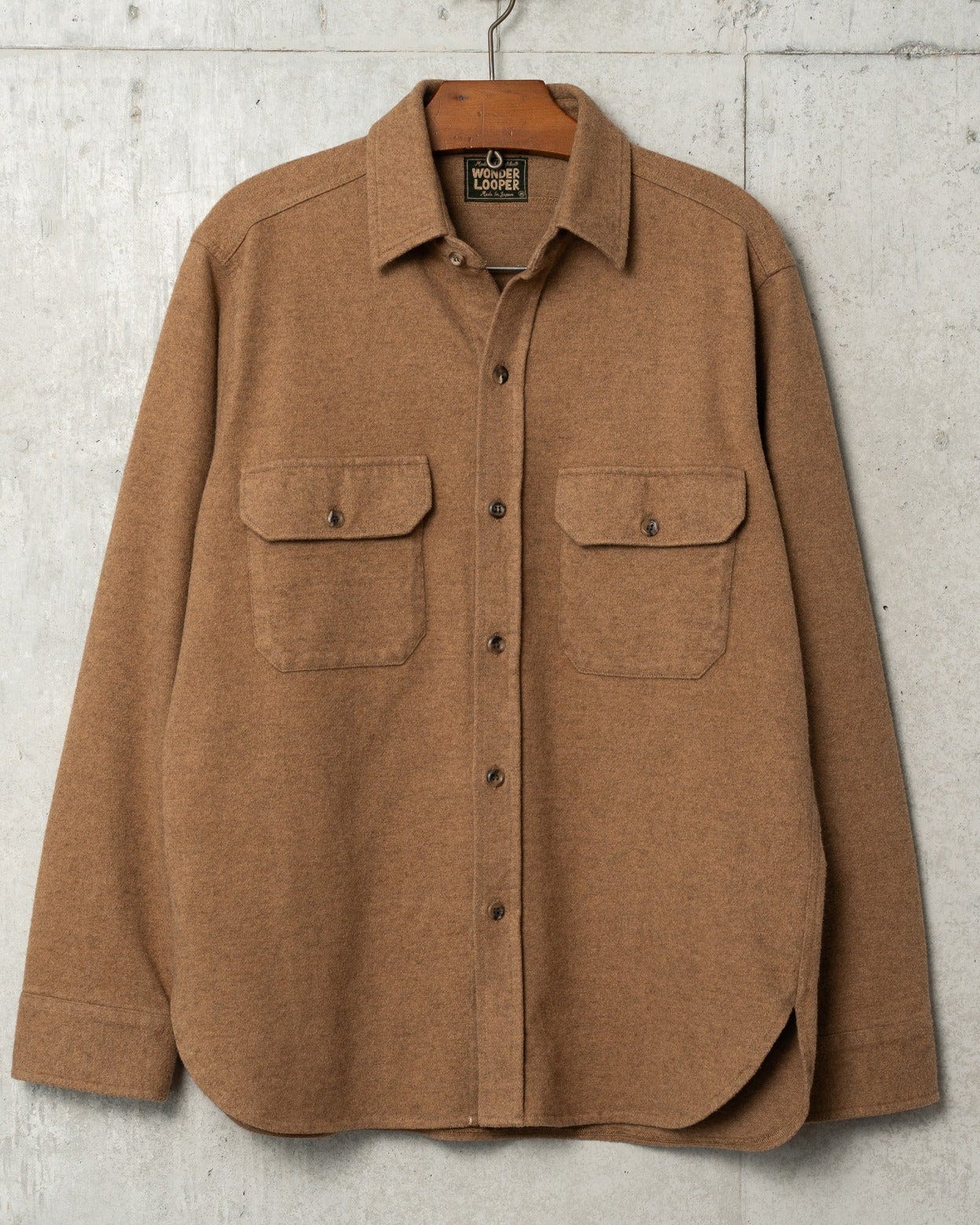
It’s another example of the way Bahzad and Risa approach materials. Instead of starting with a color and figuring out how to dye a fiber to get there, they are interested in materials that already bring something interesting to the table.
Of course, that doesn’t mean Wonder Looper has abandoned dyes.
Into the Mud
The recent highlighting of naturally colored fibers doesn’t mean that Wonder Looper is any stranger to dyes. The same way the duo utilize old Japanese chain-stitch machines and loopwheel machines, they also keep Japanese heritage front and center with their natural dyeing in Amami Ōshima with their dorozome collections.
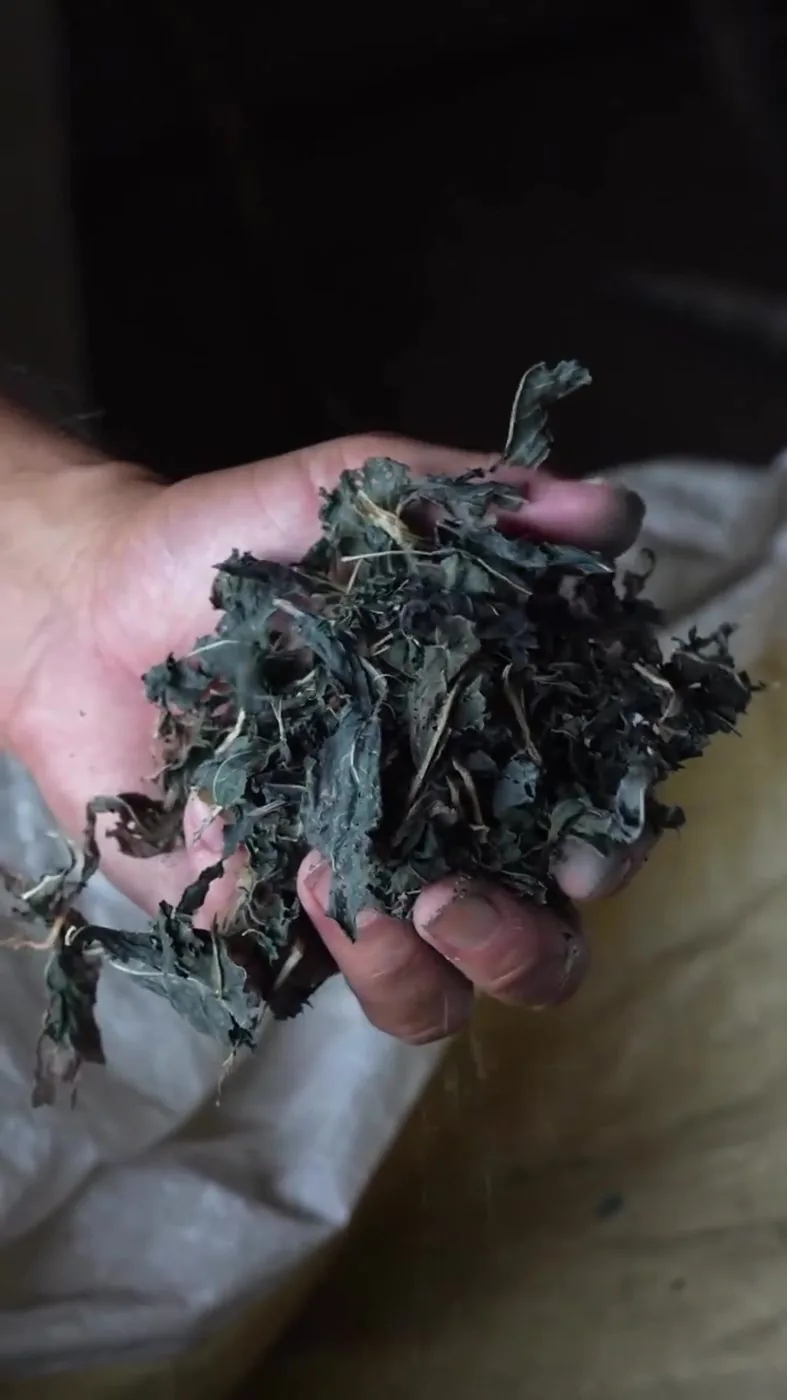
Dorozome, or mud dyeing, is a labor of love that can only be performed on Amami Ōshima. Threads get soaked in a tannin broth brewed from the tichigi/sharinbai tree, a coastal evergreen that only concentrates enough tannin in Amami’s specific salt-wind conditions. They are then worked by hand through iron-rich mud, then rinsed and returned to the tannin bath.
The process is repeated over and over until the desired color is achieved.
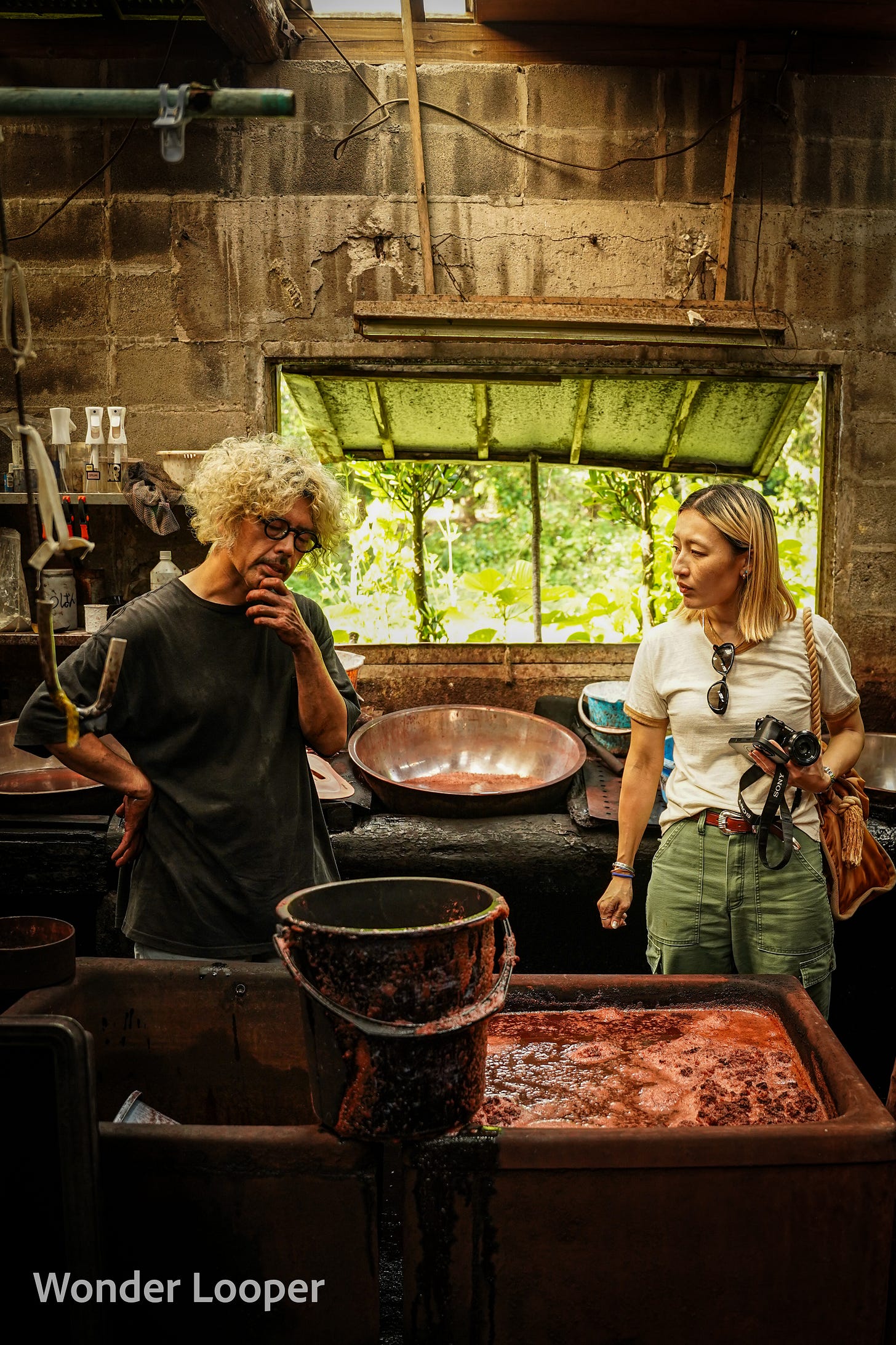
Bahzad mentioned in a recent livestream that they had plans to run Foxfibre® through this process as well. Since Foxfibre® already carries tannins on its own, the sharinbai broth step of the traditional dorozome process would be unnecessary. For some of Wonder Looper’s spring/summer 2027 collection, the plan is to skip the sharinbai step entirely and go straight to mud.
I asked whether their dye house partners pushed back on omitting sharinbai from the traditional dorozome process, or on the fact that Wonder Looper is asking them to garment-dye cotton tees instead of silk skeins for kimonos. Bahzad told me of his close relationship with the craftspeople of Amami Ōshima. The dyers have already moved well past kimono-only work and recognize that preserving a tradition sometimes means applying it to new applications instead of letting it freeze in place and die off.
But it doesn’t mean asking the artisans to compromise their way of life or their timelines.
The dye house’s roof recently collapsed in a typhoon, and Bahzad’s read on it was closer to shrugging than panicking: island life, things break, the work continues when it continues.
He’s deliberate about not stacking projects on people he considers artists first and vendors second. The spring dye collection is in progress, and it will be ready when it’s ready.
Old Machines, New Collaborations
Bahzad and Michael Kristy, the creator behind The Iron Snail, go back quite a ways. When Michael put out his first-ever clothing project, a denim jacket, Bahzad coordinated the whole thing through Naked & Famous.
The friendship has held ever since. Michael calls when he has a production question or needs a second opinion for one of his videos, and at some point along the way, Michael gave Bahzad the watch he was wearing during our call.
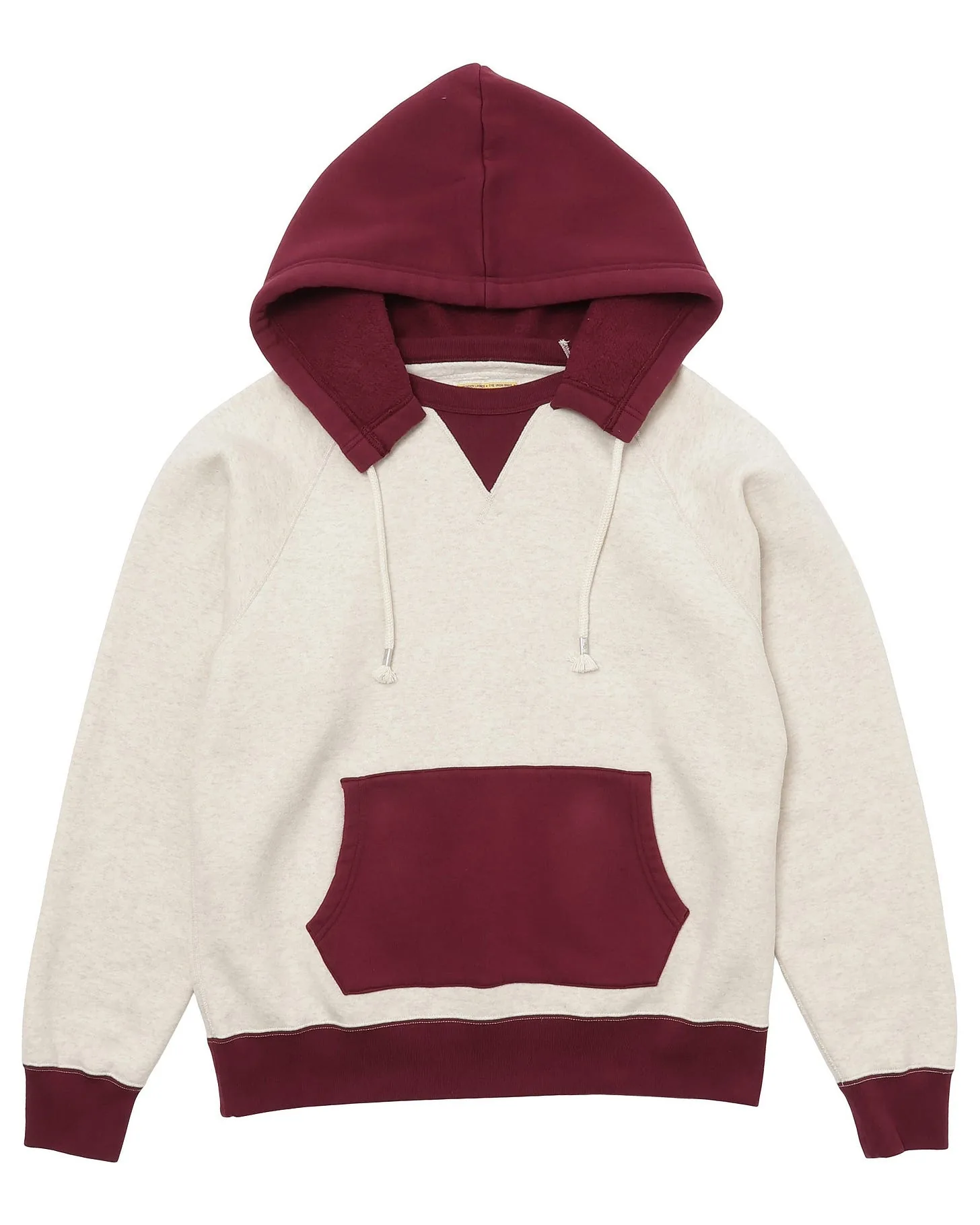
A collaboration was always somewhere in the back of both their minds. The first idea was wool, since Michael uses a lot of it in his own work, but nothing came of that until a conversation about hoodies — their history, how the garment came to be and evolved into its modern form — turned into the actual project.
Michael is a master of storytelling and loves to tell you about everything he makes, so a hoodie built around the garment’s history fit the two of them better than any wool idea they could come up with.
Bahzad doesn’t hedge when he talks about him: “As a creator, I think he’s probably the best in this space, and most genuine.” He’s careful to note he’s not knocking anyone else working the same territory, just that something about Michael in particular makes people feel like they already know him, on camera and off.
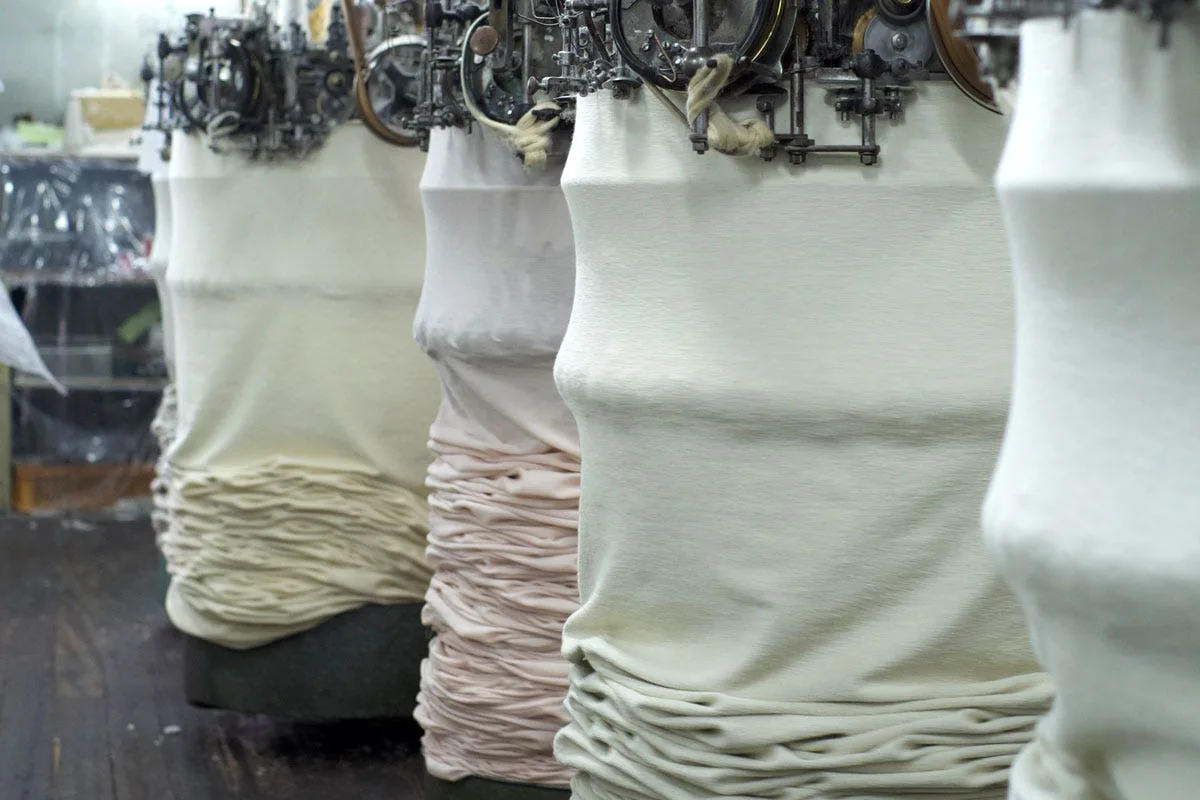
The Afterhood itself runs on an Azuma knitting machine, not the tsuriami machines Wonder Looper normally uses. Using the Azuma machine is a deliberate step up in speed, and understanding that choice means understanding tsuriami knitting.
Tsuriami machines are vintage, extremely slow, and finite. Three of them run specifically for Wonder Looper full time, and they can’t be sped up to accommodate the number of orders coming in. You can’t add machines that don’t exist, and you can’t make an old machine move faster than it was built to move.
If my purchase order doubles, well, it’s just going to take double the time. They can’t be like, okay, we’re going to go faster.
Built during the period when older loopwheel machines transitioned into high-speed sinker machines, the Azuma bridges the gap in speed and structure. It’s capable of a similarly puffy, soft, vintage-feel fabric, but faster and cheaper to run. It’s not a downgrade so much as a second dial that lets Wonder Looper tell a vintage-production story on a hoodie without an eight-month wait behind it.
Parts for both the tsuriami and Azuma machines come from the same place parts come from for every piece of vintage textile equipment still running: decommissioned machines, scavenged for whatever can be salvaged, with custom fabrication running eighteen to twenty-four months when scavenging fails. Bahzad has been on the other side of that math before. At Naked & Famous, the Montreal factory ran Union Special chain-stitch machines for hemming, and a single replacement bolt, no larger than a thumb, once ran him $750 with zero alternative suppliers. “What are you gonna say? No, you can’t,” he said. “I need that part now. I’m going to pay it.”
What Wonder Looper is Building
I admittedly came into this conversation as a Wonder Looper fanboy. I own several pieces already, and when I began writing my series on natural dyes, it felt like an incredible opportunity to get a better look behind the scenes with a brand I admire. Bahzad has been a delight to talk to and gave me access to plenty of behind-the-scenes footage that helped me bring my essay on natural brown dyes to life.
Wonder Looper is a heritage-inspired brand taking the craftsmanship of old techniques to unexplored territory. Talking to Bahzad confirmed what I’d suspected from the outside — that it’s not based on market research. It’s their personal curiosity made manifest. It’s what most brands aspire to be before they have to give in and cater to their audience if they want to keep the lights on.
It’s that same curiosity and appreciation for heritage that had Risa learning a dying embroidery craft during lockdown, keeping ancient mud-dyeing techniques alive, exploring naturally colored fibers, and committing to machines that no one makes parts for.
Wonder Looper still offers that embroidery service for every piece ordered from their website.
The fall collection is out now, and I am particularly excited about the Grandrelle Foxfibre® Henleys, Yak Blend Sweatpants, and Yak Blend Field Shirts.
Spring will bring the Green Foxfibre® release and, if the dye house’s timeline holds, the first Foxfibre® pieces run through Amami mud. I’ll have more on the collection itself soon.
As we relish in the excitement of the FW26 release and look forward to the SS27 release, I think of what Bahzad told me near the end of our call when I asked how he thinks about balancing what the customer wants against what he and Risa want to make:
If we’re excited for it, genuinely, then I think there will be enough of a customer base for us to produce that.
So far, he’s been right.